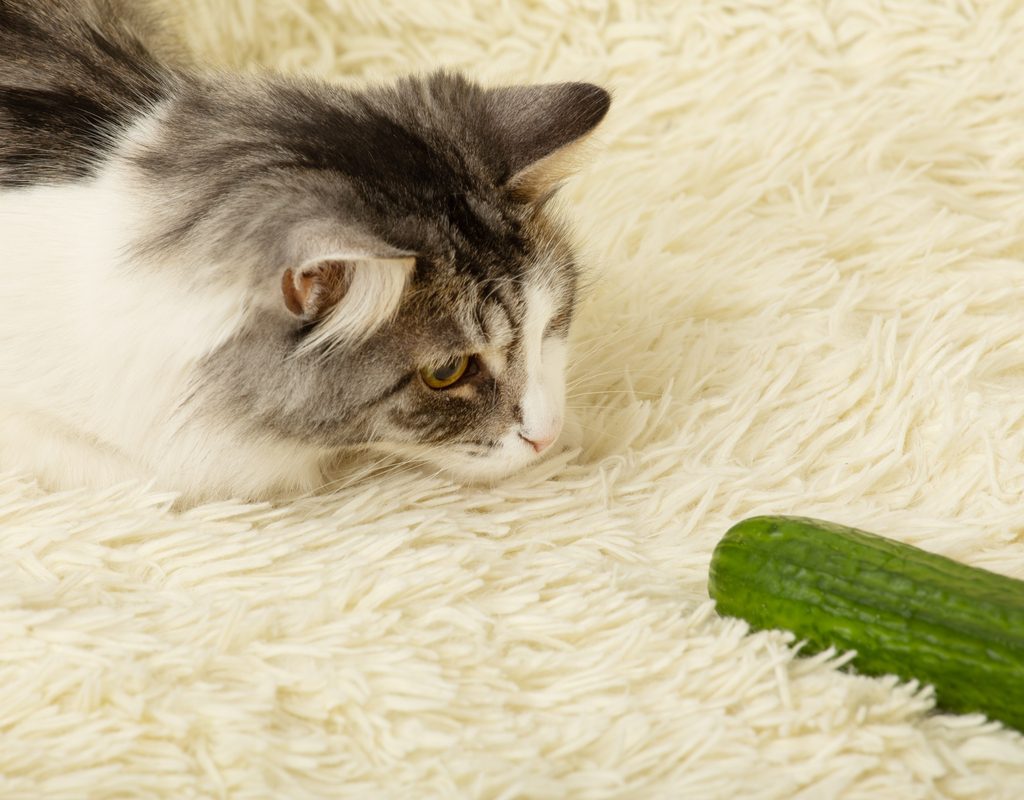
By now, you’ve probably seen plenty of the videos making the rounds of the internet, featuring cats leaping into the air when they discovered cucumbers nearby. Their owners often laugh at the cats’ antics, and many of the cats flee the room, seeking a space where they’re safe from the cucumber. At first glance, it seems silly that cats would be so terrified of a food, especially when it’s lying, unmoving, on the floor. But when you understand a little bit more about how your cat thinks and what he might be seeing in the cucumber, you can understand why this food is so frightening.
Why are cats afraid of cucumbers?
Theories on cat behavior suggest a few potential reasons why cats find cucumbers so frightening. The first is that your cat is just reacting because he’s startled. This would explain the many videos where cat owners put cucumbers directly behind the cats, and the cats leap into the air once they turn around. Their surroundings have suddenly changed, and they may be reacting to the cucumber in surprise. The cat’s startle instinct kicks in, and his reaction is to get out of the room as quickly as possible.
This startle instinct theory is reinforced by cats who exhibit the same response when other objects are placed behind them. In these instances, a cat is reacting to a change in its environment, not to the object that changed it. That object doesn’t have to be scary — it’s the sudden change that frightens the cat.
It’s also possible that cucumbers resemble snakes, prompting the fear that many cats exhibit when they spot the cucumber. Cats instinctively know they should avoid snakes, so a cat’s leaping and racing out of the room might be prompted by that instinct.
Is it bad to scare your cat with a cucumber?
You might be tempted to get in on the viral cat video sensation, but scaring your cat with a cucumber isn’t the way to do it. Deliberately frightening your cat isn’t kind, and you’ll be contributing to your cat’s stress. A cat who reacts dramatically to a cucumber could be at risk of hurting himself, too.
Don’t forget that your cat may lose trust in you if he starts to associate you with the cucumbers that are frightening him. It takes awhile to get cats to trust you, and your cat knows that you’ll keep him safe. Don’t erode that trust by scaring him with a cucumber.

Other, kinder viral cat ideas
That’s not to say that you can’t capture viral videos of your cat. There are plenty of other ways to film your cat that are much more enjoyable for you both.
To come up with some ideas, think about what your cat likes to do most, or what he does that is unique to him. Maybe he loves to play with certain toys and shows off his acrobatic moves. Or maybe he’s the inquisitive type who enjoys playing with puzzle toys. If your cat is super patient, he might let you put him into costume or re-create famous movie scenes or paintings with him as the main subject.
Get creative — there are tons of potential ways you can film your cat and make for an interesting video. If you’re crafty, consider teaching other cat owners how to make items for their cats, like beds or cat treats. Your cat can star in the video and test out and approve everything that you make.
Scientists and cat behaviorists are still working on fully understanding many cat behaviors. While we have some potential ideas about why cucumbers bother so many cats, we might never fully understand what it is about this food that’s so alarming. However, since you know that cucumbers will probably bother your cat, avoid creating that situation. Focus on ways you can build and maintain your cat’s trust in you and foster a sense of security and confidence in your cat. Scaring your cat with a cucumber just for a video isn’t worth it, especially when you think about the stress it will cause your furry friend. There are much kinder ways to get a memorable video of your kitty.