
Cat care isn’t a one-size-fits-all situation in any aspect, including diet. Every finicky feline has their own food preferences and habits, but you set the rules when it comes to the amount of food they get each day. It can be tricky to determine how much wet food to feed a cat without a veterinarian’s specifications, but you can figure out your feline’s ideal food with a bit of research and thought.
And that’s where we come in! We’ve figured out the best ways to determine how much wet food to feed a cat so you can approach mealtime without any questions. Remember, many factors determine a kitty’s ideal amount of food, so you’ll need to consider more than what’s in their food bowl.
Wet or dry food?
Although wet food is nutritionally superior to dry food, with fewer carbohydrates and higher moisture content, not all cats eat a 100% wet food diet. Dry food is simply more appealing to some picky eaters, but it’s also cheaper and has a longer shelf life. The small pieces of dry food also work well in automatic feeders, which provides the convenience that many cats and cat owners need to thrive.
It typically won’t matter whether a healthy adult cat eats wet food, dry food, or a combination of both, but cats with medical conditions may need a specific type of food. Please talk to your cat’s veterinarian before making any significant changes to your cat’s diet.
What factors determine how much wet food to feed a cat

The most obvious factor that determines how much wet food your cat needs is whether they also eat dry food. Is it going to be a 50/50 split, or is the wet food more supplementary than a dinnertime staple? It’s important to keep track of how much dry food your cat eats to ensure they aren’t overeating. The best way to do this is to know your cat’s ideal daily caloric intake and to divide that appropriately between the wet and dry food portions.
Adult cats and senior cats will require fewer calories (and therefore less food) than growing kittens and adolescent felines. Until a kitten is 6 months old, they should eat kitten food and follow a kitten-specific diet to ensure they get all the nutrients they need to grow up big and strong. Additionally, a cat’s activity level also correlates to the amount of food they need. More active cats will burn more calories throughout the day and will need to eat more as a result.
This may require a visit to the vet, but your cat’s weight and body condition also determine their ideal amount of food. Cats that are overweight need to consume fewer calories at each meal, while malnourished felines will need more calories to help put on the pounds. It’s important not to let your furry friend gain or lose weight too quickly, as this can cause even more health concerns. Consider this one more reason to consult a veterinarian about your cat’s health and diet.
Feeding a pregnant cat becomes complicated after 4 or 5 weeks post-breeding. At that point in the pregnancy, it’s important to switch to kitten food or growth formula. She will need to increase her caloric intake consistently until the kittens are born. After birth, her caloric needs will be determined by the size of the litter she’s nursing. Caring for a pregnant cat or a new mother with kittens requires plenty of research and preparation, so don’t take this lightly.
How much wet food to feed a cat
Now that you know that many factors contribute to a cat’s caloric needs, we can explore the average daily calorie intake for cats of a certain weight and age. This can be an excellent starting point for determining how much wet food to feed your cat!
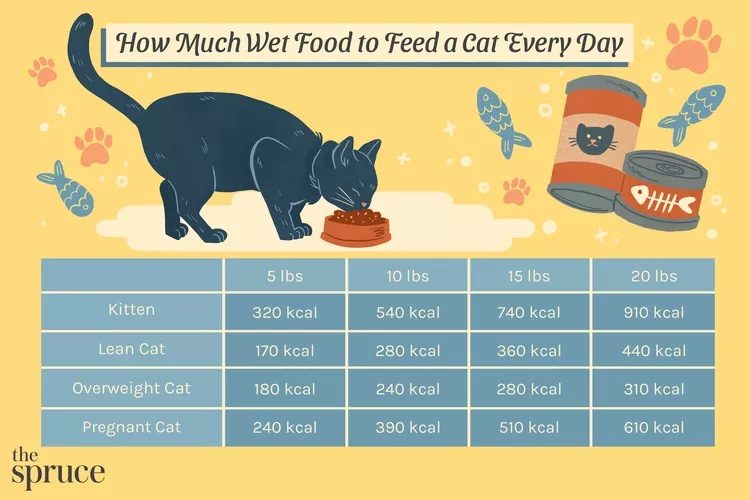
Alternatively, you can use the nutritional information and feeding guidelines on the cans of cat food as a starting point. You can sometimes find further information on cat food brands’ websites, but it may also require some trial and error to see how your four-legged friend responds to their new wet food.
If you notice any unintentional weight loss, begging for food, or signs of hunger while they maintain their current weight, try adding a bit more to their meals. On the flip side, reduce their food intake if they begin unintentionally gaining weight.
Remember, not all cat foods are made equal, either. Some may have more protein for the same amount of calories, while another, low-calorie food could allow your cat to eat twice the amount without the health drawbacks. Your options may be overwhelming, but veterinarians, pet store employees, and other cat parents can help you choose where to start.
Finding the right brand of food for your cat can be just as tricky as determining how much to feed them, so give yourself grace while you figure out what works best. The trial and error can get frustrating, but it will all be worth it to see your cat happy, healthy, and excited for their next meal.