Cat parenthood has some perks. Felines are generally more independent than dogs (and easier to potty train). Also, recent research suggests rooming in with a cat at night is less of a disturbance than sleeping with a pup. Another perk? You probably can get by never bathing your cat. Cats take pride in their hygiene, and their barbed, sandpaper-like tongues typically do the trick and keep them clean and healthy. However, the keywords here are “probably” and “typically.”
Sometimes, bathing a cat is a necessary evil, such as if they get sick or have something on their fur that a tongue-shower can’t fix. Understandably, giving your kitty a scrub session may be at the bottom of your pet parenthood bucket list (if it even made the cut). Yet, knowing how to bathe a cat correctly can help you get your pet clean without getting hurt. This comprehensive guide scratches below the surface.
Take care of these basics before bathing a cat
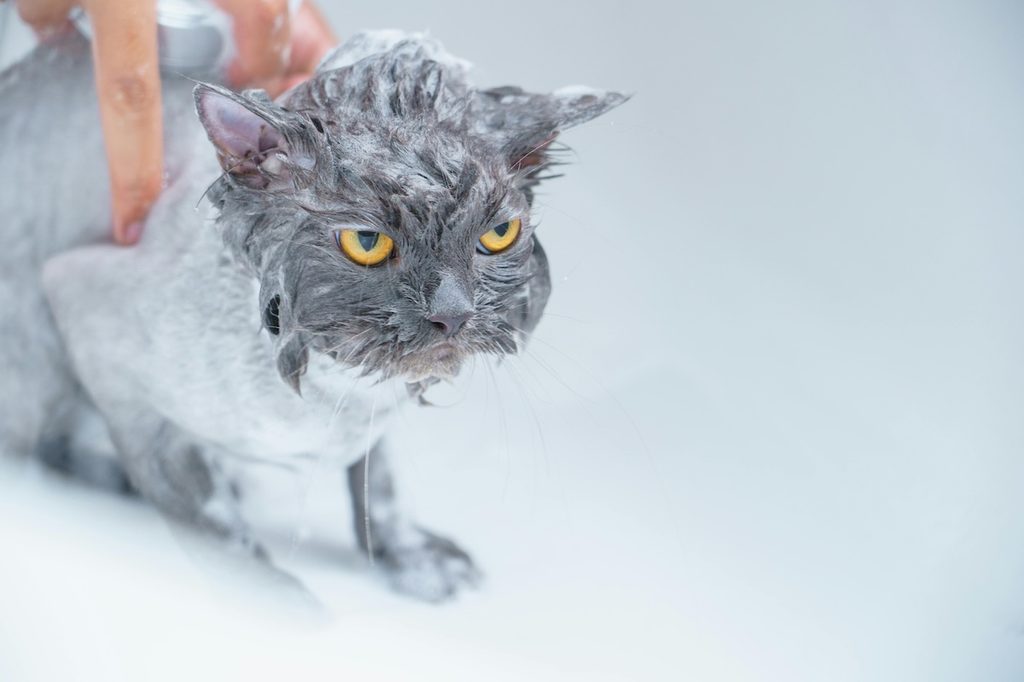
When bathing a cat, the goal is to make the ordeal as quick and painless as possible (for both of you). A little preparation and know-how go a long way.
How often should you bathe a cat?
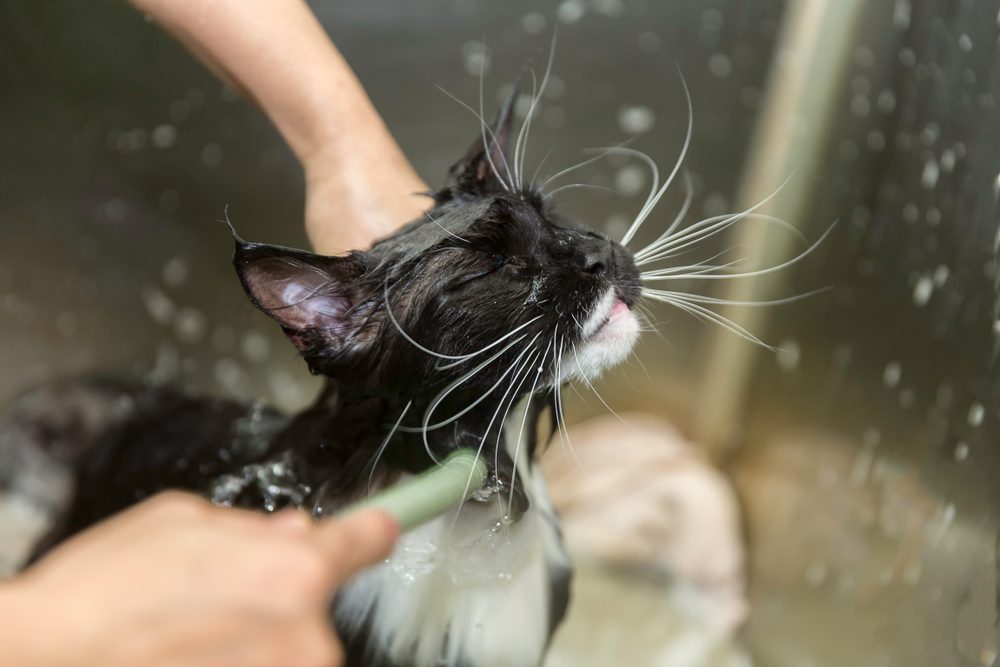
As we said, you may never have to. Ultimately, cat bathing is on a need-to-do basis. Some signs your cat needs a tub session include:
- Your pet has fleas or other external parasites
- Dirt or debris buildup
- Trouble grooming because of health, weight, and age
- You have a long-haired cat that gets dirty easily (and struggles with cleaning) or a hairless breed (cats need fur to absorb the oily substance sebum, which acts as a natural moisturizer. Without fur, their skin can get greasy.)
One instance in which bathing a cat is likely not worth the trouble is human allergies. Cat allergies are triggered by a protein in the saliva. When cats lick themselves, this protein gets onto their fur and skin, and they shed.
What is the best place to bathe a cat?
Unlike dogs, you’ll want to avoid bathing a cat outdoors and opt for an indoor spot. The safest place for most cats is indoors, to begin with, and the unappealing proposition of taking a bath may be a reason to try to make a dangerous escape through your neighborhood. The best place to bathe your cat in your home depends on your pet and what you have available. A traditional bathtub for humans works. A sink may be more comfortable and easier to fill for a smaller cat or kitten.
How to bathe a cat: A step-by-step guide
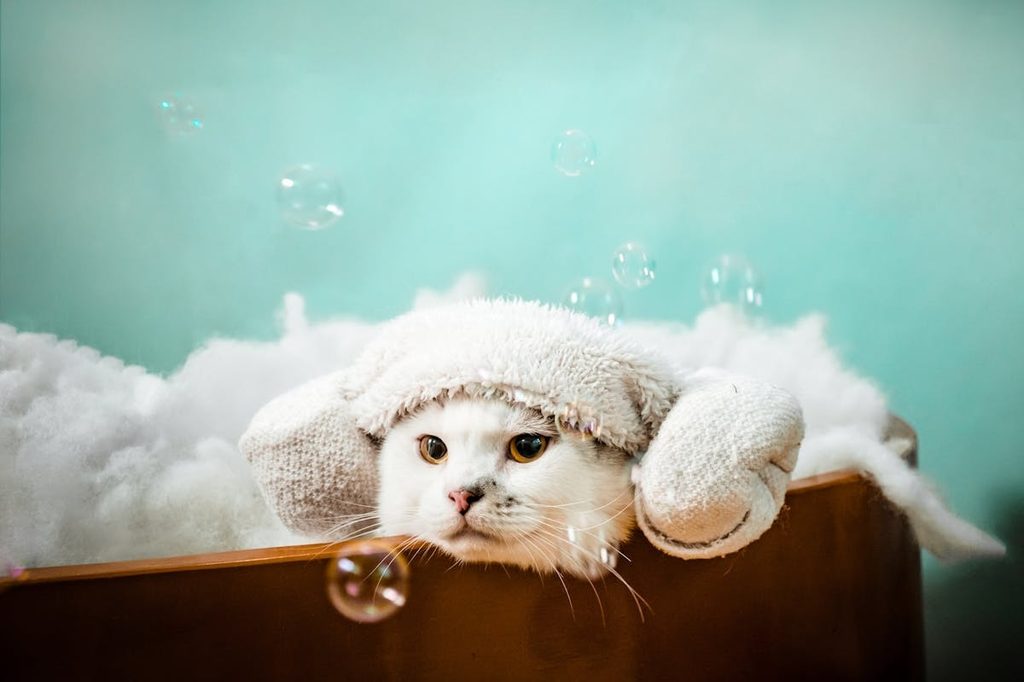
Ready to bathe your cat? Maybe not, but parenting duties call anyway. This guide can help streamline the process.
- Trim your cat’s nails. The reason for this one is likely obvious. Consider taking this step a day or two before the bath (to give your cat time to forgive you) or at least a few hours in advance. Cats aren’t usually fans of “manicures,” so trimming their nails and bathing them back to back may be too much.
- Play with them. A good romp can help tire a cat out so they are more docile for a bath.
- Gather supplies. You won’t want to leave your cat alone in the tub or sink while you gather supplies — they will likely jump out. Get what you need in advance, including shampoo, towel, brush, scoop for water (a measuring cup works), treats, and a nonslip bath mat.
- Brush your cat’s hair (if they have fur). Get knots and tangles out of kitty’s coat so it’s easier to clean.
- Slowly lower your cat into lukewarm water. Ease into the process by gradually putting your cat into the water, allowing them to get used to the idea.
- Rinse. Scoop water and gently pour it along their back, starting from behind the ears and working your way toward the tail.
- Shampoo. Follow the directions on the back of the shampoo bottle about lathering as you work the product into kitty’s coat. (Medicated shampoos may need to sit for a while.)
- Rinse. Shampoo buildup can irritate a cat, so be sure to rinse their coat thoroughly. Gently wipe the face and ears.
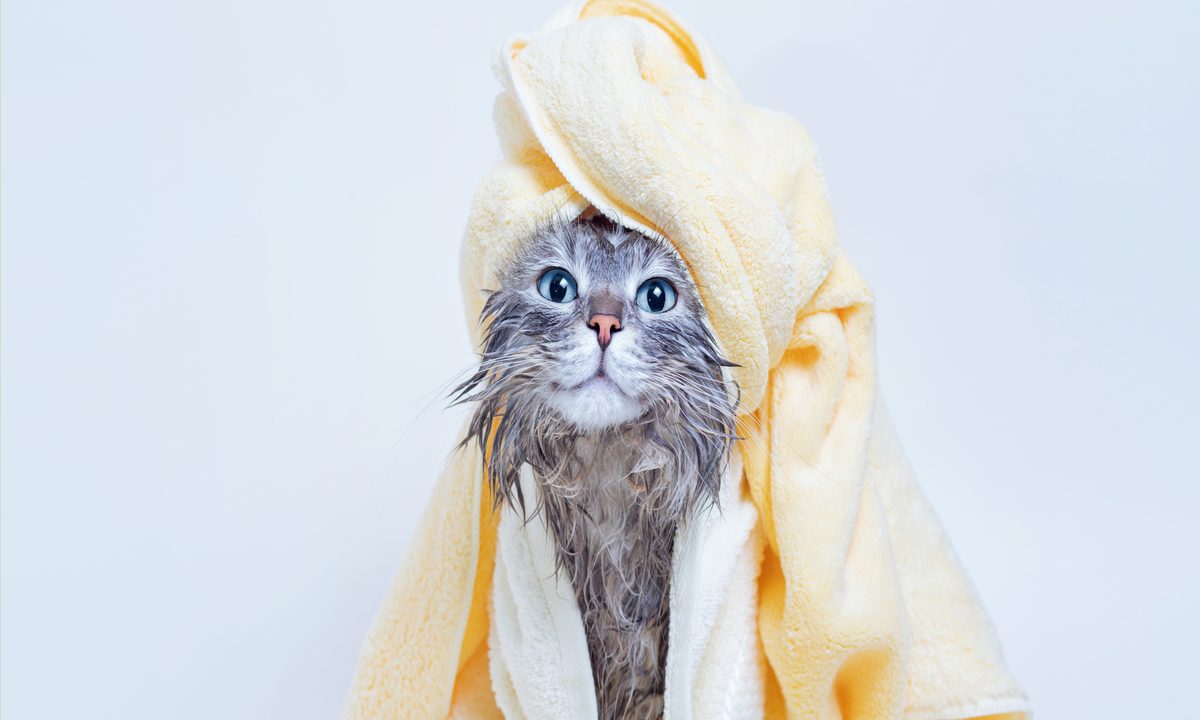
- Dry the cat off. You can use a towel, though some cats tolerate a hair dryer on the lowest setting.
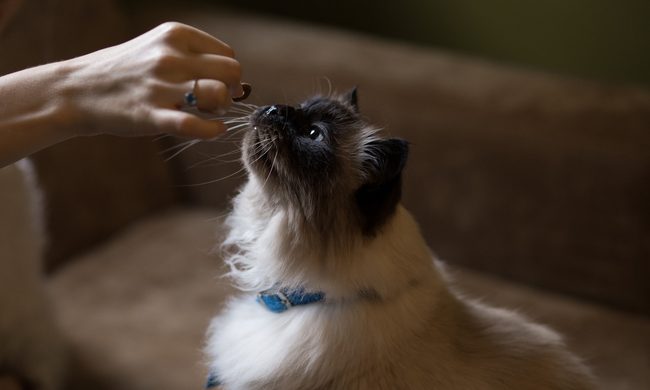
- Reward. Give your cat love, praise, and treats (Pro tip: Offering treats and praise throughout a bath can make the experience more positive for your cat.).
Final thoughts on bathing a cat
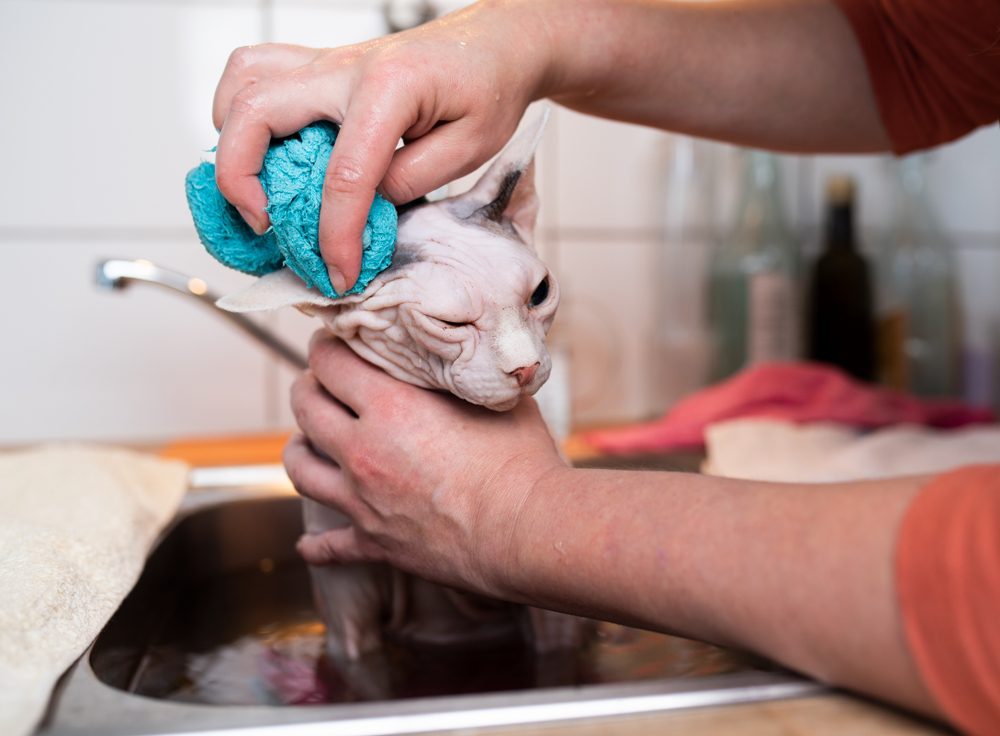
Many cat parents can get by without ever having to bathe their pets. Cats are hygienic creatures with barbed tongues designed to keep them clean, which is a great feature considering that most felines don’t consider a bath akin to a day at the spa.
However, sometimes, indoor cats need to make a splash. Taking a few steps can help you make the experience more tolerable and safer for you and your cat. First, trim nails in advance and thank us later. Gathering supplies like shampoo and a towel before lowering your cat (slowly) into a tub can prevent escapes. Praise your cat throughout the experience, and be sure to rinse the product off their coat before ending the bath.