Lavender is one of the most popular scents — for humans — that is. Many pets won’t like it, and that’s actually a good thing. While lavender might be great for us, it’s not recommended for our kitties and can even lead to issues if ingested as a plant or even smelled as an essential oil.
Don’t worry if you have an unlit lavender candle or a sprig hanging in the kitchen, as it won’t rise to bothering your kitty or needing medical attention in most cases. So, is lavender safe for cats? We’ll cover everything you need to know.
Is lavender safe for cats?
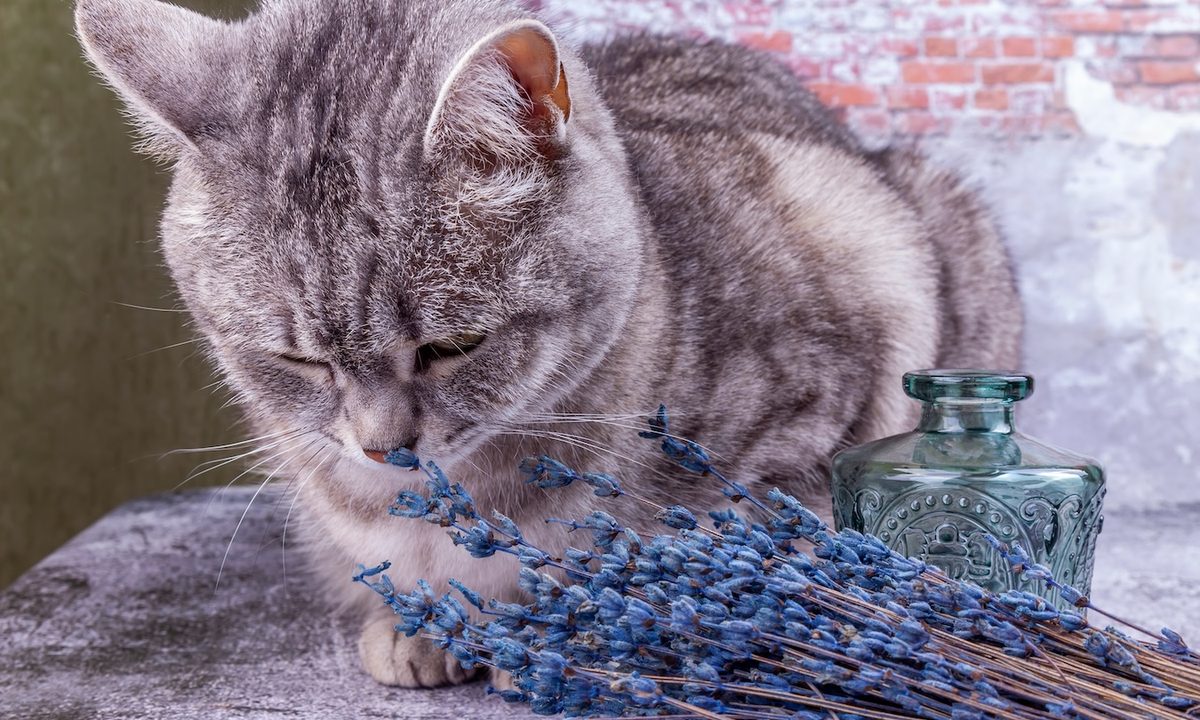
For the most part, no, although, we’ll cover how you might use lavender products safely later. The ASPCA considers lavender toxic to both cats and dogs, meaning you definitely don’t want them to digest it, owing mainly to the linalool and linalyl acetate chemicals found in the plant. Both of these help give lavender its iconic smell and therefore, will occur in many of the product derivatives. Because of this, you don’t want your mouser to eat the plant, lick lavender-scented products, or get essential oils on their skin.
Plant
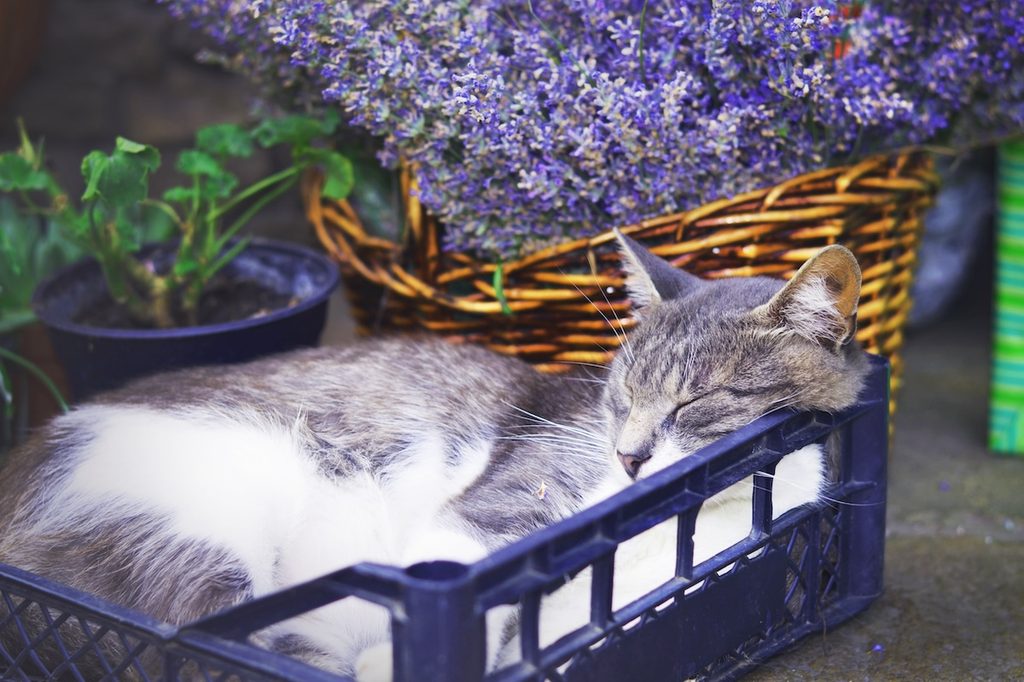
This is probably the least harmful iteration. Your cat would need to eat A LOT of lavender plant to get pretty sick. Additionally, there’s likely no harm from your cat rubbing up against it if you have a lavender in the house. However, you still don’t want your fur baby to munch on these toxic leaves. If you must keep this flora around, store it in a cat-free zone of your house.
Essential oil
Because the oil is made from concentrated lavender, you need to worry about this one a bit more. It can come in all sorts of products like diffusers and perfume, but you should keep them all away from your feline. Both ingestion and skin contact could make your cat sick. Even inhaling a strong lavender smell could bother kitty, as it can lead to respiratory problems. In general, you don’t want essential oils and cats to mix, no matter what they smell like.
Dried
Fragrance sachets or dried lavender in the spice rack have a similar reactive level as the live plant, but they’re slightly more concentrated. If your animal eats this, they’ll feel sick or could suffer liver damage should they ingest enough. Occasionally, cat toys actually contain lavender inside — always read the label first and ensure these stay intact.
Signs of lavender toxicity in cats
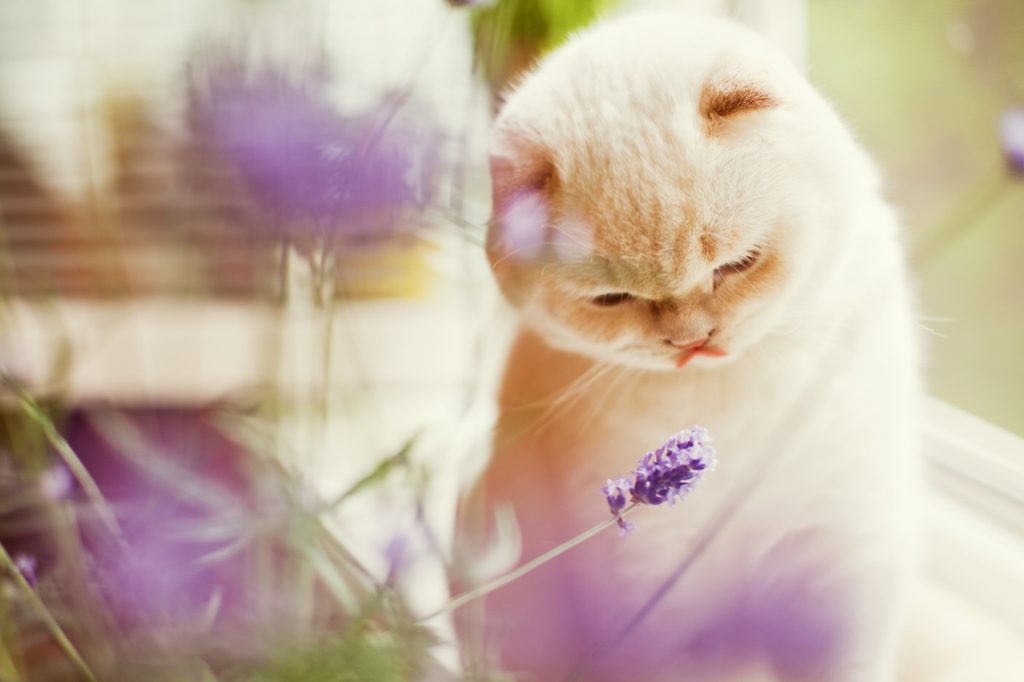
Some cats could be more sensitive than others, so you’ll see a range of reactions in your fur baby depending on whether they have an allergy that goes beyond general cat reaction and, of course, how much they ate. Mostly, when a cat eats the plant, they’ll get an upset stomach, though liver problems could happen in extreme cases.
In addition, even just contact with skin or eyes could create some irritation. You should reach out to your vet if you notice lethargy, vomiting, skin redness, or sneezing when your cat may have come across lavender in one of its forms. If you can tell how much they had, you’ll want to relay that to the cat doctor as well for a better diagnosis. After speaking with the vet, you may also want to call the Pet Poison Helpline.
Cat-safe alternatives to lavender
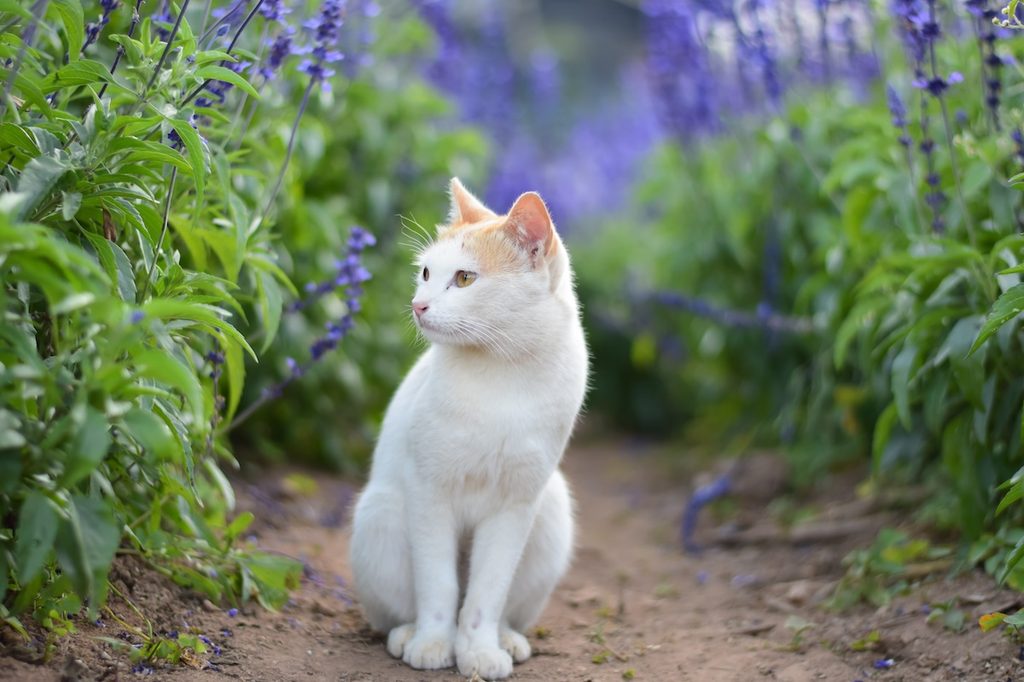
Lavender won’t have much of a calming effect on cats, anyway, so it’s not the same as when you smell it and instantly feel more zen. Instead, consider installing pheromone diffusers or providing calming supplements, as recommended by your vet. Naturally, catnip has become a go-to for a reason and will do the job. As for yourself, try a pet-friendly odor reducer or use unscented cleaners to keep the place smelling fresh. Any aroma therapy should stay in a room that your pet doesn’t frequent, as it will likely bother their delicate nose, even if there’s no lavender included.
Lavender smells great to us, but our feline friends are not wild about it. Don’t ever let kitty eat, sniff, or lick lavender or the essential oil. If they come into contact with lavender anyway, get in touch with their care team to see about treatment options. It’s possible your sweet animal will just have to wait it out until their upset tummy resolves itself. If you absolutely must have lavender in the house, keep it secure, preferably in a room that your cat doesn’t have access to and won’t stumble upon. In this case, while curiosity likely won’t kill the cat, it will definitely give you both an unpleasant evening if they find your lavender and eat it.