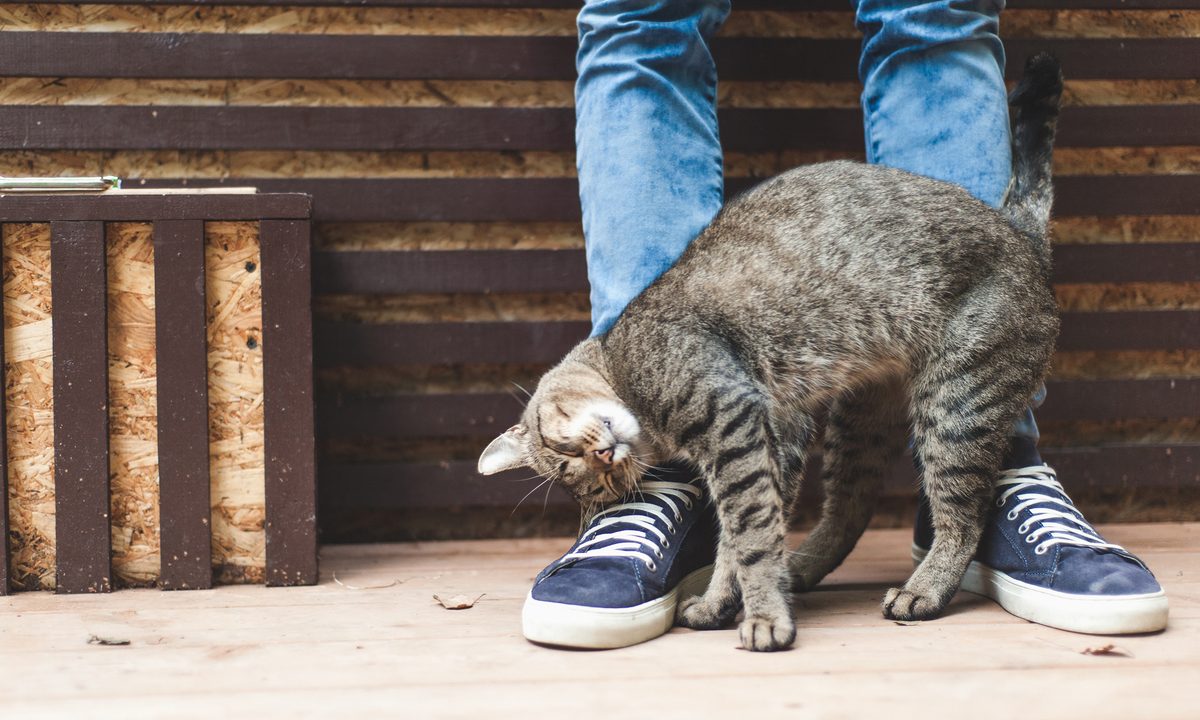
If you’ve ever sat down on the couch after being at work all day, you’ve probably noticed that your cat comes over and rubs against your legs or even hops up and rubs against your sides and arms. At first glance, this behavior might seem to be a display of affection, and you could think that your cat is cuddling up with you because they love you.
In fact, the real reason behind your pet’s behavior isn’t quite as flattering. So why do cats rub against you? It all has to do with your kitty’s instincts and how they relate to other cats.
What cats are doing when they rub against you
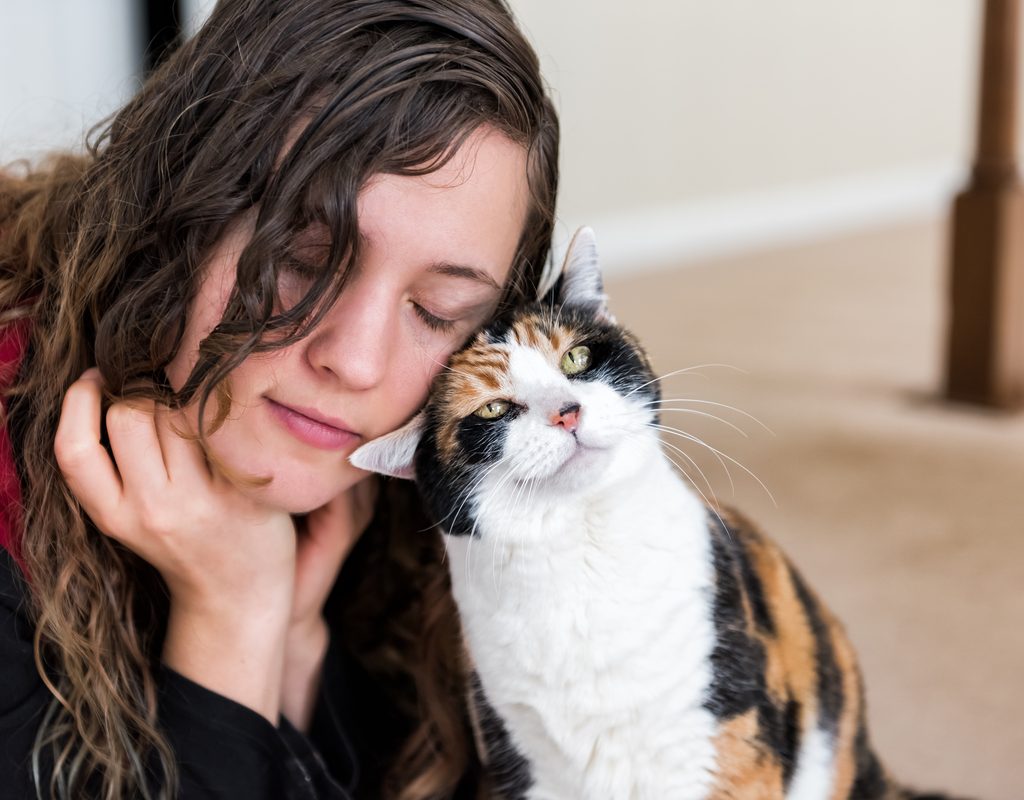
According to PetMD, the behavior of rubbing against you or other objects is your cat’s way of using their sense of smell to relay and distribute information about the environment. When your feline brushes their head against you, they’re marking you with their scent. Your cat has scent glands all over their head and neck, including in their cheek, chin, and forehead, as well as on the base of their tail. When your cat cuddles against you, they’re leaving behind their smell.
Your cat — who knows you well — may mark you, but a cat who’s meeting you for the first time may also rub up on you, more to gather information. Since the scent doesn’t stay behind for all that long, your kitty may repeatedly tag you to make sure their aura remains.
How cats stake their claim by rubbing
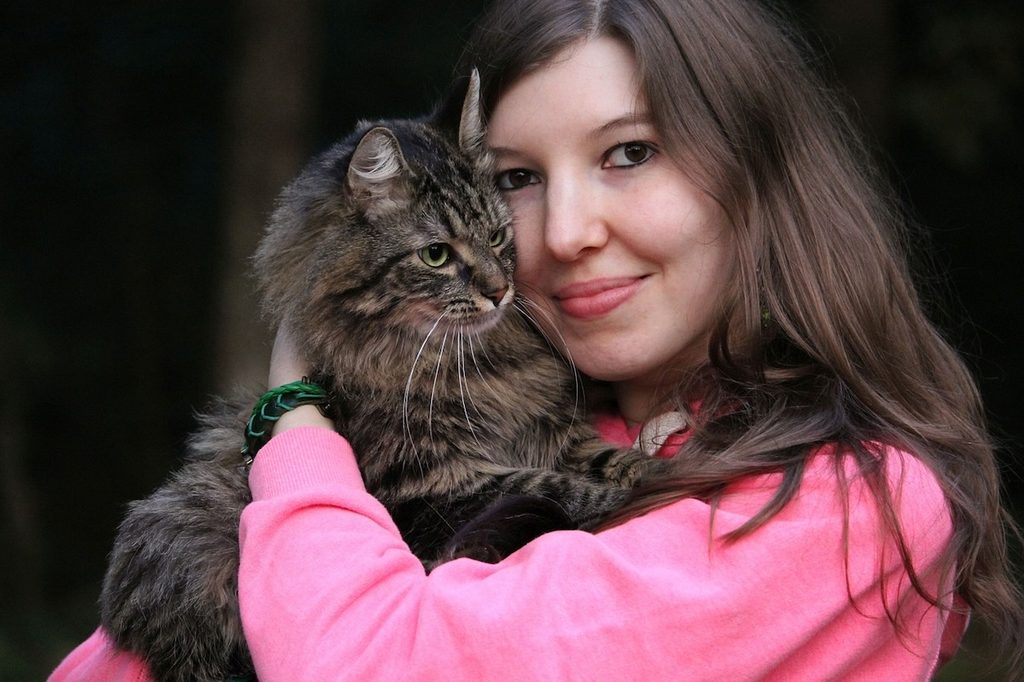
This rubbing and marking process doesn’t necessarily say, “I love you,” but rather groups you into other objects that share your cat’s scent. You’ll notice that furry friends who live together rub against each other, too. They’re spreading their communal scent and also indicating acceptance of one another.
Your cat’s act of rubbing up against you is, essentially, a way of marking you as his territory. Leaving his smell behind tells other animals that you’re already his.
Additional ways cats stake their claim
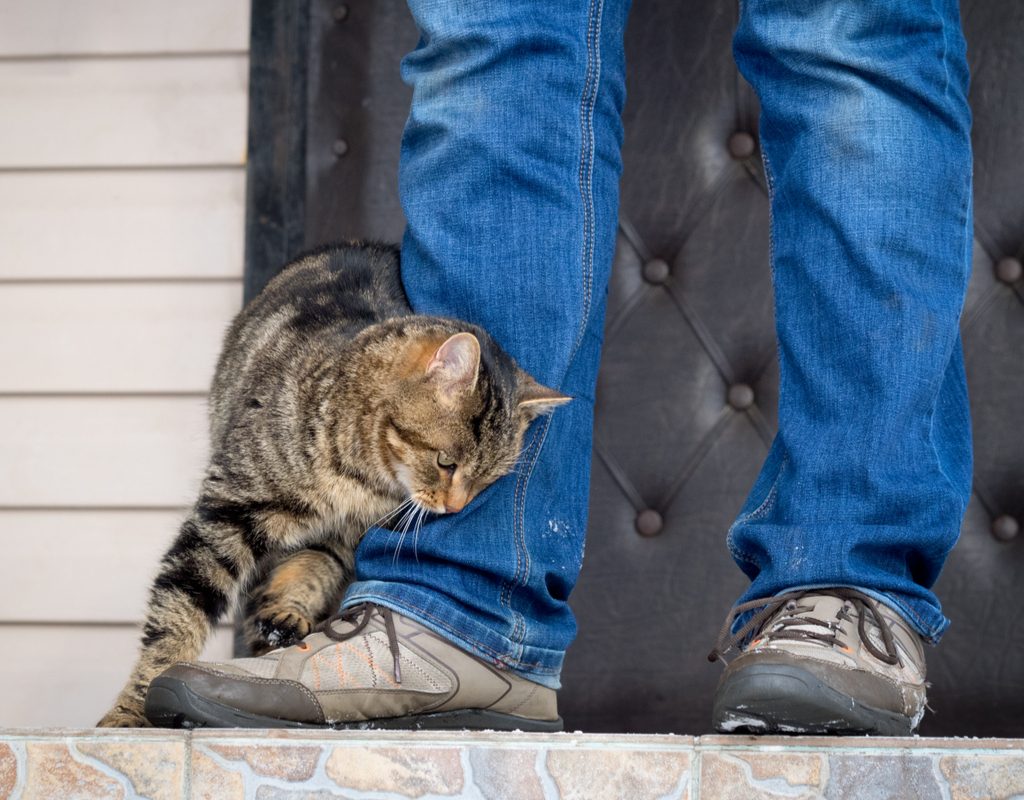
Rubbing isn’t the only way that cats communicate that you or an object are theirs. Purina notes that cats use scratching in a similar way, using the scent glands on their paws to leave their perfume behind. That’s why your cat may scratch at your sofa or doorjamb — these areas see high traffic and carry many scents. Your cat is scratching to mark them as part of their territory as well.
If your cat’s clawing becomes a problem, you can discourage it by placing scratching posts in front of the areas that your beastie is targeting. You might also have luck using tape on your furniture since the sticky surface will help to prevent your cat from going for that area.
In some cases, your cat might pee on objects to mark their scent, too. While much more inconvenient and undesirable than rubbing and scratching, peeing on things also transfers your cat’s smell. If your pet starts urinating on objects, they are likely trying to mark them and establish that they’re your pet’s territory. Peeing is sometimes prompted by bringing a new cat into the home, or by other changes that make your cat feel unsettled and insecure.
If your mouser starts peeing on your items and in your home, you’ll need to address the changes that are making your kitty feel stressed. Peeing can also be prompted by physical issues like urinary tract infections, so be sure to schedule an appointment with your vet to have your cat evaluated.
Why does my cat bite me gently?
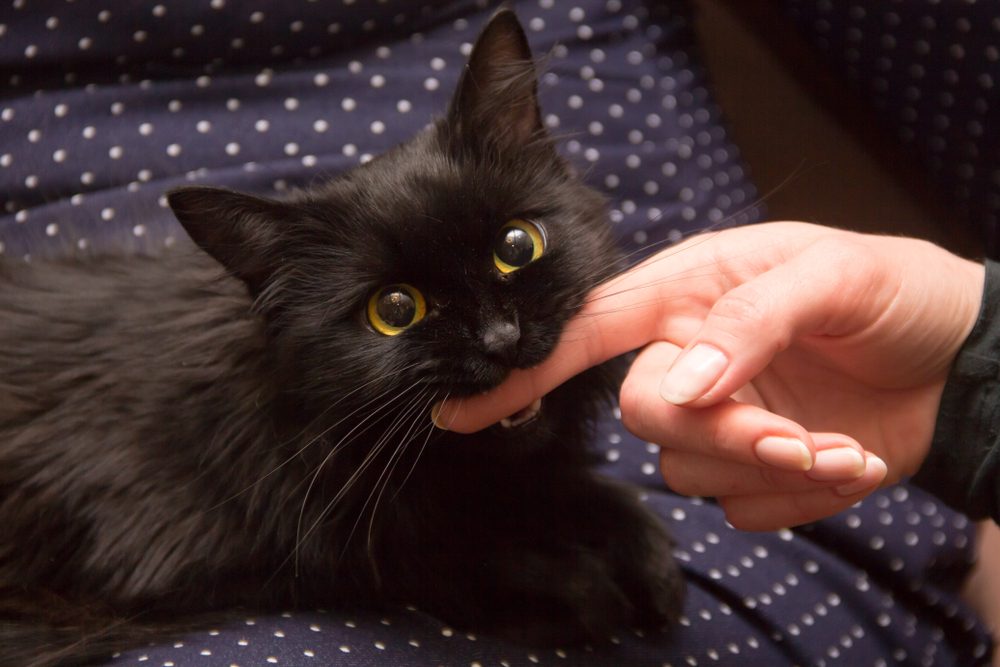
When a cat love nips you, it doesn’t claim you as theirs exactly, but it is one of their ways of showing that you’re an accepted member of the family. Gentle biting and licking might actually be a form of grooming, proving that kitty sees you as their person in need of cleaning.
Sometimes, a play bite indicates that your cat is ready for you to break out the squeaky toy or catnip — feel free to oblige. These soft champs won’t break the skin or hurt, and you can ignore them if you ever don’t want to engage. That’s very different from the bite you’ll receive from an aggressive cat or one that’s overstimulated. Remember, too. that all kittens nibble now and then — that’s how they figure out the world, including you.
How to tell if a cat loves you?
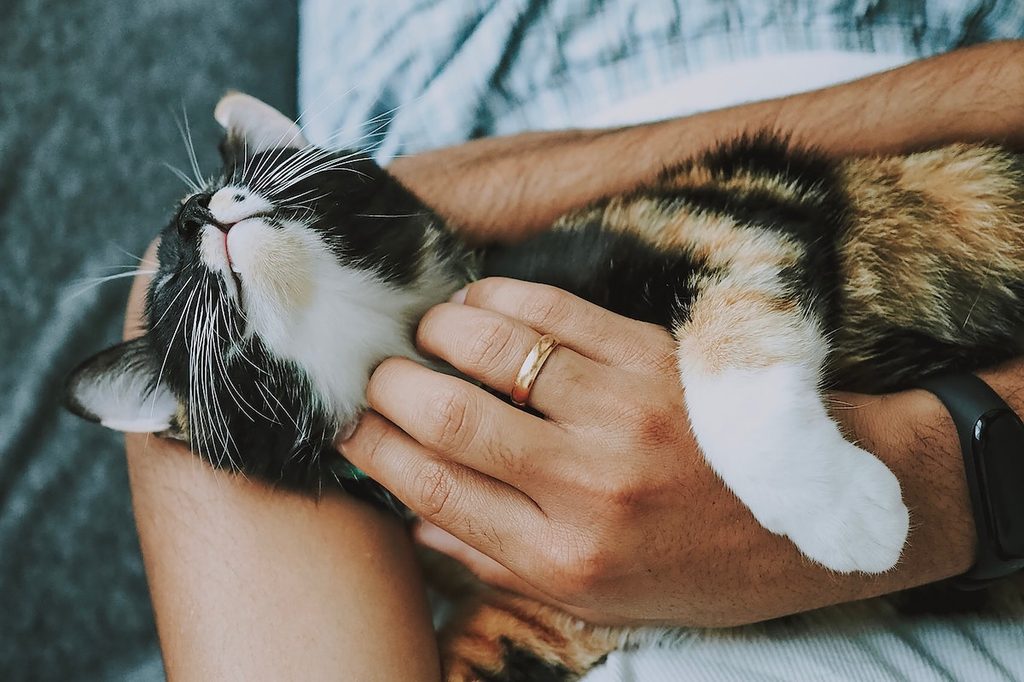
If rubbing doesn’t necessarily signal your cat’s eternal devotion, what does? The top sign is obviously purring since that shows general contentment. In fact, if they purr while rubbing, that should be taken as a sign that you’re both in their inner circle and your kitty’s favorite person. Other things to look out for include grooming, presenting their tummy, and spending time with you. You can take all of these different clues and determine once and for all that your cat loves you. Anytime there is doubt in your mind, feel free to give your fur baby an extra pat or a treat just to make sure.
Cats show their affection in many ways, and while your cat rubbing up against you might seem like they’re looking to cuddle, that’s not quite the reason behind this behavior. Instead, your kitty is marking you as his and showing other cats that you’re a part of his territory. Your cat’s efforts to claim you might not be driven by the affection you’d imagined, but be flattered. If your cat is taking the time to scent mark you, then you’re something they care about.