
You’ve done your homework and made sure the campground allows dogs. Even the trails you’re planning to hike are dog-friendly. And you know your dog is up for the adventure. Anything he gets to do outdoors with you is his favorite activity.
So, all that’s left to do is pack your gear and head out, right? Not quite. Camping with your dog can be a lot of fun; however, it takes a little preparation. While he’s always eager to head out the door without a moment’s hesitation, he needs his own set of gear to keep him happy and healthy on the trip. Before you take your dog camping, make sure you’ve got everything on this list.
The basics
- Identification tags and collar. Examine your dog’s identification tags to make sure they’re still readable. Replace them if necessary, then make sure they’re fastened securely to your dog’s collar. If he has a microchip and you haven’t had it checked in a while, now would be a good time to do so.
- Leash. You’ll want to keep your dog leashed at all times to comply with campground regulations and to prevent him from getting lost. Make sure it’s rugged enough for outdoor use. And take along a spare if you have one, just in case.
- Food and treats. Pack enough food for your dog to eat regularly, then add a bit more. Be sure to include enough treats, too. If you’ll be active every day, your dog can afford to take in a few more calories than usual.
- Water. Although it might be tempting to let your dog drink from any nearby streams or lakes along the way, it’s best to bring along enough clean drinking water for both of you. That way, you can be sure he won’t pick up any illnesses — such as giardiasis or leptospirosis — by drinking from a contaminated water source.
- Food and water bowls. This seems basic, but you’d be surprised how many campers simply forget to pack these items for their dogs. Use the ones from home or purchase the collapsible variety to easily carry in your backpack.
- Waste bags. Contrary to popular opinion, it’s not OK to leave your dog’s waste in the woods or along the trail. Not only is it inconsiderate to others using the campground or trail, but it also can transmit harmful bacteria and parasites to wildlife in the area. If you don’t want to pack it out, take along a shovel so you can bury it.
- Towel. What good is going camping if you can’t get dirty, right? Bring an old towel or two so your dog can have his fun and you can wipe (most of) the dirt off him before he comes into the tent.
Safety essentials
- Reflective gear. It gets dark in the woods at night. And while you’re not planning to get separated from your dog, accidents do happen. Make it easier to see him at night by outfitting him in reflective gear, even if it’s just a reflective strip on his leash and dog collar.
- First-aid kit. Add canine first-aid essentials like hydrogen peroxide (to induce vomiting), grooming wipes (in case of diarrhea), and paw balm (to soothe any cuts or cracks) to your personal first-aid kit.
- Canine bug repellent. Ingredients in human bug repellent can cause vomiting, seizures, and skin irritation, so pick up some dog-friendly repellent at your local pet store.
- Life jacket with handles, if your trip involves being on or near the water.
Comfort
- Favorite toy, for those times you’re relaxing around the campsite.
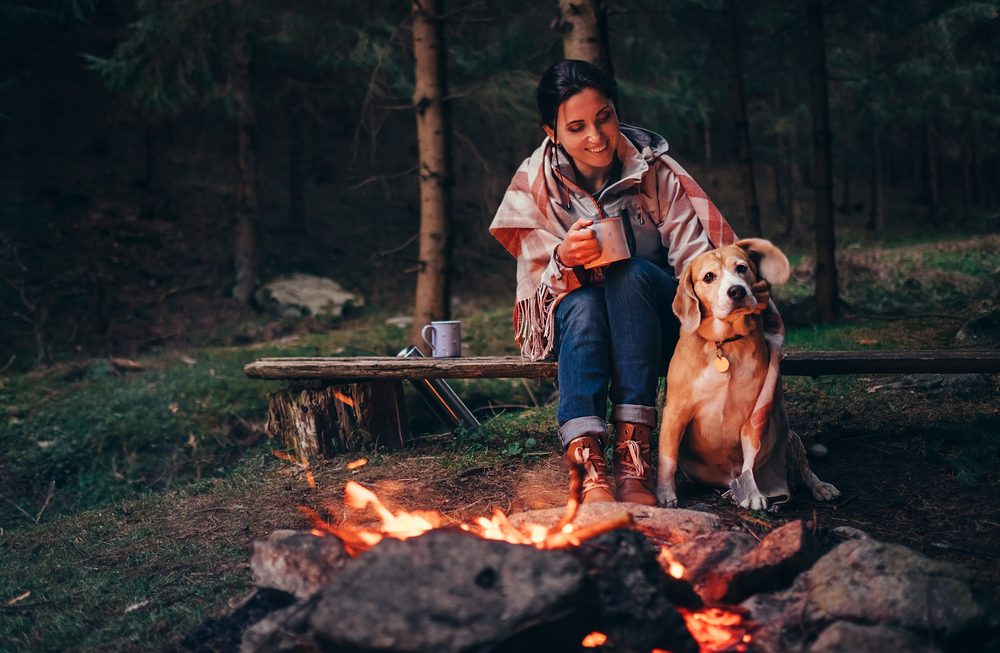
- Mat or blanket, for him to lie on outside the tent, especially if the campsite ground is bare.
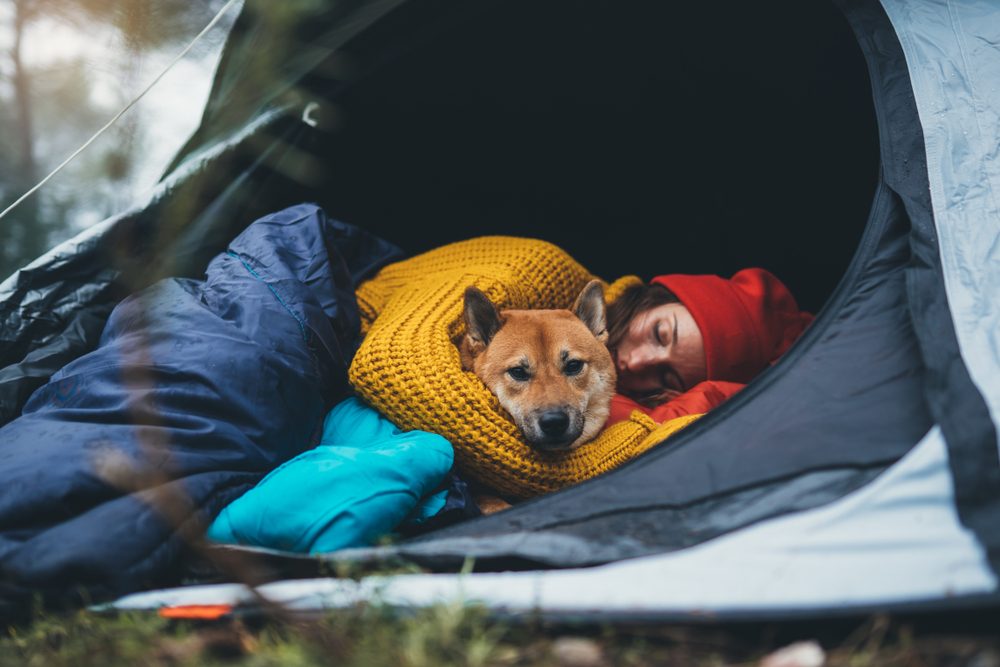
- Crate or bed, whichever he is accustomed to sleeping on at home. Make sure it fits inside your tent or camper. It isn’t safe for your dog to stay outside when you’re camping.
- Dog jacket, for an extra layer of warmth in case of inclement weather.
- Dog booties, for hiking on rocky trails or in campgrounds where there are thorns and stickers.
One last thing: Make a quick call to your veterinarian and review your plans, especially if they include any strenuous hiking or other endurance activities. She can provide guidance regarding the amount of exercise appropriate for the age, weight, and breed of your dog as well as if there are any unusual trends you should know about — such as an increase in the flea and tick population or leptospirosis cases.
Once you’ve checked everything off the list, load up and hit the road. When you camp with your dog, you add an extra measure of protection and physical activity to the experience, not to mention a great companion with which to explore everything the great outdoors has to offer.