
A member of the herding group, German shepherds are known for their keen intellect, courage, loyalty, and eagerness to please. German shepherds are one of the most popular breeds in the world, and they can often be found employed as service dogs and working alongside law enforcement. When they’re not hard at work, these clever pups are often found romping through the yard with children. Despite their large, intimidating size, shepherds make wonderful family dogs as long as they’re trained properly. Crates are popular training tools, but is it cruel to crate-train such an active dog? We’ll tell you everything you need to know.
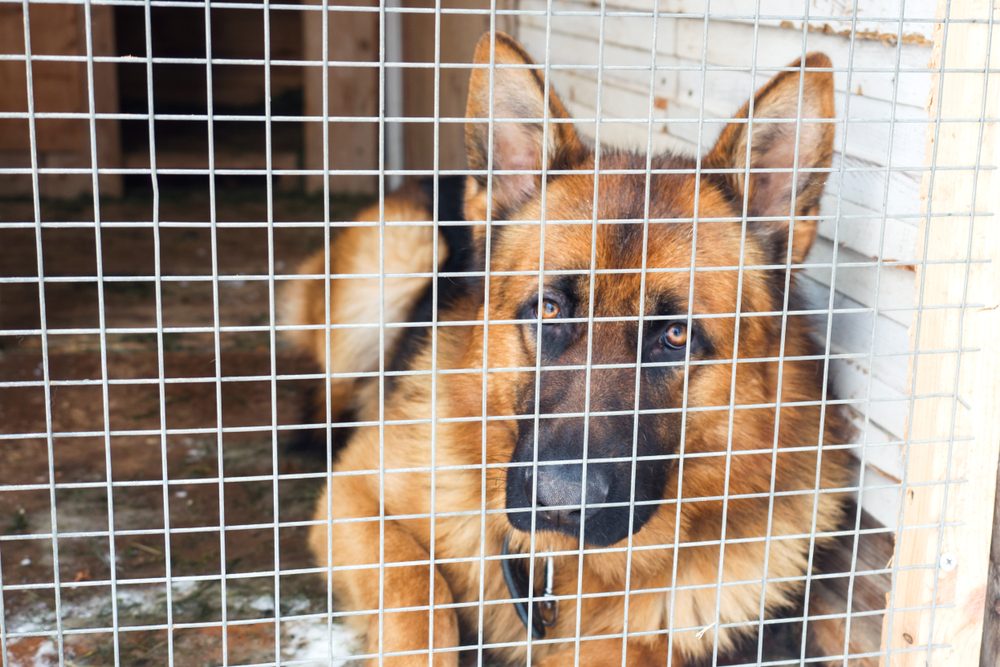
How long does it take to crate-train a German shepherd?
As one of the world’s most intelligent breeds, German shepherds have the ability to learn new tricks with very few repetitions. With that being said, crate-training a dog usually takes longer than teaching him how to sit or stay. But there’s some good news: because they’re so smart, German shepherds can be fully crate-trained in about a month as long as you work with your dog consistently.
As a general rule, puppies should be left in a crate for one hour per month of age, but they should never be kept in a crate for longer than four hours at a time. Puppies have small bladders, and the last thing you want is to inadvertently teach your pup that he’s supposed to do his business in his crate. By the time your pup is six months old, he should be able to sleep in his crate overnight without having any accidents.
Crate-training tips
Whether you have a young puppy or an older dog, crate training requires time and patience. We’ve rounded up a few tips to make the training process easier for you and your dog.
#1: Buy the right size crate for your dog
Crate training begins with choosing the best crate size for your dog. You may want to purchase a crate large enough to accommodate his adult size.
#2: Start off slowly
If your dog has never spent time in a crate before, easing her into it is the best way to go. Leave the crate open in a room where you spend plenty of time. Your pup may wander into the crate without being told to do so.
#3: Make the crate feel homey
Once your dog is used to the crate’s presence, place a blanket, dog bed, water bowl, and a few favorite toys inside to make the crate more attractive to your dog. Now you can try closing the door and leaving your pup in his crate.
#4: Ignore her protests
Some dogs may bark or whine, but you shouldn’t let your pup out until she quiets down. If you open the door the instant your pup whimpers, you’ll teach her that crying means she’ll be let out of the crate. Unless your dog is genuinely in distress, you shouldn’t remove her from his crate when she cries.

Are German shepherds hard to crate train?
While crate training a German shepherd puppy may seem easier than training an adult dog, studies show that sometimes the reverse is true. Older dogs are more mature and have longer attention spans than young puppies, so don’t worry if you’ve adopted an older dog. According to the American Kennel Club, “Crate training is an invaluable tool for facilitating housetraining, which almost all GSDs take to quickly and easily. In fact, many GSD owners will find that this is one of the easiest breeds to housetrain, as long as constant supervision and consistency are required.”
German shepherds are remarkably intelligent dogs, which makes the training process much easier than it otherwise could be. However, remember that all dogs learn at their own pace. Your pup may take longer to crate-train than your friend’s German shepherd. And, if you’ve adopted an older dog, you may have to help her unlearn prior behaviors before you can successfully crate train her.
Where should your German shepherd puppy sleep?
While some people believe crate training any dog is cruel, that’s not necessarily true. Crate training should never be used as a punishment or a substitute for spending time with your dog, but there’s nothing wrong with crate training a dog as long as you do it correctly. According to the professionals, your German shepherd puppy should sleep indoors in a crate. Not only does crating your dog at night make housebreaking easier, but it also keeps your dog safe. Puppies, especially German shepherd puppies, explore the world with their noses, which can lead them to mischief. If your pup is sleeping soundly in a crate, he won’t be able to chew your shoes, furniture, or garbage while you sleep.
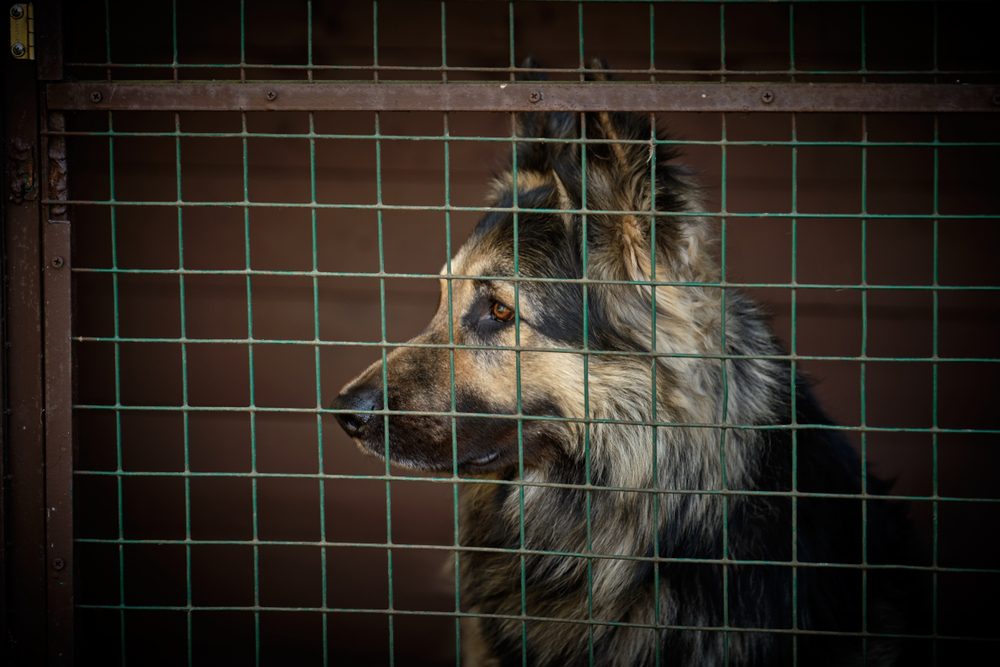
Crate training is one of the most controversial topics amongst dog owners, but research shows that crating your dog can help her feel safe and secure. Make sure your dog’s crate isn’t sitting near a hot window or near a drafty spot, always keep water in the crate, and remember that crating your dog should never be used as punishment. With time and patience, your German shepherd will come to view her crate as her den, and she might even choose to spend time there on her own.