
Watching a dog gobble down a bowl of their favorite food as if it were one bite can be impressive, but it’s not great for your dog. Besides, who can even taste anything when they’re eating so fast?
For dog owners asking themselves, “Why does my dog eat so fast?” you may want to be more concerned about how to slow them down. Honestly, some dogs just get highly excited to eat, and there’s no guaranteed way to change the way they think about their meals. However, if you’re looking to learn how to stop a dog from eating too fast, you’re in luck. There are so many options to try, your fast eater can stay comfy and healthy no matter what’s on the menu.
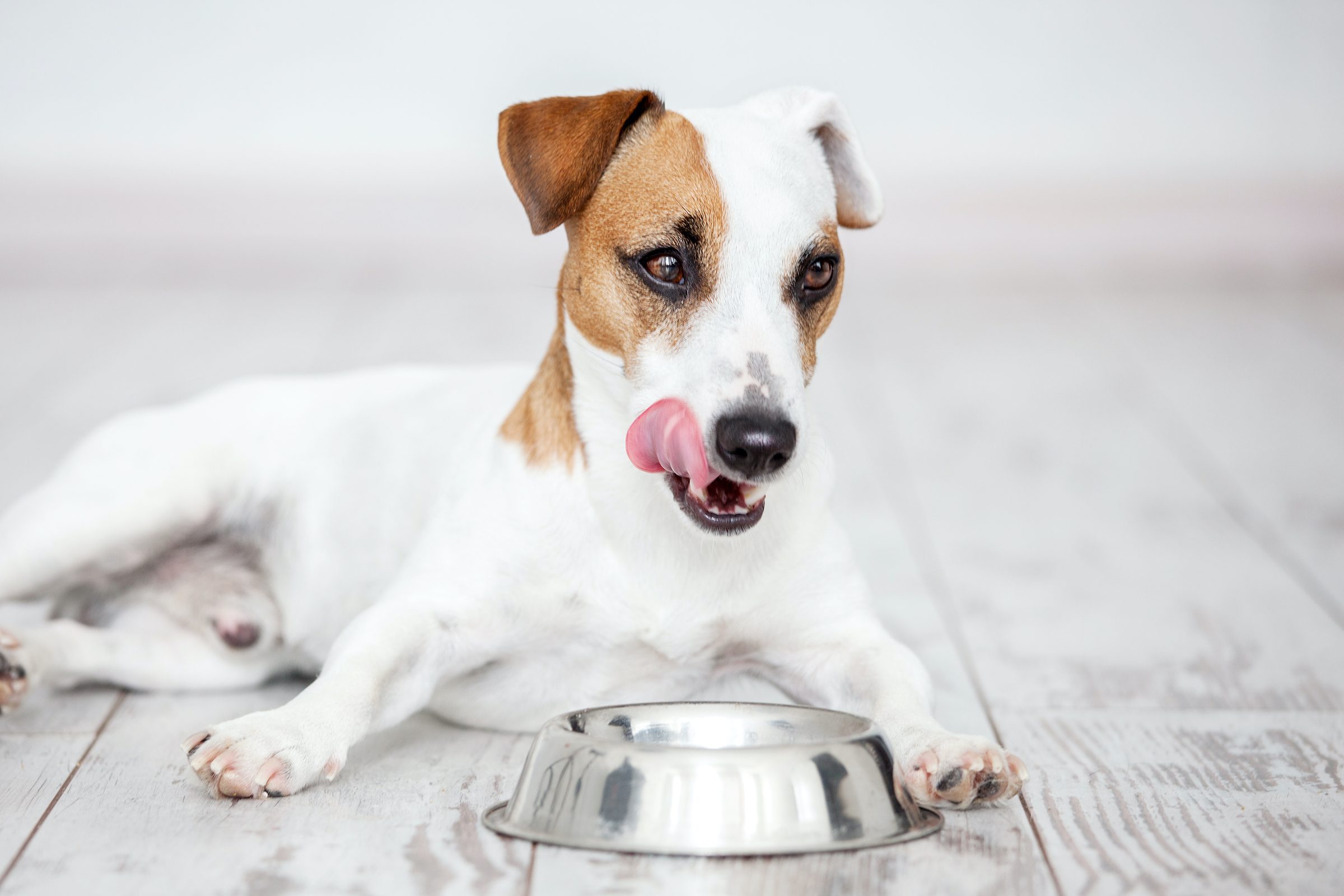
What is the muffin pan trick?
Some resourceful pet parents have come up with a great dog-life hack: using a muffin pan to slow down their dog’s fast eating. If you fill up each muffin slot with kibble or wet food, your dog will be able to get to only a small portion at a time. They may still be able to scarf down a mouthful, but nothing compared with how they ate from a regular bowl.
If you invert the muffin pan, you can spread out the food around each hole, making your dog work a little harder to get each and every bite. Be warned — they may make a bit of a mess sliding the kibble all around the tray, so put down a pup-safe food bowl mat if you can. (You’ll thank us later!)
You can even use a cookie sheet. While not as challenging for your dog to access as a muffin pan would be, spreading out the kibble over a larger surface still prolongs eating time for your dog. They have to scoot the food into a pile to take big mouthfuls, which will take just as long as eating from the sheet regularly. They’ll figure it out!
You can even make your very own slow feeder or puzzle bowl by using your dog’s regular food bowl. If you put it inside a larger bowl, making a target sort of shape, it’ll be harder for your dog to get their whole snout into their food, therefore slowing them down.
How to stop your dog from eating too fast
If you prefer to keep your muffin pans slobber-free, there are several other methods you can try. A fair warning: You’ll probably have to invest in a helpful tool to do the job for you unless you have the time for hand-feeding at every meal. Some dogs prefer being hand-fed anyway, but be careful not to get them too used to it, or they might not eat unless you’re doling it out a bite at a time.
One way around this is by using mealtime as training time, too. You’ll get to make sure your dog stays safe while they eat, but they’ll be learning your desired behaviors, too.
The most popular way to help a fast eater is by using a puzzle toy or slow feeder. Slow-feeder bowls leave just enough room for your dog to get a bite every time but not enough room for them to gulp down mouthfuls all at once.
Puzzle feeders work the same way but will require more interaction from your dog. They may need to nose some of the kibble to a certain part of the bowl to reach it, while other feeders release kibble over time as your pup plays.
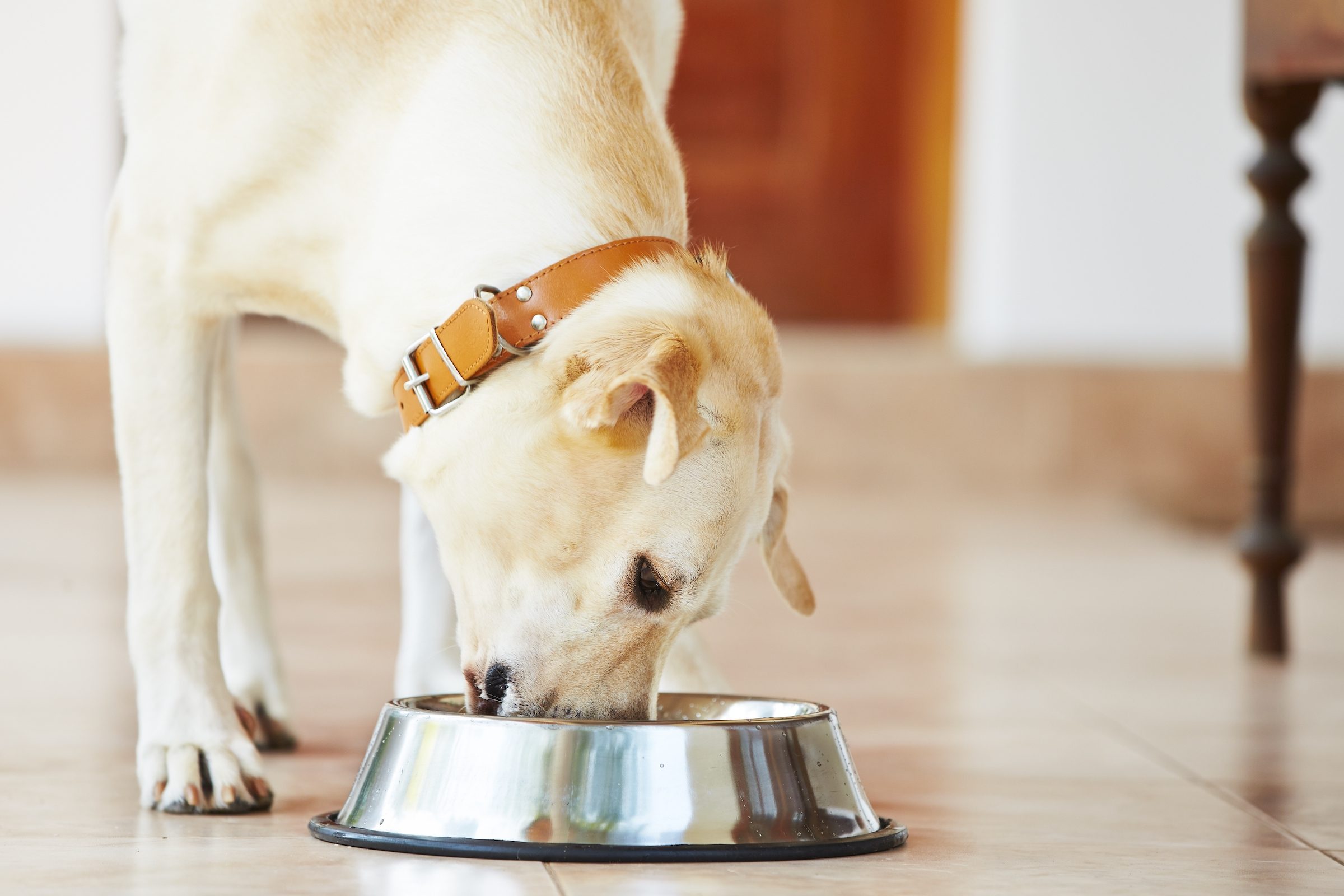
Why is it dangerous for a dog to eat fast?
When a dog eats too quickly, according to the American Kennel Club, they’re at higher risk for vomiting, abdominal discomfort, and choking. It’s easy to see why this can be dangerous, but did you know bloating can be life-threatening for dogs, too?
Although dogs don’t experience it the way we do, bloat is a serious condition for canines. Formally called gastric dilatation-volvulus (or GDV), it occurs when the stomach or intestines suddenly expand and get twisted around. Dogs will go into shock nearly immediately, though many pet parents are still unaware of this phenomenon. When a dog eats too fast, they can swallow air and increase their risk of developing bloat.
Using the muffin pan trick or any other slow feeder/technique can help reduce your dog’s risk for these uncomfortable conditions. You’ll lead them to experience eating in a whole new light, which will hopefully include actually tasting their food! Your pup has so many sweet, savory, and meaty flavors to try — as long as they eat slowly, of course.