

Our dogs talk to us. No really, they use a form a communication called “referential signaling,” which means they give clues without words. Interestingly, this is also how babies and apes interface as well, though it’s rare cross species. Dogs combine body language with vocalizations to get their point across and let us know what they need.
Our brains immediately go to the iconic bark when we think about a pup speaking, but it doesn’t end there. Fido also whimpers, whines, growls, and sighs to ensure you know just what he’s saying. It’s up to us to decode dog sounds and suss out the messages.
What sounds do dogs make?

You should be on the lookout (or listen out) for eight different sounds from your pooch. Understanding each one will help you get a handle on your pet and assist you in meeting their daily needs. Here are the ones you should recognize.
Bark
OK, we’re starting with the obvious one first. Of course, there are numerous barks that serve different purposes. Dogs bark a lot more and for many more reasons than wolves, which allows them to tell us — and each other — things. You’ll note the bark that when your furry friend hears the delivery person doesn’t sound anything like the one when they greet you at the door. If protecting their territory, they’ll make a deep woof, but while playing, it should be high pitched and frequent.
Whimper
Starting in puppyhood, dogs whimper, primarily to get attention from you, but they may also emit a whimper when you come home and they’re overwhelmed with happiness. On the flip side, a canine might whimper when scared or upset. If your little guy just came home from getting their shots at the vet, you could get a couple of whimpers.
Whine
Unlike the whimper, a whine sounds high pitched and usually longer. You’ll hear these from puppies a lot, especially when they get hurt or play. As adults, dogs sometimes whine at the vet or in other stressful situations. Naturally, it could also mean that they got hurt and need medical attention.
Howl
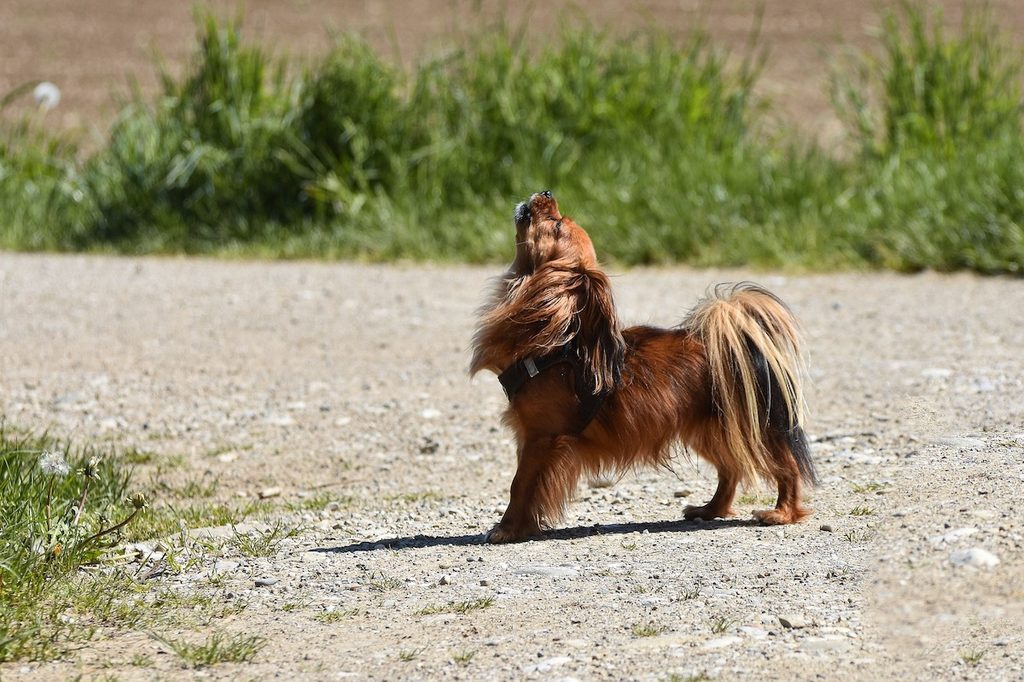
The classic howl goes on for up to 10 seconds and helps wolves to find their packs. Lots of dogs don’t make this noise at all, but you will find some that do. We don’t always know why pups howl, though it certainly tends to happen when they get left alone. Some hunting dogs also use this to signal that they have found the trail. Lastly, if a howling sound, or something similar, such as a siren, alerts your buddy’s ears, they’ll likely join in.
Growl
Nearly all the time, a growl sends a threatening message. We recognize this low tone and probably instinctually back away, realizing that they mean business. Usually, it’s a warning that says to buzz off. However, lots of doggies also growl during play. Don’t worry if that happens because it doesn’t signify that they’re mad — your pet is just completely caught up in the moment. Owners tend to quickly learn the difference between these two similar utterances.
Grunt
When you give a big stretch, you probably let out a few involuntary grunts, and your dog will do the same. He might also grunt when he sees you or changes position. It’s overall a sign of satisfaction.
Pant
Interestingly, the panting sound of playtime isn’t exactly the same as when a dog overheats, even though it seems pretty similar to our ears. This one only happens when he feels excited and enthused about the game.
Sigh
Nothing makes our animals seem more human than when they let out a sigh. As with us, this could happen after they lie down or when they feel perfect contentment. Alternatively, it could express disappointment, probably in the lack of treats coming their way coming their way.
While this guide can help you get a good idea of your pet more generally, every pup pup has a slightly different voice. You will need to learn your own beastie — their barks, whines, and howls — so you can always figure out what they’re saying to you. As you start to know their speech, they’ll pick up on yours as well, until you both understand each other. Once you two have established a common language, you can distinguish every unique sound they make and have a good sense of how they feel. That helps you figure out when they’re hurt or in distress. Pretty soon, you’ll comprehend every bark as if your dog were speaking.