French bulldogs are intelligent, playful, good-natured lapdogs who have won the hearts of Americans with their wiggly butts and adorable bat-like ears. But don’t be fooled into thinking that these cuties don’t need training and discipline. Affectionately known as Frenchies, these are clever dogs with big personalities that can get them into trouble. According to the French Bulldog Rescue Network (FBRN), many Frenchies lose their homes because of behavioral issues such as object guarding or aggression towards other animals. These problems can often be overcome when a Frenchie isn’t allowed to run the household, say FBRN experts.
Frenchies are strong-willed and need a fair amount of training to make them civilized companions, according to experts at the American Kennel Club (AKC). The good news is that they are also people-pleasers, making them easy to train. According to the French Bulldog Club of America (FBDCA), many Frenchies compete successfully in obedience, rally, and agility. Others are certified to work as therapy dogs in schools, nursing homes, and hospitals. Positive reinforcement using treats and praise to reward wanted behavior is the best way to train French bulldogs.
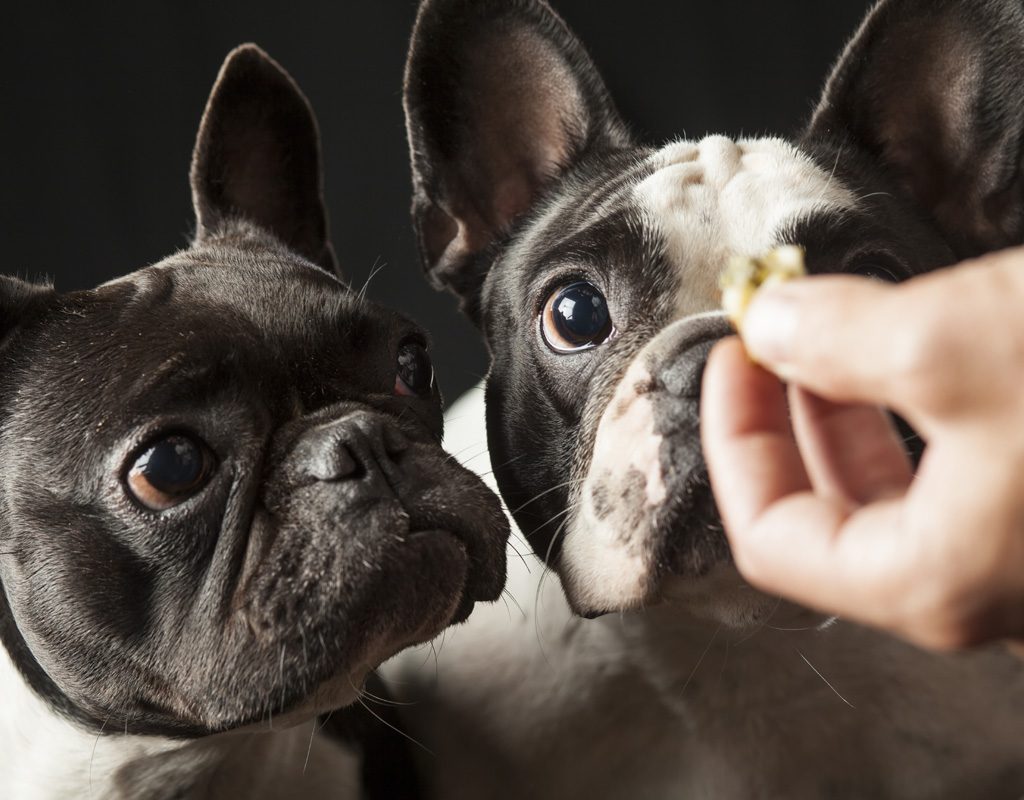
These training treats will make teaching your French bulldog much easier
While treats play an invaluable role in working with Frenchies, it’s important to consider your dog’s health when choosing snacks. According to veterinary experts, obesity can be a significant health problem in French bulldogs and may cause or worsen joint problems, metabolic and digestive disorders, back pain, and heart disease. You can keep your Frenchie’s weight in check by using healthy low-calorie treats. Avoid overfeeding treats by also using praise and favorite toys as motivators.
Following are top-ranked training treats all under 10 calories that will be sure to get your Frenchie excited:
- Blue Buffalo Blue Bits Tasty Chicken Recipe
Real chicken is the first ingredient in these treats. They also include Omega-3 fatty acids to help keep the skin and coat healthy.
- Fruitables Skinny Minis Watermelon Flavor
These treats tempt dogs with the taste of real watermelon and fresh pumpkin. They are free of artificial colors and flavors, and contain natural antioxidants to help keep your puppy healthy.
- Pet Botanics Training Rewards Bacon Flavor
The real pork liver in these treats is the first ingredient. They include a blend of botanical ingredients including green tea, cranberries, peppermint, and chamomile.
- Zuke’s Mini Naturals Peanut Butter and Oats
Peanut butter is the first ingredient in these treats, which also contain berries and savory herbs. They are formulated to provide nutrients and are free of fillers and by-products.
Are French bulldogs easy to train?
In an AKC article Sharon Dykes, a French bulldog breeder and owner, said that this breed loves learning. Training, she says, should start as soon as the puppies arrive in their new homes. It’s important to provide them with activities straight away because otherwise puppies can get into trouble, cautions Dykes, who is also an FBDCA board member. She recommends teaching puppies to sit and walk on a leash along with fun activities like chasing a ball in exchange for cuddle time and treats.
Enrolling your Frenchie in puppy socialization classes is an essential part of his early training. The American Veterinary Society of Animal Behavior says: “In general, puppies can start socialization classes as early as 7 to 8 weeks of age.” Puppies should receive a minimum of one set of vaccines and a first deworming at least seven days before the first class.
How do you discipline a French bulldog?
By the time your Frenchie reaches 6 to 8 months of age, hormones start to kick in and you may see some behavioral changes, Dykes says. If you live in a multi-dog household, your adolescent Frenchie may compete for the position of pack leader. This can result in toy or food stealing or bickering. Punishment is not the way to manage these behaviors. Instead, when disciplining your Frenchie, use a firm “no” when you catch your dog engaged in unwanted behavior. Then redirect your dog to a positive behavior such as asking for a “sit” or a “down” and rewarding him for responding. That puts the focus on the wanted behavior.
In closing, if despite your best efforts your Frenchie is behaving badly, reach out to a professional for help. Good training and discipline involve repetition, positive reinforcement, and consistency, say training experts at Bark Busters. You have to set rules and boundaries, and your Frenchie has to know that you mean what you say. It’s important to remember that you can love your Frenchie and still be a strong positive leader.