
Whether you’re a do-it-yourself kind of dog owner or someone who hasn’t found what they’re looking for, making your own dog harness may have crossed your mind. Sure, there are a number of cute harnesses on the market, but if you have a creative side, those store-bought harnesses just might not be your cup of tea.
If you’re ready to take the next step and are thinking about making your own DIY dog harness, read on. With a little planning and the right materials, you can make a custom harness for your dog. Check out our easy guide below!
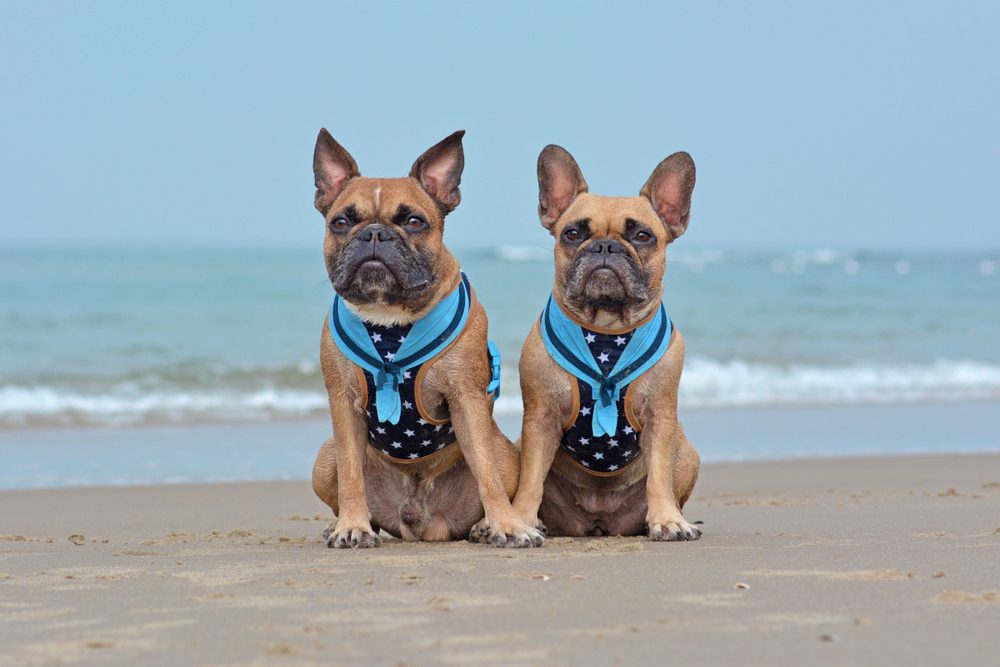
Step 1: Determine what type of harness you want to make
Chances are, if you’ve been thinking about making a harness for your dog, you already know what you want it to look like. If not, take a moment to think about it. Dog harnesses distribute pressure over a larger part of your dog’s body, reducing the strain on his back and neck. But not all harnesses are created equal.
- Decorative harnesses are simply for show, especially if you like to dress your pup up for special occasions (like Halloween) or want her to mirror your fashion sense.
- Functional harnesses are helpful when walking strong dogs or wiggly escape artists. They give you more control and reduce the amount of pressure on your dog’s neck and back.
- Temporary harnesses can be an essential part of your safety gear, especially if you find yourself in situations where you might need to add a measure of security to your dog’s collar and leash.
Step 2: Determine what material to use
Once you know which type of harness you want to make, think about the materials you want to work with.
- Fabric and yarn are good materials for making decorative harnesses. Places like JoAnn Fabrics and Michaels carry seasonal and everyday varieties of these materials, as well as patterns you can use to fashion your own creations.
- Nylon webbing and paracord are better options for those wanting to make a sturdy, functional harness.
- Rope (approximately four times the length of your dog) is a good material to carry in your backpack should you need to make a temporary harness.
Step 3: Measure your dog
Whether you’re making something decorative or functional, it’s important to make sure it fits correctly. That means taking accurate measurements of your dog’s neck and chest before you get started.
To measure the circumference of your dog’s neck, find her shoulder blades and measure the circumference of her neck just above them. To measure your dog’s chest, measure her body at her widest point.
Step 4: Gather your supplies
There’s nothing more frustrating than getting halfway through a project only to realize you’re missing a critical element, so make sure you have everything you need before you begin.
For illustration, we’ll walk you through the steps needed to make a nylon webbing harness. For this project, you’ll need:
- Nylon webbing. This comes in a variety of widths and colors, so be sure to choose the width that’s right for your dog. Consider using ½ inch to ⅝ inch for smaller dogs, 1 inch to 1.5 inches for medium-sized dogs, and 2 inches and wider for larger dogs.
- Metal D rings (2) and triglide slider (1). Make sure to purchase rings that will accommodate the width of your nylon.
- Side-release buckle appropriate for the width of the nylon webbing
- Scissors
- Chalk or tape
- Sewing machine or needle and thread
- Optional items: decorative trim and a lighter
Please note: This harness is not suitable for a strong dog with pulling issues.
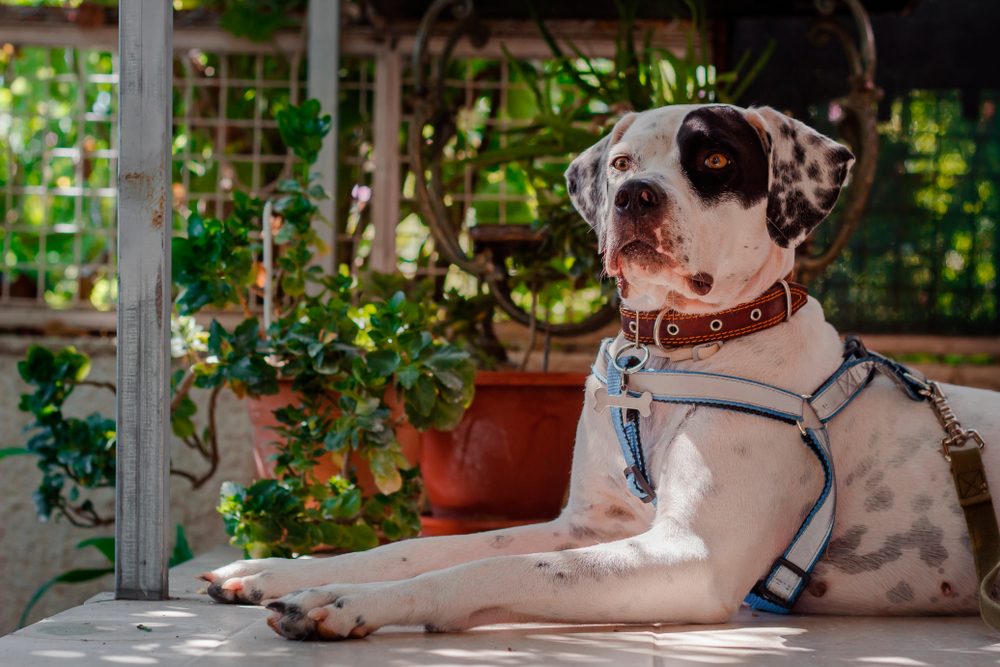
Step 5: Start creating!
Now you’re ready to begin. Decorate your nylon webbing with the trim of your choice before you begin sewing. If you’re so inclined, choose a contrasting color of thread to add extra personalization. And remember, reinforce all stitching with a zigzag or box stitch.
First, cut a length of nylon webbing equal to your dog’s chest measurement. (If you want to prevent fraying, lightly singe each end with the lighter.)
Loop one end of the webbing through the middle of the triglide slider, fold it over and sew it together. Loop the other end of the chest strap through the middle of one side of the buckle, then back through triglide slider, and through the other end of the buckle. Fold the end of the chest strap over the buckle and sew it together.
Make sure the completed chest strap fits by putting it on your dog and adjusting it to fit snugly, with a two-finger space between your dog’s body and the strap.
Second, slide the buckle underneath your dog. With your chalk (or tape), mark each shoulder. This is where the ends of the front strap will attach.
Third, cut a length of nylon webbing the length of the neck measurement, fold it in half, and mark the halfway point with chalk or tape. This is your front strap. Slide a D ring to the halfway mark and tape it in place. Cut a 1-inch to 2-inch piece of webbing and sew each end securely to the other side of the strap to lock the D ring in place.
Fourth, sew each end of the front strap to the markings on the chest strap. If your dog is still growing, secure the front strap to itself by folding it over the chest strap. This will allow the front strap to slide along the chest strap as your dog grows. If your dog has finished growing, secure the front strap directly to the chest strap at the markings.
Finally, now that your harness is complete, add the final D ring to the chest strap. Cut a strip of webbing twice as long as the width of your nylon, add ¼ inch to ½ inch, and thread it through the D ring. Sew the loop to the center of the chest strap as marked, sewing one end to the top of the strap and the other end to the opposite side.
Time to strut your stuff!
Congratulations! You’ve just created a custom-tailored harness for your dog. Before you set out on a walk to show off your new creation, make sure your dog is wearing her collar and identification tags, too. Walk with confidence, knowing your dog is safe and comfortable, and be prepared to get stopped by passersby who can’t resist commenting on your dog’s adorable DIY harness.