Bringing home a new puppy is such an exciting time, so make sure to enjoy every minute of it! The truth is, though, not every minute will be easygoing — you’ll be introducing a young dog to many experiences for the first time, after all.
When can you take a puppy on a walk? Puppies walk well at slightly different ages depending on several factors, but there’s more than age to consider when taking your pup out for his first walk. Keep reading to learn everything you need to know about walking a puppy: the best gear, training tips, and more.
Make sure your puppy is vaccinated
Although every dog matures at their own rate, there are a few milestones a puppy should reach before venturing out into the world. Most importantly, are they up to date on all shots? According to Doyalson Animal Hospital, pups should be at least two weeks past their first dose of vaccines, which are generally received at 6–8 weeks old, before going out for a walk.
Until getting their booster shots at 12 and 16 weeks, avoid grasses, wooded areas, and spaces with other dogs (viruses and bacteria all love it here). After all three doses, and at your vet’s discretion, your puppy can start exploring parks and other fun places.
Have the right gear
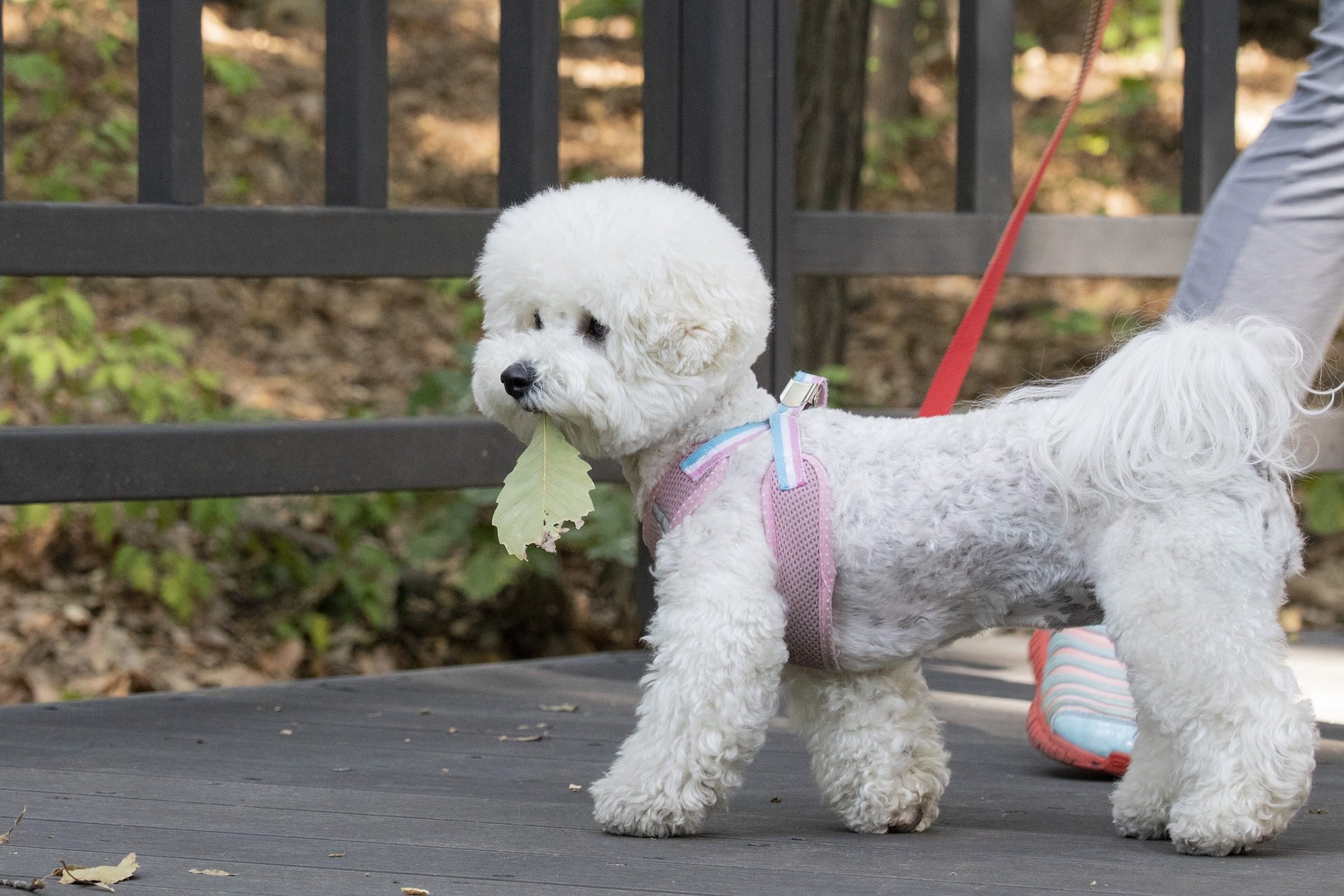
Your puppy may be small, but he needs to be kept secured on a leash when out for a walk. You may think you have the upper hand on him, but anything can happen. To be safe, invest in an adjustable harness that can grow with your puppy, as well as a high-quality leash and collar. It’ll take your fur baby a while to get used to wearing anything new, so be patient! Let him try on his harness, collar, etc., for a few minutes while you’re chilling indoors before you graduate to the real thing.
A poop bag holder makes cleaning up after your dog even easier, while a portable water bowl lets your pup stay hydrated anywhere you go. Some puppies need a little extra motivation while out and about, so a treat holder for your dog’s leash will be your best friend.
Don’t overexert your pup
As one can imagine, puppies can’t walk quite as long as their older counterparts can. At the same time, the American Kennel Club notes, no two dogs have the same tolerance for exercise whether or not they’re the same breed or age. When in doubt, shorter bursts of exercise multiple times a day will be less exhausting for your puppy.
Purina reminds pet parents of a good rule of thumb when it comes to walking puppies: The duration of the walk should be five minutes for every month of age your fur baby is. For example, a 3-month-old dog should have 15 minutes of exercise at a time (two times a day is ideal), while a 7-month-old will probably be up for a 35-minute workout.
Pick the mildest time of day to walk
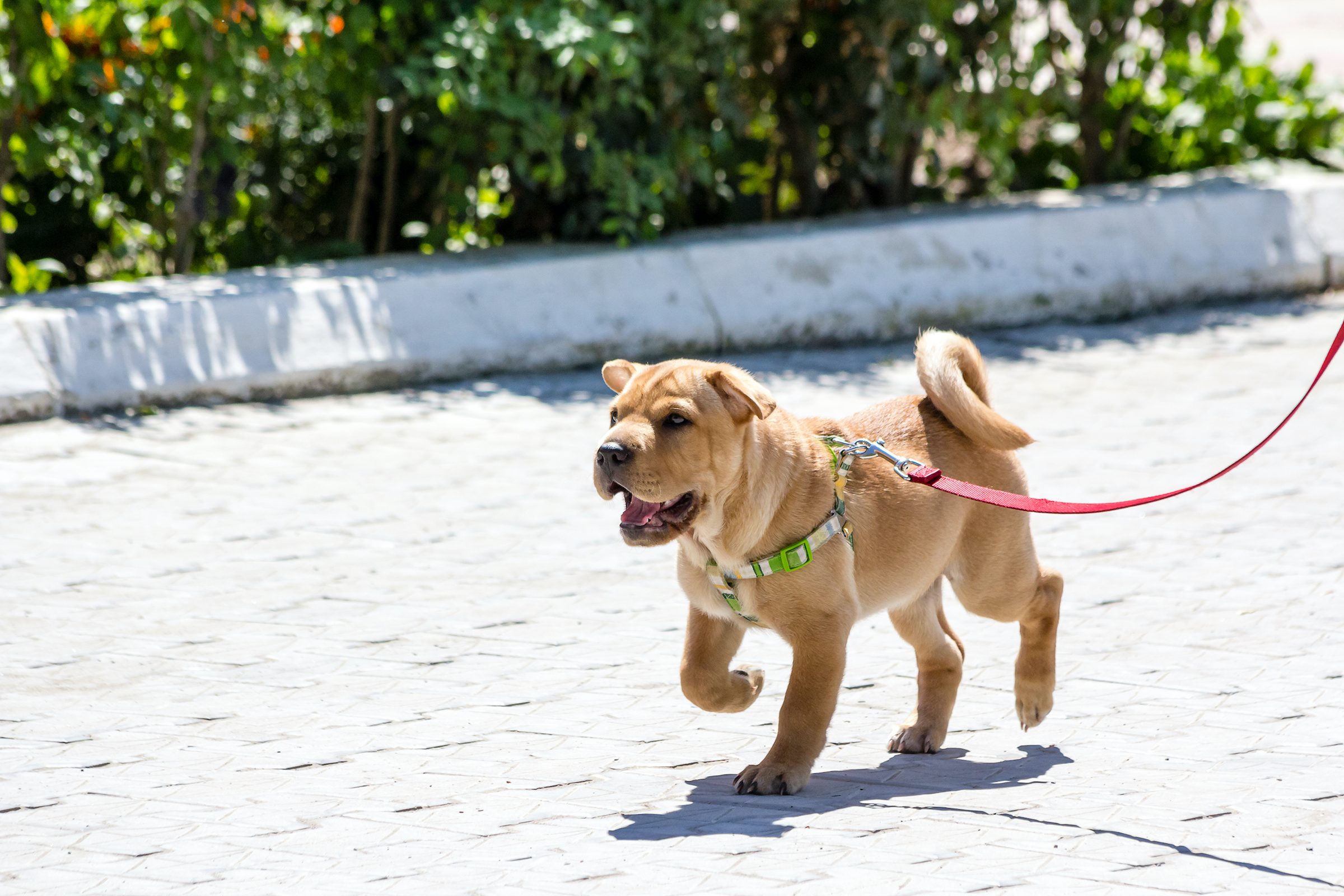
You wouldn’t want to go for a walk in the blistering heat, would you? Neither would your pup! Keep him in mind when you decide when to go out since the concrete underfoot can be even hotter than the air around you. On the other end of the spectrum, dogs, especially those who have short coats, can be permanently injured by cold exposure.
Although most pet owners don’t live at the North Pole or in the Sahara Desert, it still keeps your dog a lot more comfortable to take walks at the mildest part of the day. If you’re avoiding heat, try walking first thing in the morning or after dinner in the evening, but if you’re trying to stay warm, a midday walk will be your best bet.
Use walks as training
When taking your puppy on his first walk, you won’t have much of a choice but to use the time to train him. One way or another, he’ll need to know you’re in command when the leash is on, but it’s easy to get caught up in his excitement and let him take the lead.
If you’re already training your pup, incorporate obedience commands to help him get in the right mindset. And don’t give in to pulling! Stop where you are when your little one starts to pull, then continue on your way once he has relaxed. Bringing along your pup’s favorite treats is a great way to keep him focused, especially if he’s food motivated for training, too!
Whether or not it’s your first time introducing a puppy to his leash and harness, it can be tricky to know what’s waiting for you. Luckily, now that you have all these insider tips, you can better expect the unexpected. You know what tools you need and what mindset to have — from here on, all it takes is practice, practice, practice!