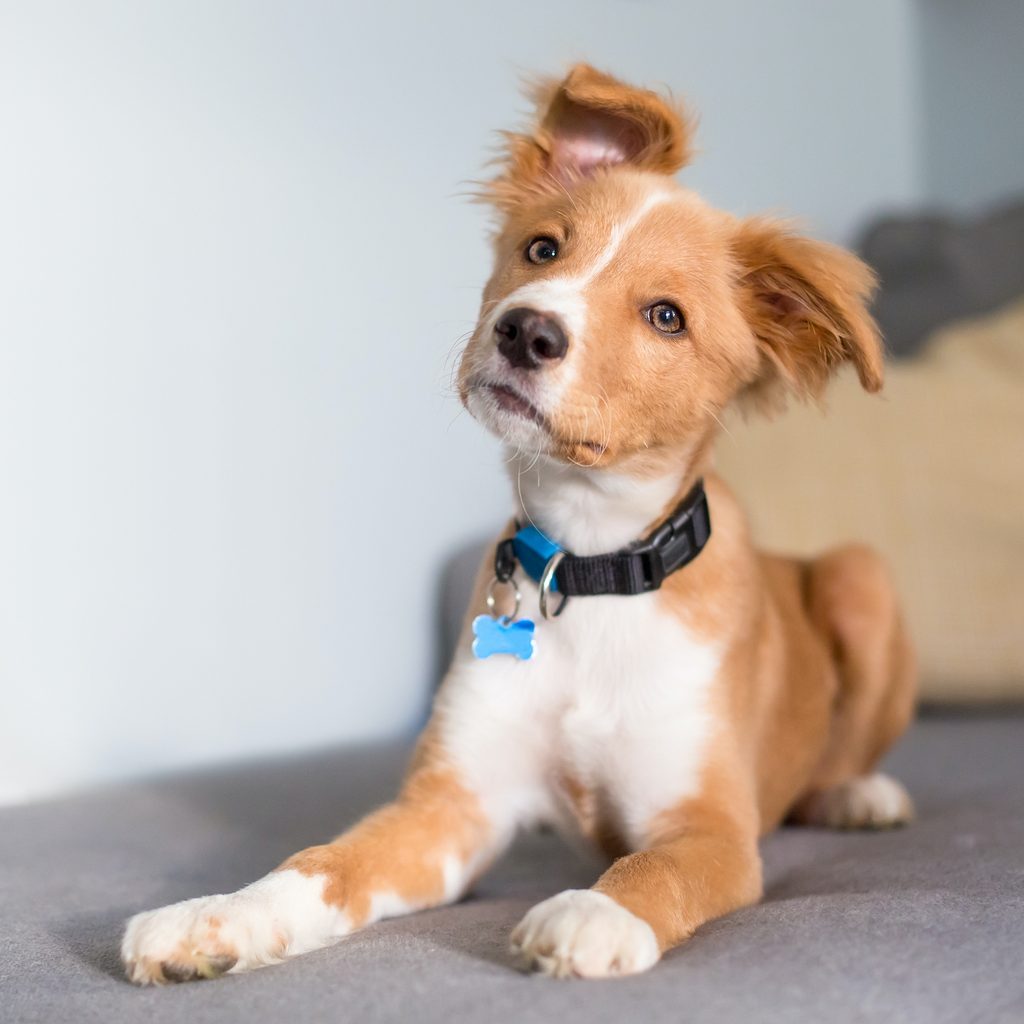
Ah, the head tilt — is there anything sweeter? There’s no way to hold back a smile when your pup perks up their ears and leans their head to one side. It seems so much like they’re listening to your every word when they look at you that way, but why do dogs tilt their heads? Could it be a problem with their ear health? Or is it as quizzical and curious as it seems?
You’ll be happy to know that science, so far, says yes. There are several reasons why dogs tilt their heads, most of which have to do with the ways they see, hear, and communicate, so read on to learn how to determine what your dog’s head tilts mean. Odds are, they’re totally trying to hear you!
Here’s what you need to know.
Why do dogs tilt their heads?
So what’s behind this adorable behavior? When you’re not talking to your furry friend or squeaking a toy for their attention, these are some of the reasons why they may offer a head tilt or two:
Improved directional hearing
When considering the anatomy of dogs’ ears, it’s important to remember that canines have pinnae, or ear flaps, that partially or completely cover their ears, according to VCA Hospitals. Pups who perk their ears are lifting these flaps to let as much sound in as possible. Head tilts help accomplish the same thing by repositioning the head.
When a dog tilts their head in response to a sound, it’s likely they’re giving themselves the best chance to hear. VCA Hospitals notes that they may cock their head in the direction the sound is coming from, or they may turn their whole head (or even body) around to face the sound directly.
By optimizing their sound input, dogs can also determine how far away a sound is. They do this by noticing how long the sound takes to hit one ear, then the other.
Clearer vision
Dogs with longer snouts may tilt their heads as a way of getting a better look, notes Dr. Stanley Coren, PhD. His research found that greyhounds and other breeds with longer noses engaged in head-cocking behavior more frequently than flat-faced breeds, though canine behaviorists believe more research in the field is needed.

Why do dogs tilt their heads while looking at you?
When communication is considered, there can be many more factors that result in the cutest of head tilts.
Concentration and memory recall
A recent study led by the animal behavior team at Eötvös Loránd University picked up on a pattern between doggy head tilts and memory recall. They found that ‘gifted’ dogs (dogs who could learn and remember the names of toys) tilted their heads about 42% of the time when being asked to retrieve a toy they recognized. The researchers hypothesized that the head tilt is linked to mental processing, especially since all of the dogs completed the task they were asked to do.
To show you they are listening
VCA Hospitals notes that, since a dog’s ear muscles are controlled by the same part of the brain that governs facial expressions and head movements, there is likely to be some overlap. “So, when a dog cocks his head to the side, he is trying to hear your words, understand what you are saying, and let you know that he is concentrating on you.”
Because you respond to it
Didn’t think this could get any cuter? Think again! Many dogs notice how you respond to their head cocking, and this could very well encourage them to keep doing it. Think of it like positive reinforcement — if you praise your pup, or even give them attention for a sweet head tilt, they’ll be quick to repeat this behavior.
When to worry about a head tilt
While the occasional, responsive head tilt isn’t anything to worry about, a constant tilt, especially one that’s new, can be something that warrants a trip to the vet. According to VCA Hospitals, an infection of the external ear canal can cause itching, pain, and an occasional tilt, while middle ear infections may result in a more constant tilt. You may also notice pawing at the ear.
In very rare cases, a constant head tilt to one side can be a symptom of a neurological disorder. Your veterinarian will be the best person to examine and diagnose your pet if you feel like there’s an issue, and it’s worth keeping an eye out even if your pup offers a tilt or two without any sound present.
Don’t worry, though — head tilts are generally completely safe… and completely adorable! You can take comfort in knowing that your dog really is listening closely and showing you they care, and feel no guilt in enjoying the sweet, quizzical look of the canine head tilt. It’s a classic!