There's nothing better than stroking soft rabbit fur, especially because they typically keep it quite clean. Contrary to popular belief, rabbits aren't dirty animals at all. One of the reasons bunnies make such good animal companions is because, just like cats, ferrets, guinea pigs, and rats, rabbits can be trained to use a litter box. Best of all, they tend to use the same location in their enclosure as a designated bathroom — generally one of the corners — which makes potty training this furry friend a relatively simple process.
Older rabbits are easier to potty train than younger rabbits, as their ability to learn — and their attention span — increases with age. Babies are the hardest to teach, but with persistence and patience, you’ll be able to make the training stick. Curious about how to litter train a rabbit? We’ll walk you through what you’ll need, and we’ll share six useful training tips.
Supplies you need to litter train a rabbit
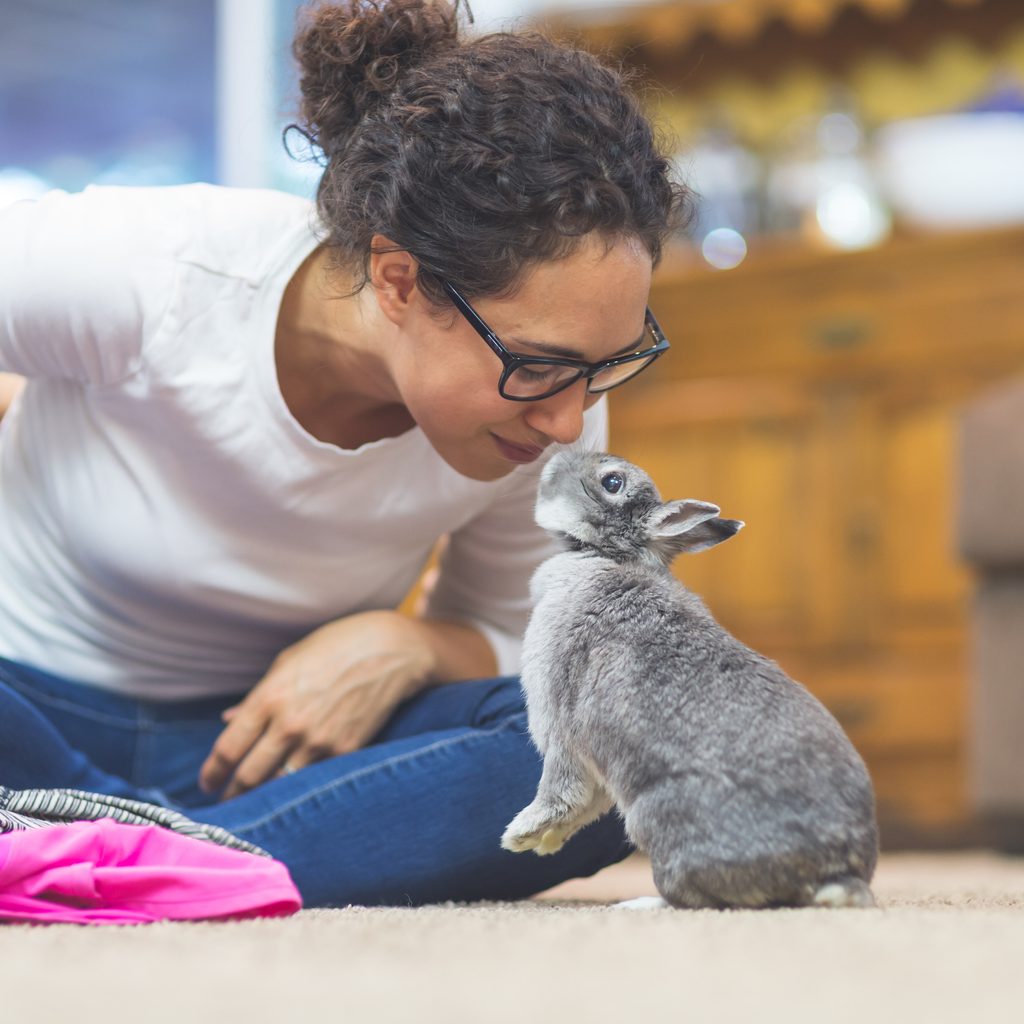
Figuring out how to potty train your cottontail doesn’t have to be difficult. Before you begin, make sure you have the right supplies:
- Cage: First, you’ll need a cage to limit your rabbit’s ability to roam during litter training. You can let your bunny hop freely again once she’s properly trained, but keeping your rabbit confined during the early stages of the process helps her learn faster, and it drastically cuts down on messes you’ll have to clean up if you leave your little guy unchecked.
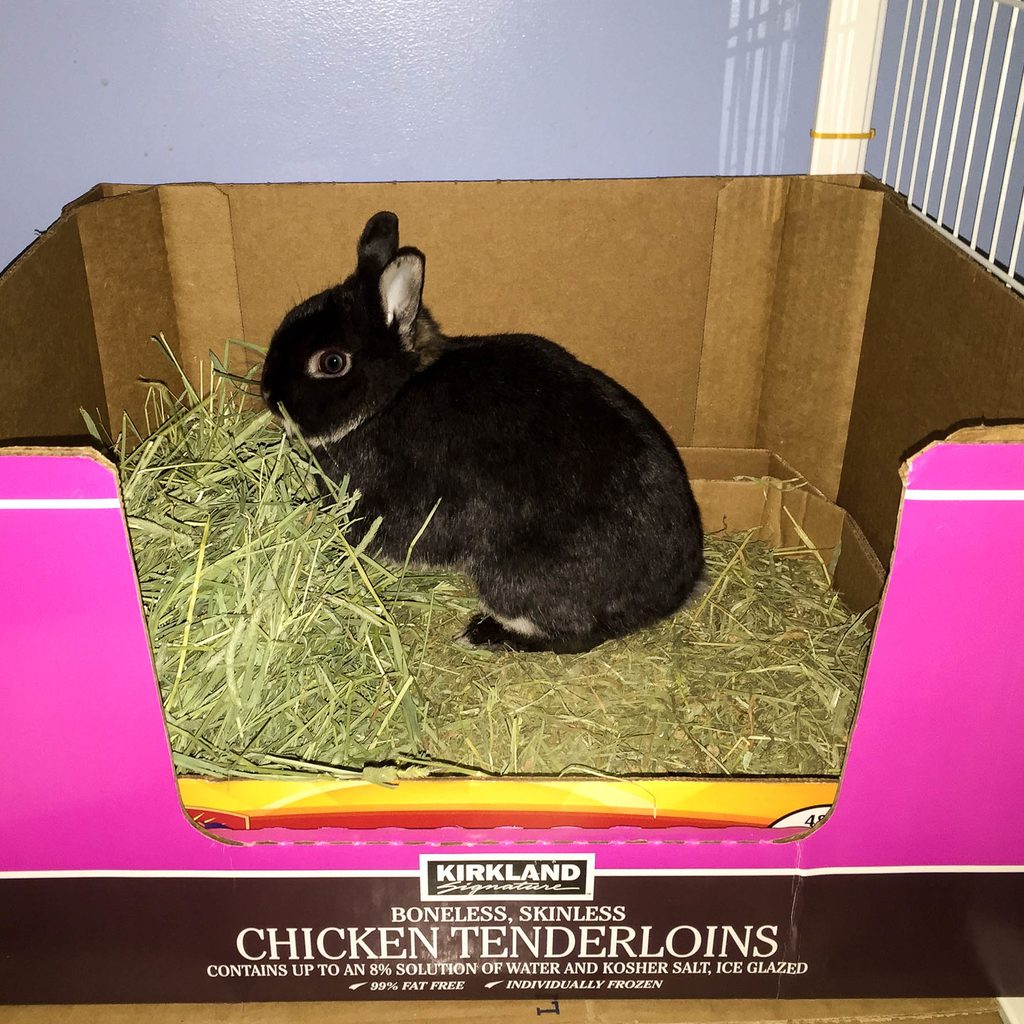
- Litter box: While you can buy litter boxes specially made for rabbits, they’re often too small for your furry friend to use comfortably, especially if you’re training an older rabbit. Your bunny should have plenty of room to move around, but the sides of the container can't be too tall for her to hop over. (You can always cut out a doorway if needed.)
- Litter: Avoid using wood shavings, clay-based litter, and clumping litter. They can harm your rabbit’s respiratory tract. Recycled newspaper litter is a wonderful option for bunnies, and it helps cut down on odor. Unlike cats, bunnies don’t bury their poop under the litter, so you’ll need to fill the box with only a thin layer of shredded newspaper to absorb urine. (You’ll have to empty the litter box fully each time you clean it, so using a thin layer stops you from going through it so quickly, saving you money in the long run.)

How to potty train a rabbit
Step 1: Line the floor beneath the box, because even the best-trained rabbit can have accidents.
This makes cleanup easier, not to mention, it protects your flooring from stains.
Step 2: Use food to encourage your rabbit to use the litter box.
Rabbits are funny little creatures in that they prefer to eat while they poop. Place a bundle of hay on top of the litter. The scent of one of their favorite noshes will be irresistible, and your bunny will be much more likely to use the litter box.
Step 3: Teach your rabbit to use the box.
If your bunny insists on going potty outside her litter box, absorb the urine with a paper towel, pick up the poop, and place both items in the litter box. This helps your bunny accept the idea that the box is where she should potty from now on.
Step 4: Move the box to your rabbit’s favorite place.
Does your rabbit insist on going potty in the same corner? Try setting the litter box there. Sometimes it’s better to let your rabbit tell you where she wants to go rather than try to force the issue.
Step 5: If your rabbit urinates and leaves droppings throughout your home, have her spayed.
This is the best way to stop it. Spraying is a territorial behavior, and spaying (or neutering) rabbits curbs the instinctive desire to mark their territory.
Step 6: Learn your rabbit’s "I’m about to use the bathroom" body language.
If she lifts her tail or shifts into a seated position before going potty, scoop her up and put her in the litter box. Accidents may happen, but it’s one of the fastest ways to train any animal to use its designated bathroom space.

Tips to consider when litter training a bunny
Step 1: Prepare for trial and error.
Bunnies can be more finicky than cats when it comes to their litter, so you may have to try out a few combinations before getting the litter box just right. Start with around 1 inch of your chosen litter and cover it with rabbit-safe hay.
Step 2: Protect the area.
Rabbits aren’t as precise as cats, so invest in a tough rubber or plastic mat to go underneath the box. Ensure it’s thick enough that your rabbit can’t chew through it. You’ll have an easier time mopping up small accidents, and you’ll also keep excess hay or litter out of your carpet.
Frequently asked questions about litter training rabbits
Why do I need to use hay?
Rabbits love to nibble on hay and poop at the same time. Placing hay on the litter or in a hay feeder directly beside the litter box will encourage pooping in the right place.
How much litter should I use?
Since you dump the box each time, you don’t need much litter. Cover the bottom of the box up to an inch to absorb wetness as your bunny urinates.
My bunny was litter trained but is forgetting good habits. What do I do?
Needing to retrain your domestic rabbit throughout its life span isn’t uncommon. Simply limit your buddy’s space until good habits return. Go through the steps again if you need to.
My bunny is going to the bathroom on my furniture. What do I do?
It’s best to place your litter box where your bunny likes to go to the bathroom, but if that place is on your furniture, it’s a different story. Your rabbit is showing you who’s boss. That’s an entirely different training question than litter box training. Keep up with your litter box training even while you address this second issue.
Litter training rabbits can take time, especially if you’ve adopted an older rabbit who was never trained to use a designated space to go to the bathroom. Fortunately, rabbits are clever creatures, and with time, patience, and effort, they can be taught to use a litter box.