Bonding with a pet who loves you is one of the joys of life, no matter the species. For some, though, it can be challenging to tell whether your pet is showing affection, especially for owners of animals whose body language isn’t as widely known. You’ll know a happy dog from its relaxed stance and wagging tail — but how do you decode a bunny’s body language?
If you’ve ever wondered, “How do rabbits show affection?” read on to find your answers. Like most small mammals commonly kept as pets, rabbits are able and often eager to bond with their people. In fact, rabbits are known to get bored and even depressed from a lack of social interaction (via Indiana House Rabbit Society), though this interaction will look a bit different than that of a cat or dog. You might be surprised to know what subtle behaviors are really signs of love.
Cuddling
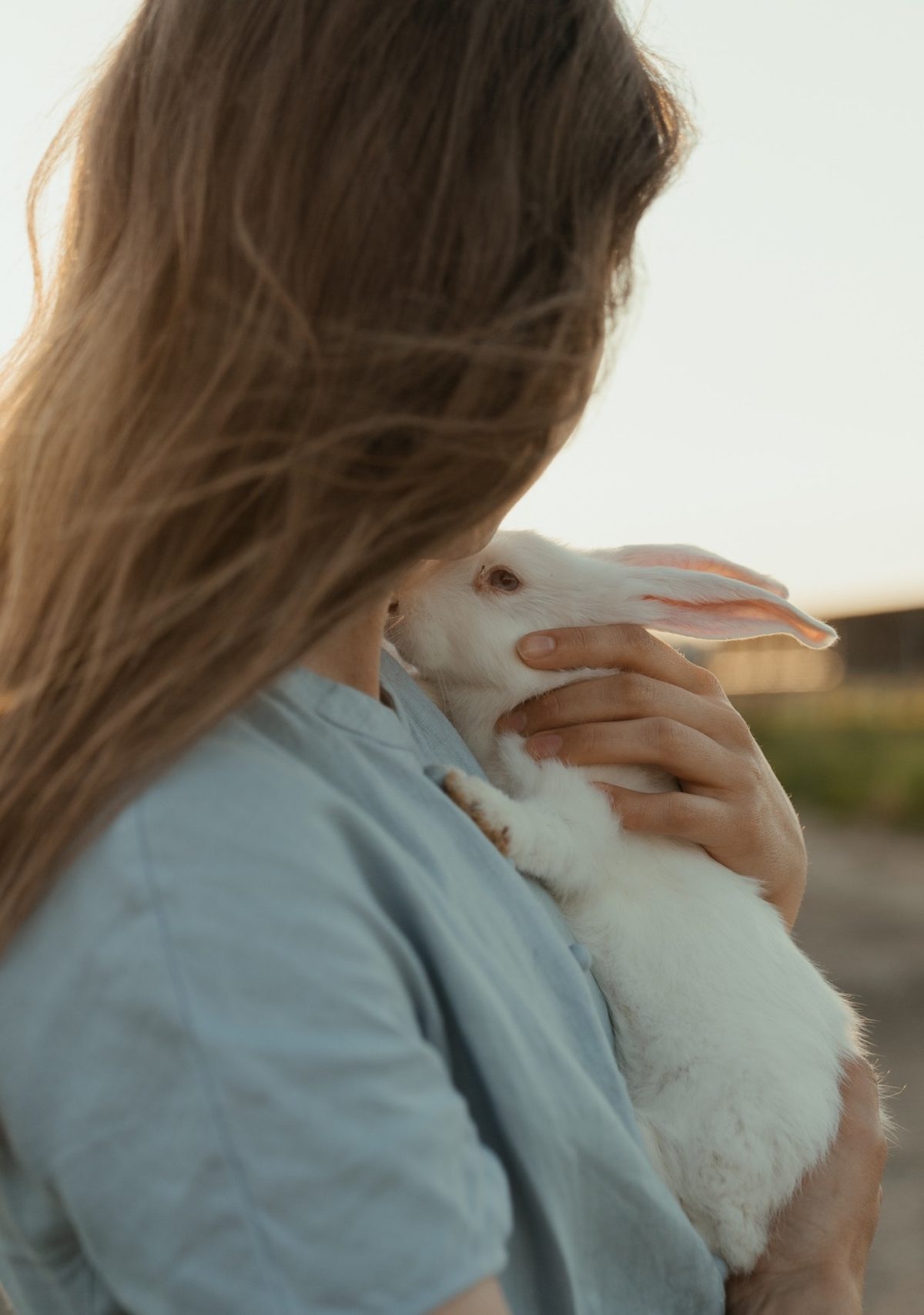
Many rabbit owners ask themselves whether rabbits like to be cuddled, but the answer will vary from pet to pet. It will also depend on how you define cuddling! For most rabbits, it’s uncomfortable and distressing to feel restrained by hands or arms, even those of the people who feed them. “Feeling restrained is very challenging for a prey species whose main coping strategy is to run away from potential threats,” explains Rosie Bescoby, animal behaviorist. “That’s why our normal tactile signs of affection can sometimes backfire.”
If your rabbit somehow does enjoy being swaddled or snuggled, consider yourself lucky! When you hold him, make sure to support both his front and hindquarters to avoid injury or stress to either of you (but mostly the bunny). If your fuzzy friend doesn’t like to be cuddled, however, don’t fret. There are many other ways to bond with your animal, and several subtle ways bunnies can show you affection without a full-on hug.
Binkying
If you’re really, truly blessed, you’ll get to witness a bunny binky. Binkying is a little flip or hop for joy in which the rabbit twists around in the air before landing. They might binky once while running or several times repeatedly. This is a sign of happiness and comfort — a rabbit won’t binky when they feel vulnerable. Some bunnies just don’t binky at all, which isn’t a sign of anything negative. Sometimes rabbits who roam free won’t feel energy bursts quite as significantly as one who’s been in their hutch all night.
Chinning
Here’s one behavior that may not look as obvious as the others. As if rabbits couldn’t get any cuter, they often place or rub their chin on others they love (via Kaytee). Think of it like a cat rubbing against your leg; it’s a way to claim you as theirs — by getting their scent on you, that is! Rabbits have scent glands located on their chin, but it’s totally OK if you’d rather just pretend they’re cuddling.
Licking
Nope, your rabbit isn’t licking you for the salt of your skin (though a salt and mineral lick will benefit both his diet and his teeth). Licking is a bunny’s way of grooming, whether they’re focused on themselves, another rabbit, or a person. Rabbits tend to groom only those they’re bonded with, so consider yourself honored if your pet starts to lick. Sometimes, licking will be just as much of a request as it is a sign of affection. Odds are, they’d like a little love back!
If your bunny really gets going, you might even get a little love nip, though he doesn’t intend to hurt you with a bite (via Rabbit Source). It’s just another — albeit painful — way of grooming you.
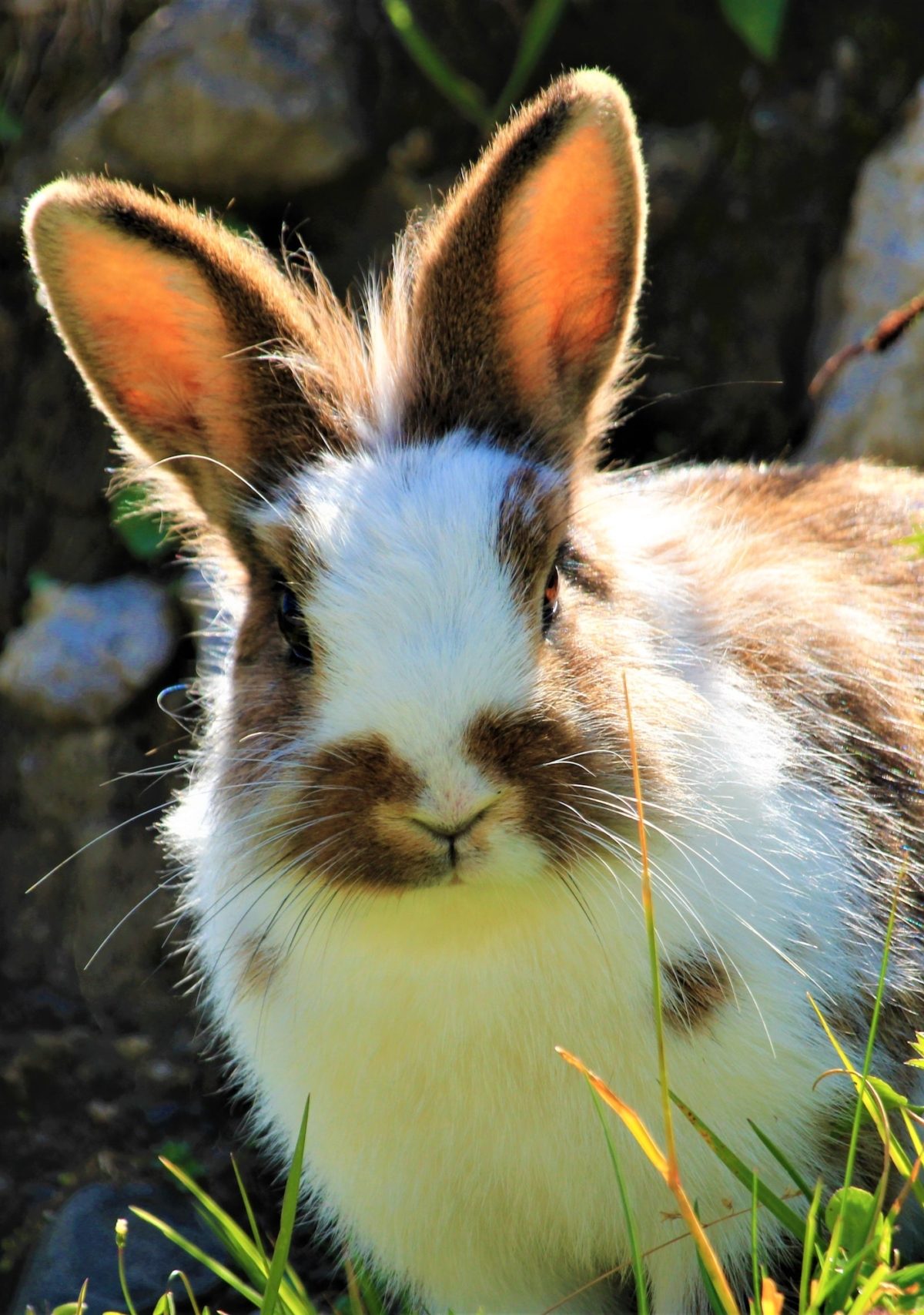
Flopping
A rabbit who is flopped out on the ground is truly, wholly relaxed. While it may not be a display of affection, it certainly is a way to let you know that he feels safe and content around you (via PetPlan). In the wild, bunnies use running as their main form of defense, which means, as a prey species, they’re often on high alert. A rabbit who’s lying down isn’t poised to run, or even on the lookout for danger.
Still, don’t take advantage of your bunny’s relaxation. To encourage the trust required for your bunny to flop in your presence, don’t break his trance! If he’s not in the mood, your rabbit might even find petting to be a bother, so experts recommend just sitting near him to show him you’ll respect his space.
Do you have a happy bunny on your hands? From chinning to flopping, there are so many ways to tell. Watching for body language like this is a great way to gauge your relationship with your rabbit from moment to moment. Plus, how cute is it to know your bunny is happy and asking for some affection? As subtle as his signs may be, it’s gratifying to know that your rabbit feels safe enough with you to show some of these behaviors. That’s how you’ll know he loves you.