  1. Home
  2. Other animals
  3. Evergreens

Try these tips to make the perfect DIY bird toys for your pet at home

You can easily create new things for your bird from everyday items

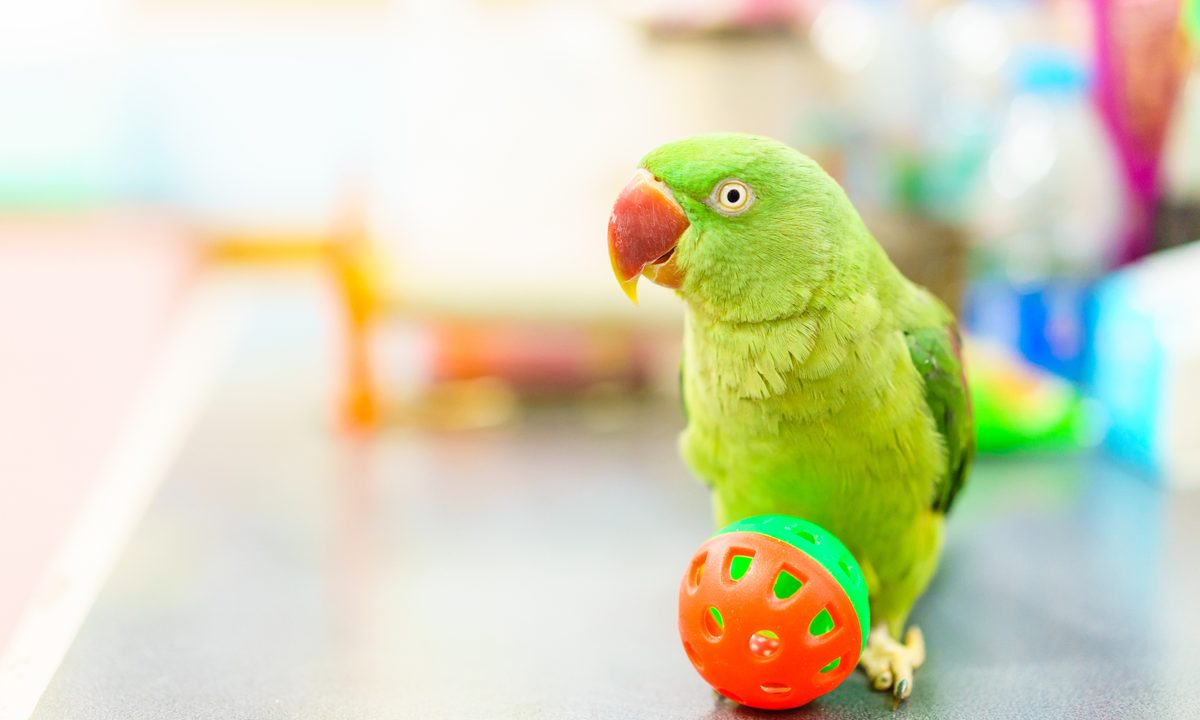
Alexandrine Parakeet, Green parrot with red mouth playing ball on the table
sommart sombutwanitkul / Shutterstock

In many ways, owning a bird is very different from owning a cat, dog, or hamster. For starters, we guess you’d be pretty surprised if you found your calico flying around the room. But in some ways, all pets are the same, especially when it comes to toys. Birds, like all of these others (and us too, of course), love to play. In fact, your avian perhaps needs even more mental stimulation because they’re so smart and social.

While you should keep your animal company much of the time, they will also enjoy playing games on their own or with their cage mates. Don’t want to shell out more cash for easily destroyed toys? Find out more about how to make DIY bird toys and try out a couple of these commonplace items to engage your bird.

Recommended Videos

What do birds like to play with?

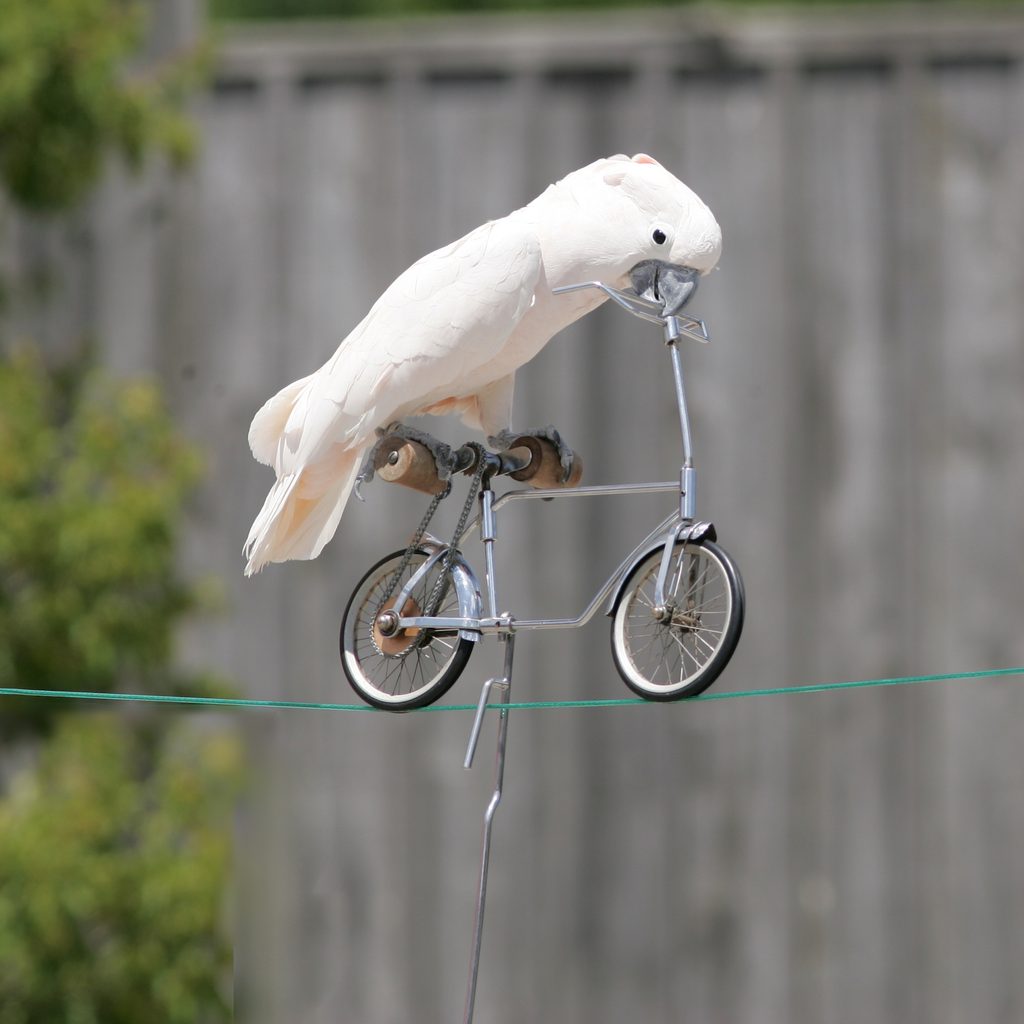
Bird rides a bike on a clothes line
glen gaffney / Shutterstock

Even in the wild, you might find birds picking at string or diving toward shiny objects. They love to have fun by discovering exciting new things. Our feathered friends are also prone to destruction and may rip apart even their number-one pick, so let them have toys they’re free to tear up.

If you direct their destructive energies into cheap toys, you’ll avoid having your curtains or furniture played with. Make sure you monitor their actions to avoid any choking hazards, but otherwise, encourage their reign of terror over shredded paper.

How do you make bird toys out of household items?
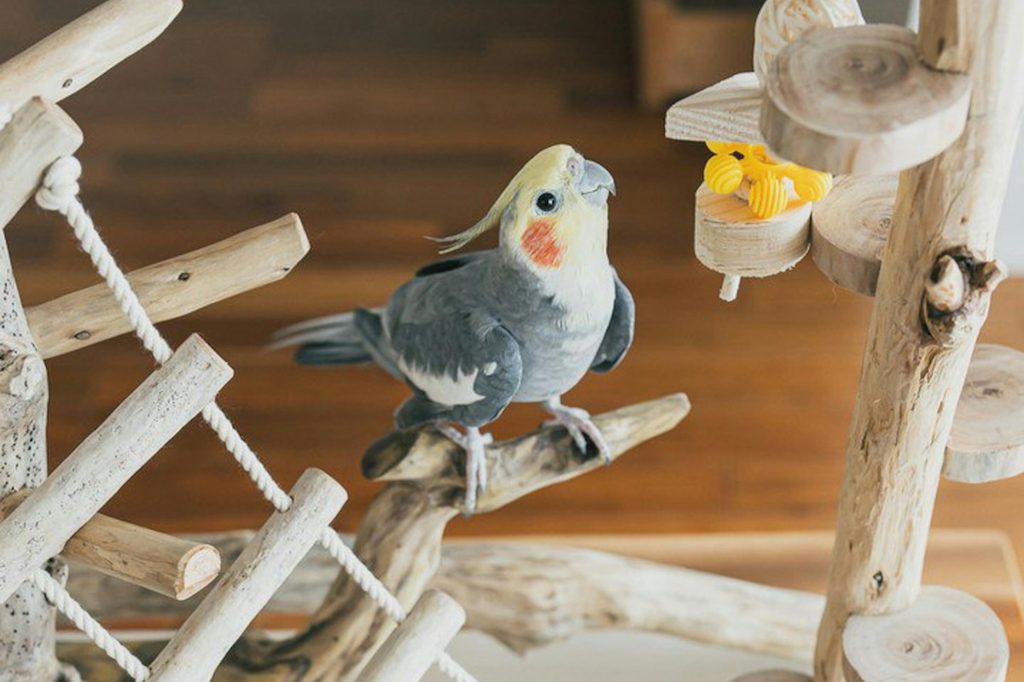
A pet bird playing with wooden toys
Zander_world14 / Pexels

You likely already have a few of their favorites lying around: rope, branches, cloth, pinecones, paper, and coconut shells. For some of these, you can set them in the cage and let them take the lead. Just be sure you don’t give your bird anything unsafe.

Rope will make a good swing or “chew” toy, though it can also pose a hazard if there’s a possibility of them getting caught up in it. Branches similarly will bring in bugs or other parasites if you just pick them up from outside. You can order these items specially made for birds, or you can simply pass along items like old wooden spoons that you no longer need. Gather a pile of materials that you imagine might make a good toy, or pieces of one, and start planning out your designs. 

How do you make homemade parrot toys?
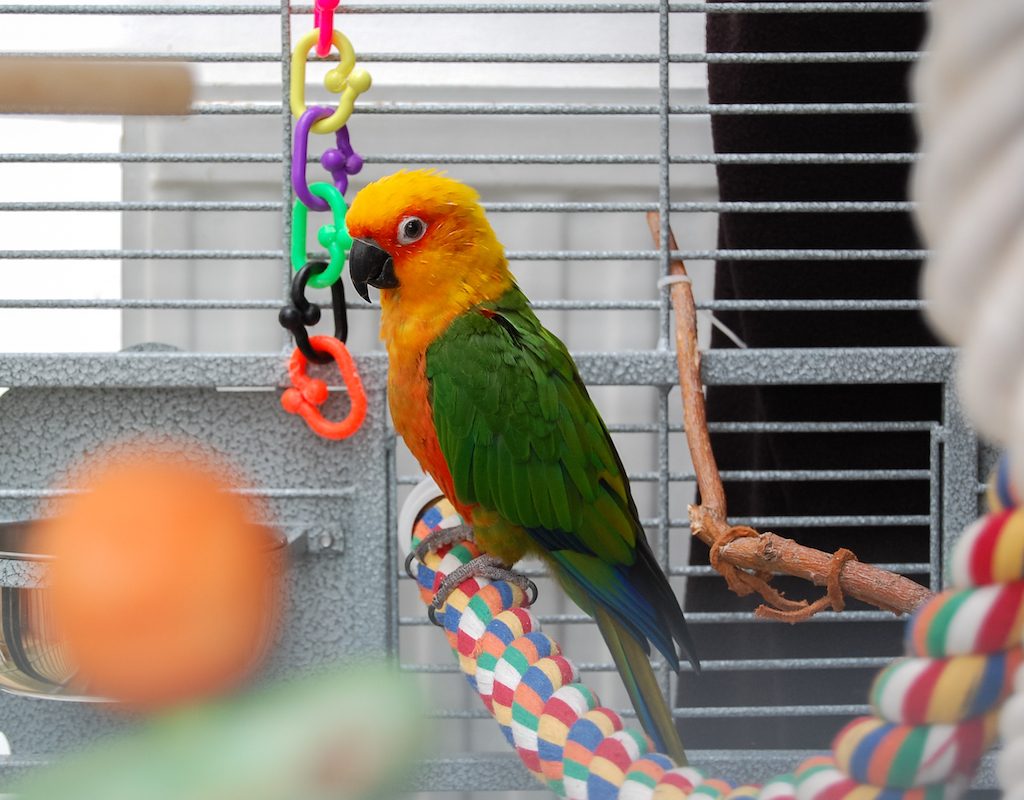
Bird sits on rope and looks at toys in his cage
Linda Bestwick / Shutterstock

Now that you have your ingredients, it’s time to build a few things for your birdie. A mirror attached to the cage will keep your avian occupied for hours while they size up themself. Also try a food toy, like a pine cone dipped in seed and berries (use peanut butter as your glue, not honey; honey is bad for birds).

Get clever by hiding food or tying it to a string just out of reach to force them to think critically to get at the treat. Consider throwing in straw or hay to keep your bird’s beak busy. There are almost endless possibilities once you gather all the potential building blocks from your home. 

What shouldn’t your bird play with?
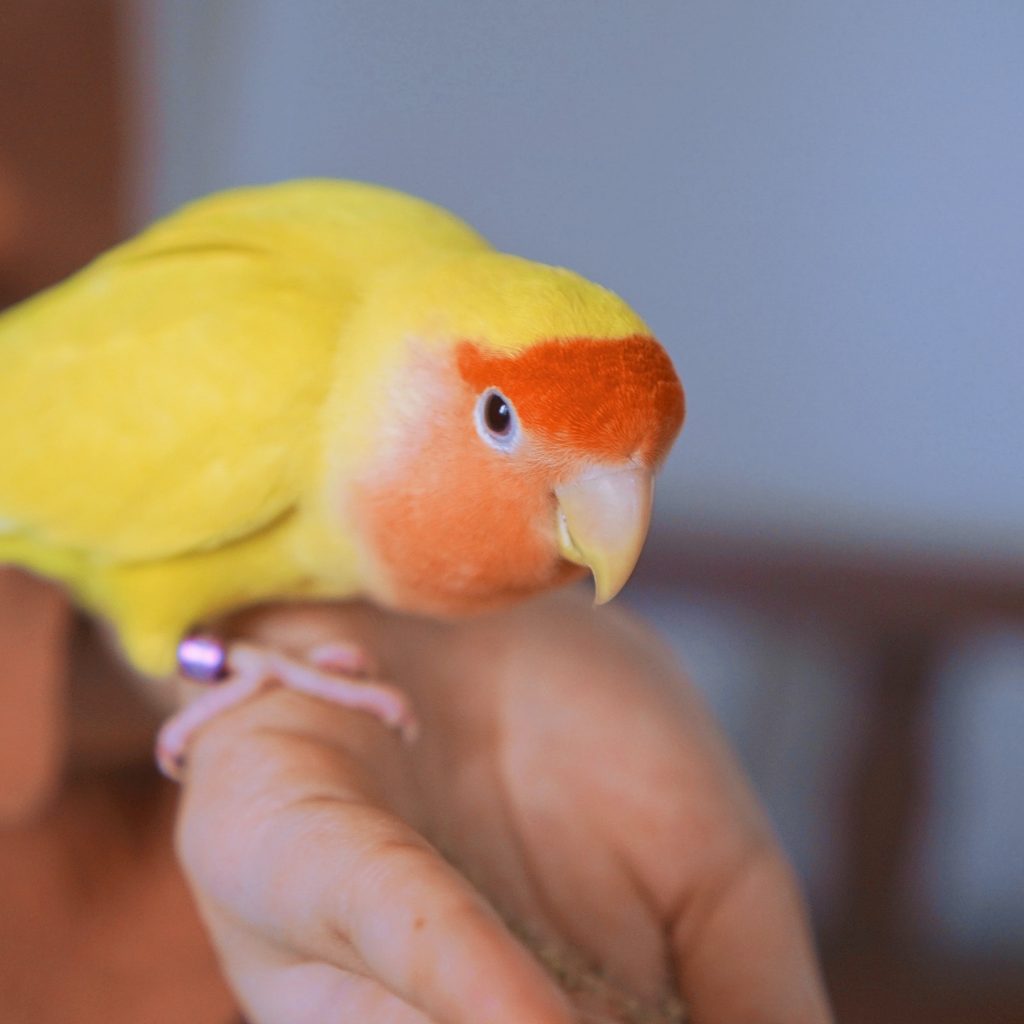
Bird perches on owner's hand
MF Evelyn / Unsplash

Even though we’re sure you’ll find a lot of good playthings, you don’t want to introduce any unsafe materials to your bird’s home. Stay away from plastic, especially any small pieces that they might accidentally swallow. Additionally, thin plastic (such as a bag or cling wrap) could suffocate them.

The same goes for aluminum foil or other small metal bits you don’t want mistakenly ingested. Any wood you provide should be untreated, without splinters, and unlikely to break into small pieces. Lastly, chains and hooks often come with edges or gaps that will catch your animal, or worse, tangle them up. 

How do I make my bird not bored?
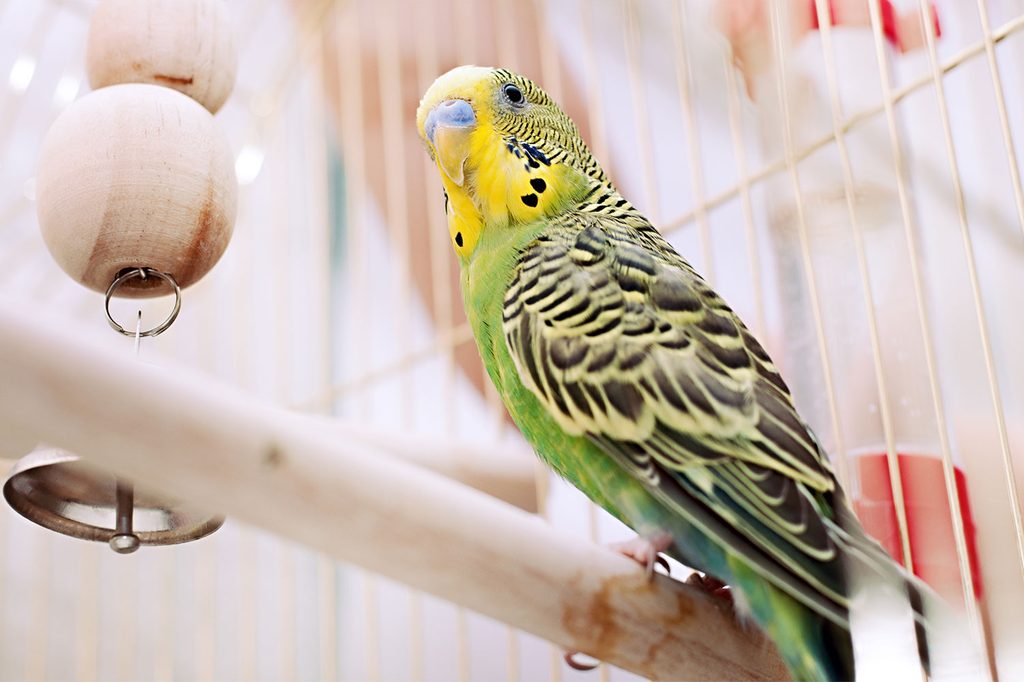
A bird in his cage on a perch
Africa Studio / Shutterstock

Birds need a lot of mental stimulation, as much as a cat or dog, and should not be treated as a starter pet. Many experts recommend taking your pet out of the cage frequently and letting them fly around in a safe space (you can set aside one proofed room for them).

As part of this, you may decide to invest in bird training, including housebreaking. That way, birdie will fly around but not cover your house in droppings. Training can also provide mental and physical exercise. Lots of these little guys love to learn tricks and commands. Lastly, DIY toys don’t replace the basics, such as perches and a big cage — both of these are necessary for any flyer.

Our conclusions on DIY bird toys
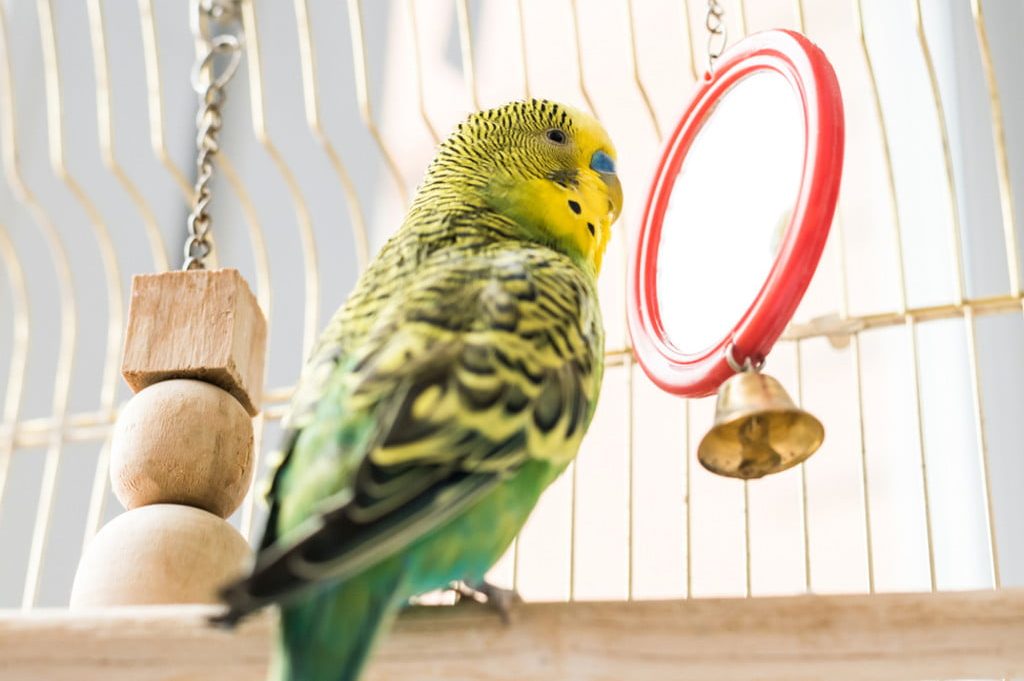
Parakeet looks at himself in the mirror
Vyaseleva Elena / Shutterstock

Using household items to create toys for your bird sounds like a great plan, in theory. We all know that life often gets in the way of DIY projects, though. If you find that’s the case, go ahead and pick up a few all-purpose objects that will distract and enthrall your pet. Once you’ve tried a few different things on her, you’ll start to get a good idea of what they prefer, so that you can invest (or scavenge) more of those items. Perhaps you’ll discover you have a bird that loves to swing or chew.

The key here is that these toys don’t replace your bird’s need for consistent human interaction (or consistent exercise). While you want to have numerous items on hand for their enjoyment, it’s just as important that you’re there, too.

Rebekkah Adams
Former Contributor
Rebekkah’s been a writer and editor for more than 10 years, both in print and digital. In addition to writing about pets…
Topics
Do fish sleep? It’s complicated
You'll probably find your fish resting periodically — don't panic
Fish resting in an aquarium

You might see your little swimmers still and peaceful in your tank and think that they're sleeping. But do fish sleep? It's complicated because first we have to define what sleep even means. Research says that many animals do rest and that slowing down intermittently helps with all sorts of processes, including things like fighting disease and recharging energy. So while fish don't sleep in the same way humans and most other mammals do, they still rest periodically to help them stay sharp.
How do fish sleep?
First, let's talk about our sleep. You'll notice that when we go down for the night, we almost always close our eyes and our furry friends do as well. That's thanks to our neocortex, which shuts off so we can get some shut-eye every night. Dogs and cats operate much the same, though they sleep at different times than we do (practically all day, in the case of cats).

Fish have neither a neocortex nor eyelids, meaning they can't sleep exactly the same way as humans. Researchers at Stanford studied fish brains and found that they do seem to be sleeping, though aquatic animals likely don't enter REM state (dolphins, too, have slightly different sleep methods). Sharks take this even further by swimming even during sleep — if they stop, they won't be able to keep breathing!
When do fish sleep?
You may be surprised to discover that fish usually sleep at night and spend the day awake. That's great for us to get prime-time aquarium viewing. Still, some fish are up at night, especially a few species of catfish that will do the bulk of their feeding in the wee hours of the morning. Interestingly, a few fish don't sleep at all, including some species of cavefish that live entirely in darkness, and many baby fish, which don't develop this ability until adulthood.
How do I know if my fish are sleeping?
As with all animals, you probably want to leave your tiny sea creatures alone while they get some rest. You don't want to get woken up from a nap, either, after all. Check for signs that they're catching a few z's. Fish are possibly sleeping when they stay motionless for a while, lay down on something in the tank, and don't respond to things going around them. So if you walk up to your fish house and see one snuggled up in the corner, they're probably fine. Come back later to make sure they've moved rather than tapping on their home to rouse them.

Read more
How long do goldfish live? What to know about your new carnival prize
3 tips to keep your goldfish alive longer
Goldfish swimming past snails

You might have memories from childhood of your first pet, perhaps a hamster, turtle, or goldfish. While in popular culture, we often think of the goldfish as having a short lifespan (not to mention attention span), neither of these myths is really true. In fact, these bright beauties can live for a long time with proper care.

So, how long do goldfish live? And what do you need to do to maximize your time with them? We'll break down the best ways to keep your swimmer alive.
How long do goldfish live?

Read more
What do turtles eat? Your complete guide
What to feed and not to feed your turtle or tortoise
Person feeds their pet turtle

You probably have a fair idea of what to feed a dog or cat, but bringing home your first reptile will completely change what goes into your pet pantry. Turtles, in particular, have something of a confusing diet since there are a few different types and they eat different things.

On the one hand, aquatic turtles live almost all of their lives in water and eat there, too. The flip side is that tortoises usually only eat vegetables and live on land. All of these pets need distinct menus, so you should think about what kind of turtle you want and adjust your feeding habits to match. So, what do turtles eat? We'll walk you through a nutrition plan for your animal, no matter what.
What should you feed an aquatic turtle?

Read more