No matter how careful and vigilant you are, your aquarium is bound to get dirty at some point. Not even top-of-the-line filters can keep a tank perfectly clear. It’s not your fault — it’s just nature!
As natural as tank buildup is, it’s still not healthy for your fish to be around long term. Particles in the water can make it difficult for your fish to get the oxygen they need from the water. If you notice that the water in your aquarium is becoming green or cloudy, or if your fish seem sluggish or out of sorts, it’s safe to assume it’s time for a thorough cleaning.
Cleaning your dirty aquarium may seem daunting, but PawTracks is here to help! We’ll break down some of the most common causes of gross tank water and show you what you can do about it. Some of the solutions might be simpler than you think!
What causes tank dirtiness?
Over time, particles build up in the water from waste, uneaten food, and everyday chemical reactions. This can show itself in many ways, though cloudy or green tank water is one of the most common. As similar as these issues seem, and although they both affect the water in your aquarium, they are two quite different problems.
Cloudy tank water is a relatable problem for many new aquarium owners, though it’s not necessarily an issue with the water itself. The cloud is made up of bacteria, which many aquarists refer to as infusoria. When the chemicals in a fish tank become imbalanced — usually from adding water or new fish to a tank — bacteria can “bloom,” leaving you with a noticeable problem.
Often known as “new tank syndrome,” this is a recurring issue that usually resolves by itself in a week or so if left untouched (via Chewy). Unfortunately, it looks pretty unsightly before it fades away, and in severe situations, it can have health consequences for the fish. But unless your fish are coming to the surface to gasp for air, you’re fine to let the natural cycle be. It can speed up the process a bit to feed your fish every other day rather than every day since the bacteria feeds on the fish flakes as well. (Don’t worry, fish are fine with a limited diet for a while!)
When your tank water is green, however, you have a bloom of algae on your hands. Thankfully, this problem is simple to solve, but it can return if you’re not careful. Green aquarium water can be the result of excess waste in the tank, but the levels of light hitting the water can have an effect, too. With a few simple changes, though, you can clear this dirty water and keep your tank clean for good.
How to clear green aquarium water
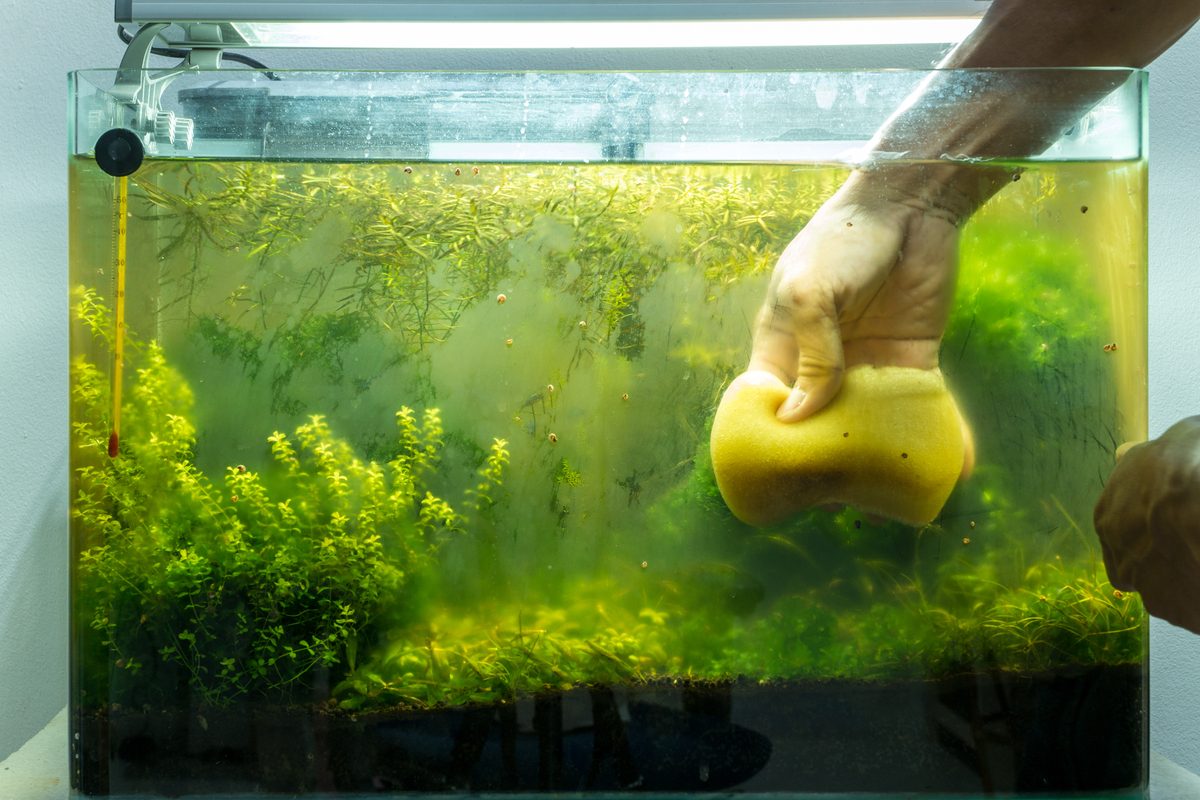
Much like clearing cloudy water, ridding your aquarium of green algae is a relatively painless process. For a quick temporary solution, an algae control treatment can be a smart way to go, but you’ll still have to treat the root of the problem. By cutting down on as much waste as possible, you give the algae less and less to feed on (via InterPet). To do this, make sure any dead fish, plants, or uneaten food is removed as soon as possible. Replacing or at least cleaning your tank’s filter is always recommended.
Regularly testing your aquarium’s pH, nitrate levels, and other chemistry can be a great way to keep algae under control moving forward. High levels of nitrates are an accurate indicator of algae growth, so pay special attention to this number. Unfortunately, tap water contains nitrates, so it’s not going to be helpful to replace a lot of your tank’s water at one time. Instead, smaller water replacements over the span of a few days will be more effective (via InterPet).
Like other plants, algae are photosynthetic, meaning they get a lot of their nutrients using light. This is why higher levels of light often lead to higher levels of algae as well. This has proven to be especially true for sunlight (via Practical Fishkeeping). It can help to restrict the amount of time your aquarium gets light every day, which is why an LED light on an automatic timer can be extra effective. Since most fish prefer darkness to light anyway, they’ll be happy with your decision, too.
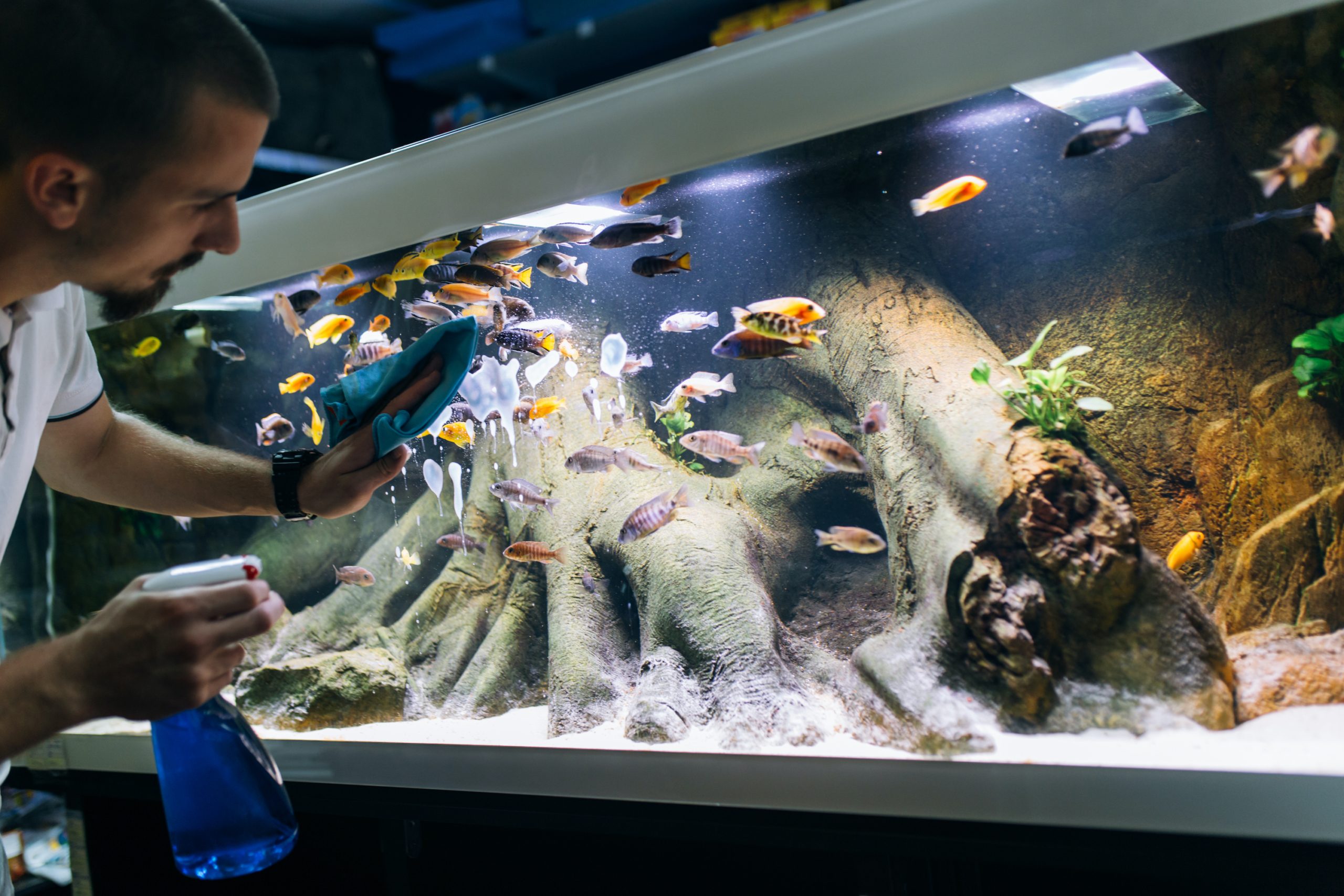
As important as the water in your tank is, you’ll need a more thorough cleaning to keep your aquarium clear of bacteria and algae. There are a variety of algae scrapers available online, which you can use to scrub down everything in your tank (plus the tank itself, of course). This should become a part of your regular cleaning routine at least weekly (via Country Vet).
Whether you’re trying to treat or prevent a bloom in your aquarium, these tips will be helpful for cleaning. We hope you give some of them a try — both you and your fish will feel so much better.
Want more? Read on further to find cute aquarium design ideas.