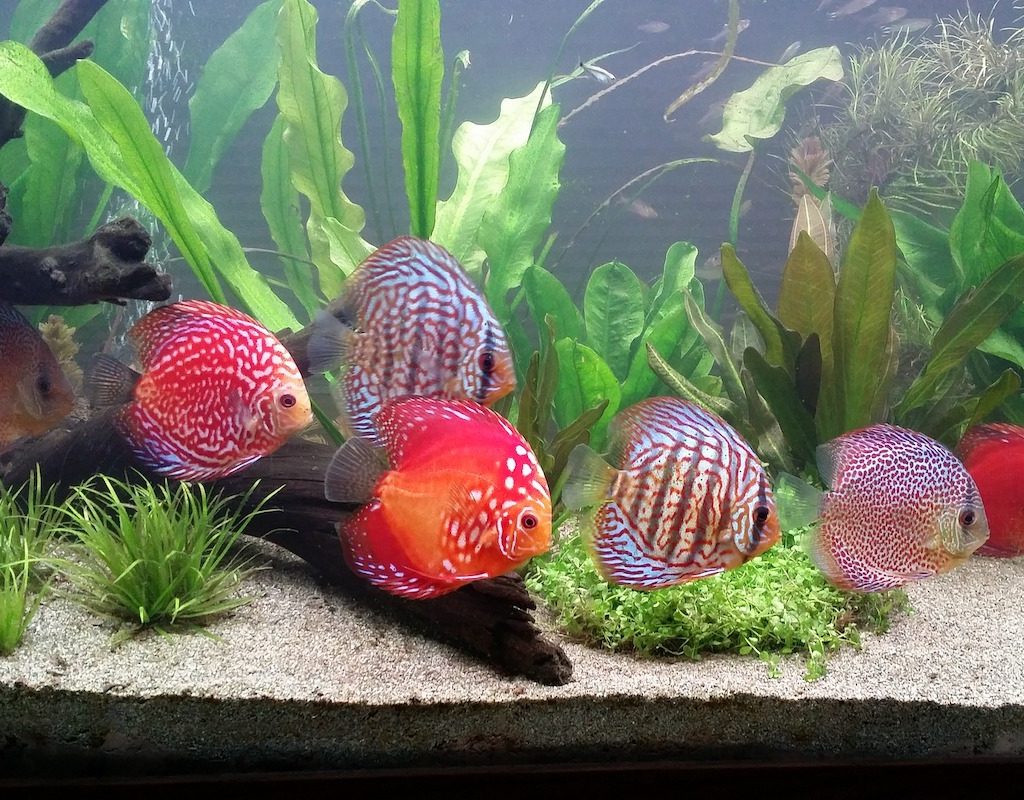
While there are a lot of mysterious things about discus fish, you’ll know right away where they get the name. Their round, yet surprisingly flat bodies resemble a frisbee or other 2D oblong object. Still, these delightful swimmers are gorgeous to watch, shoaling and swimming through your tank. Hailing from the Amazon, discus fish require an expert aquarist to maintain optimum levels in the tank that mimic their natural habitat. But don’t let that deter you from owning a school of these beauties. With a little help, you’ll understand discus fish care in no time.
Are discus fish easy to take care of?
The short answer is no. We don’t recommend this particular aquarium-dweller to beginners, who should first gain experience with easy fish and then graduate to more challenging species. That’s because discus fish have very specific water requirements and need to school. As a larger animal, discus will require a very large tank, at least 50 gallons but even up to 100. When you’re first starting out, you’ll likely select only a few smaller fish and get a beginner’s tank that’s 30 gallons or less. Lastly, these fishies can live up to 15 years! Yes, you read that right. They are nothing like a science fair goldfish that might not even see its first birthday. With the right expert care, you should have your swimmers for as long as you have your dog or cat.
Should discus fish be kept together?
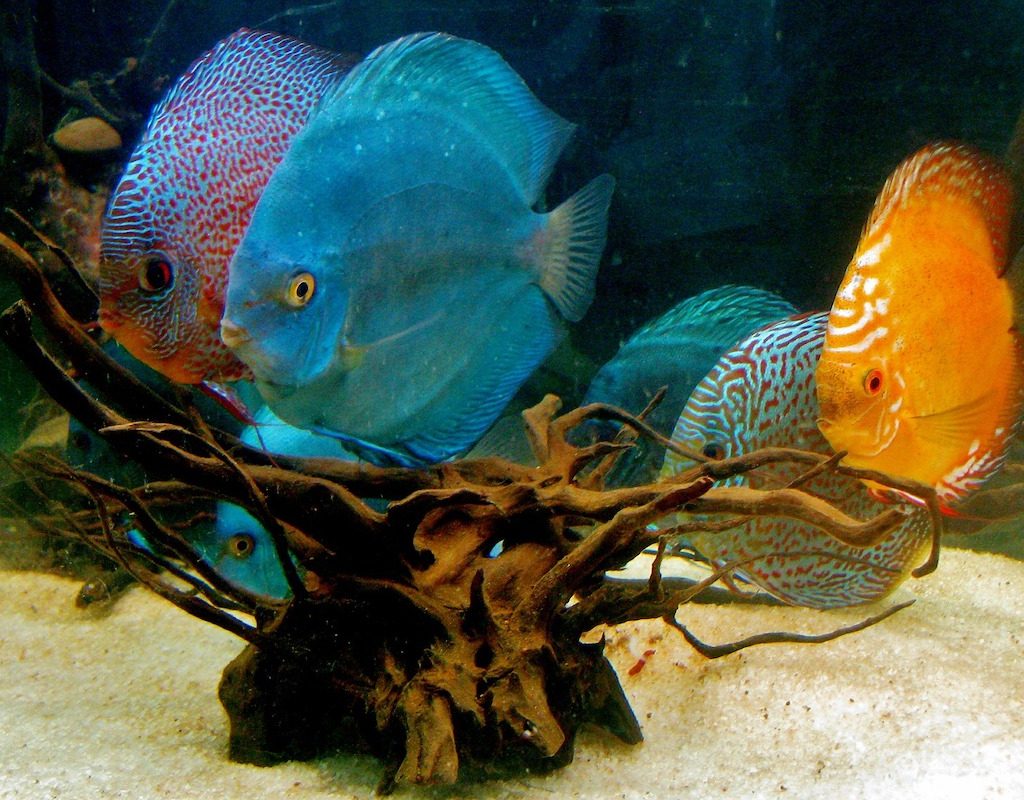
Absolutely! In fact, they must be kept in small groups as they will not live happily on their own. When you first bring together your school, they’ll have to figure out who’s the boss. This is not an aggressive breed, so don’t worry about monitoring them too closely, although you’ll want to make sure that the littlest ones don’t wind up being starved out. There’s a huge benefit to this though: When your new pack swims together, it’s a sight to behold. Because they come in a variety of vibrant colors, you get to witness a show as the greens, blues, yellows, and reds merge and flow together.
Do discus fish need daily water changes?
Unless you have very young fish, you do not need to perform daily water changes, however, this species does require cleaner water than the average fish. When you first bring your animals home, set up a schedule with regular refreshes on certain days. Many owners do 25 percent, three or four times per week. That means there’s basically always some new water in the tank. This also varies based on how large the aquarium is and how many fish you have in your habitat. Even the other types of fish will affect the frequency since you may have some that produce a lot of waste and others who help you clean, like catfish. We actually recommend corydoras (a type of catfish) as good tank mates, along with tetras, clown loaches, and gouramis.
How should I set up my discus tank?
Discus fish typically require low flow, high temperature, and low pH. You should confirm that you can keep your temperature in the mid-80s before you even add your new pets to the housing. It’s also important to condition your source water and make it a little more acidic than normal, around a pH of 6 or 7. You’ll want to run regular tests, both before you add the fish and once they’re in permanently. Additionally, sometimes these guys like to hide, so you should include wood along with some plants, like seagrass.
What do discus fish eat?
These creatures are omnivores and truly need variety to spice up their lives and brighten their scales. Provide a mix of algae, shrimp, and commercial flakes. You’ll get the best coloration if you sometimes allow them to feed on fresh, live animals, such as mosquito larvae or bloodworms. Combine this with standard tropical fish food and perhaps some plant matter. They eat every day and you have to get rid of any excess quickly, or the ammonia levels will build up and kill your sensitive fish.
While not for a newbie or anyone looking for a low-maintenance aquarium, discus fish provide a fun, gorgeous option in a large, tropical tank. Once you become a pro, you can even set up proper breeding conditions by adding a spawning cone. Only graduate to this level once you are able to maintain your tank conditions perfectly without difficulty and have had no unexplained deaths. If you follow these tips, you’ll find owning, watching, and breeding these beautiful fish to be a delight.