While our pets are a lot like us, you’ll notice some key differences when you spend enough time with them. Sadly for humans, we can’t fly like our parakeets or swim underwater like our betta fish. Reptiles, such as lizards, turtles, and snakes (also crocodiles, but we don’t recommend owning one of those as a pet), all have some pretty cool tricks too.
You can’t change colors like a chameleon, slither like a snake, or live 190 years like a tortoise. Our reptilian cousins also have special metabolisms, which means they heat their bodies and respirate slightly differently from how we do it. But how do reptiles breathe? Keep reading to find out.
Why do reptiles breathe differently?
All mammals, which includes humans, are warm-blooded, which is a bit of a misnomer that just means we make our own heat. Reptiles are cold-blooded, so they can’t generate their own body heat and need the sun to do it for them instead. The only way for them to stay warm, therefore, is to absorb heat through the environment; that’s why you often see them living in hot climates, and why you won’t see any in winter during hibernation season. When these animals are cold (especially when they are hibernating), their breathing and metabolism both slow down. They need that warm rock to warm up and get a boost. Fun fact: this is also why reptiles often eat so much less food and less often than we do. It takes a lot of energy to keep us at 98.6 degrees.
What are reptiles covered with and how do they breathe?
All reptiles are ectotherms, but their skin doesn’t look the same. After all, snakes have scales, tortoises and turtles have shells, and many lizards have an outside that changes color. However, they typically have dry, scaly skin that only becomes wet temporarily while in water. Their outside is nowhere near as slick as an amphibian, which usually has to stay moist all the time. That’s because frogs and toads actually can absorb oxygen through their skin when submerged in water, but most reptiles can’t do that. Even sea turtles need to come up to the surface to gulp air, just like a whale. Therefore, reptiles (along with birds and mammals) breathe exclusively through the lungs, while fish and amphibians have gills for at least part of their lives.

How often do reptiles breathe?
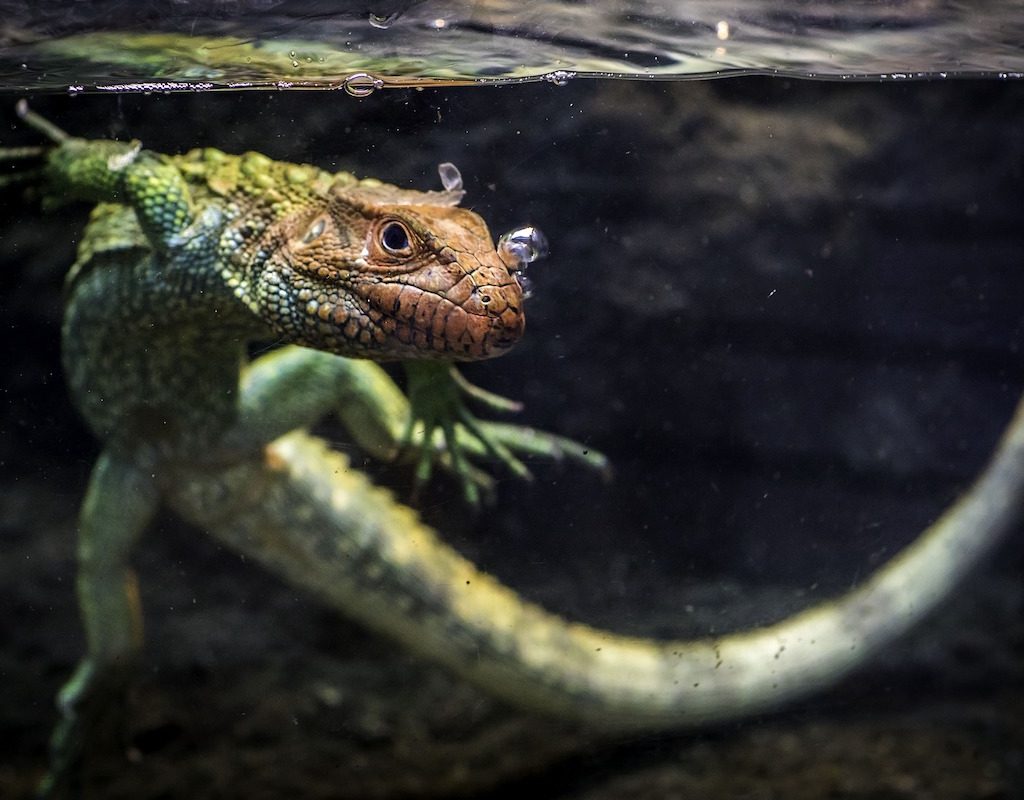
Even though mammals and reptiles have similar lungs, you must have noticed that sea turtles and snakes can dive underwater for a lot longer than we can. When turtles are resting in cool water, their breathing slows so much that they can stay under for almost 2 hours. A crocodile can go for about an hour, and some snakes can even go up to eight hours. That’s their handy metabolisms at work again. Even on land, they may have much more efficient respiratory systems than we do.
How does this affect my pets?
It’s crucial to maintain a consistent temperature in your tank, but even more important is having a few distinct temperature zones, some warmer and others cooler. Many reptiles will want a heated zone to give them some energy, but they also need a cool area to cool down. A lack of cooling zone risks overheating, which can lead to death. They also need a temperate region. This varies a bit by animal and species, but many want to live in 70 or 80 degrees all the time. You will definitely need a warming pad or lamp for them. Additionally, you don’t necessarily need to feed an adult reptile every day; some take a meal only every few days. Some snakes only eat once a year or less! We don’t recommend that for your typical pet, though. Be sure to ask your vet for recommendations.
We’re actually still researching how reptiles breathe and the ways in which their lungs differ from ours. But it’s pretty obvious that they have some advantages over us, especially for living long periods underwater, which we never evolved to do. The tradeoff, though, is that we don’t need to stand under a heating lamp just to have enough energy to go for a walk or read the newspaper. We also get to have smooth, scaleless skin. Imagine being as bumpy as a crocodile! While giving up being able to hold our breath for many hours might be disappointing at first, it seems all-around worth it to be part of the mammal family.