It’s common knowledge that reptiles aren’t exactly like us. Humans, after all, are mammals and have some special and distinct differences from other members of the animal kingdom, namely fur (and a few others). That extra hair actually represents an important part of the biological contrast between us and our reptilian counterparts.
You’ll notice that birds also have a skin covering in the form of feathers, which (in addition to being for flight) keep them warm, as our hair does for us. But reptiles don’t need any of that. So, why are reptiles cold-blooded? They have their own method for regulating temperature and it’s pretty interesting.
What is a reptile?
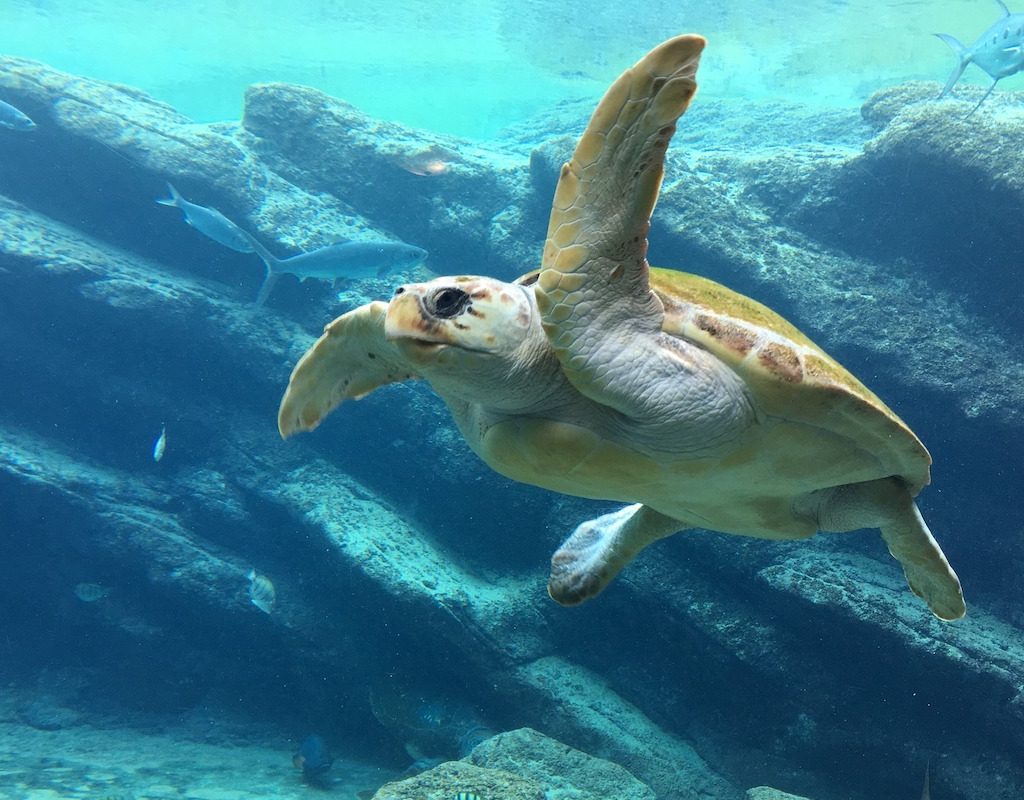
Reptiles, amphibians, birds, mammals, and fish are all distant cousins (they’re vertebrates, for anyone keeping track, which means they all have backbones). We’ve already covered the warm-blooded animals, but reptiles and amphibians such as frogs fit under the ectotherm label, not like us. While amphibians mostly lay eggs in water, reptiles do that on land, even though both types spend parts of life in both environments. Think of the majestic sea turtle who emerges onto the beach to leave her eggs behind and then returns to the sea. Other reptiles include snakes, lizards, and crocodiles. They all have dry, scaly skin that feels different from that of amphibians or fish.
Why are reptiles cold-blooded?
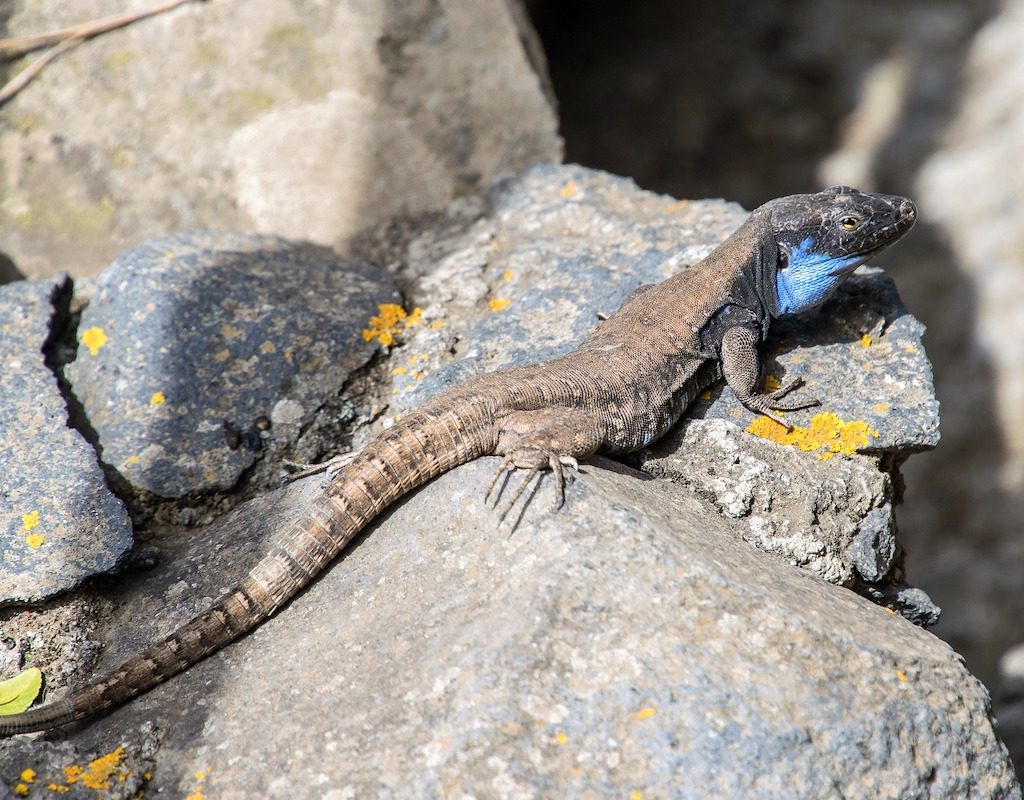
Many scientists take issue with the distinction of cold-blooded versus warm-blooded. It really comes down to making your own heat as opposed to absorbing heat from the environment – water or air or even dirt. Our body temps hover at about 98.6 degrees Fahrenheit, but a lizard is only as warm as the habitat around him. So if it’s 80 degrees on a sunny rock, the sunning lizard upon it will also clock in at 80 degrees. That’s why reptiles have to hibernate in the winter and also why you’ll find a lot more of them living in year-round hot climates. Wouldn’t you rather be warm all the time? Of course, each species requires slightly different weather, an important thing to note when you bring home a pet.
Are all reptiles cold-blooded?
For the most part, yes, though some ancient reptiles and a few other creatures may have had an internal regulator more similar to warm-blooded animals. However, each kind of reptile has very specific needs with regards to water, land, humidity, and temp. For instance, many garter snakes tend to like it a bit colder and wetter than bearded dragons. Tortoises want mostly land but aquatic turtles live nearly entirely in the water. You’ll need to research and discover the right balance depending on which animal you bring home.
What do I need to know about keeping a reptile?
All pet reptiles want a warming area and a cooling area for basking and for sleeping at night. When you set up your reptile’s cage, make sure you have all of the sections covered with multiple thermometers and a hygrometer to monitor the situation continuously. Keeping the cage warm is important for a hamster, too, but nowhere near as crucial as for a snake. If worst comes to worst, your hamster warms himself but your snake can’t.
As mentioned, the specific conditions vary by animal and even breed. In the wild, many of these guys would hibernate, but it’s best for you to keep your pet’s area consistent year-round. If the air gets too cold, they will become sluggish and possibly stop eating and pooping. Check your measures quickly and adjust as necessary to bring your guy back up to ideal temperatures. One other note, while the majority of reptiles lay eggs, some snakes give birth to live young. You definitely need this info in advance if you wind up breeding your pets.
You have the basics of warm-blooded and cold-blooded down, but you could dive in and do a lot more research (here’s a great piece on where dinosaurs fit into the equation). But when it comes to keeping your pet warm and happy, you don’t really need to know the nitty-gritty science and instead can focus on the key takeaways, like maintaining his environment. Remember that each species wants a unique balance of heat and humidity as well and that reptiles require a warm spot and a cool one. That’s the only way to make sure your reptile stays healthy.