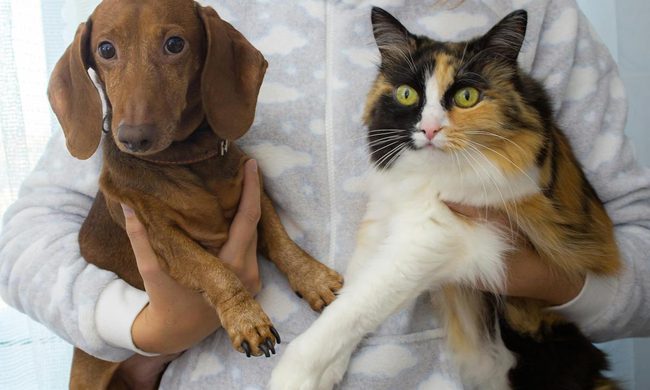
When you look into the eyes of your best furry friend, obediently waiting for their treat, it can shock you to remember that these beasties came from wild wolves. Once you start to dive into the history of canines, you uncover a fascinating series of events, complete with twists and turns.
Over the course of thousands of years, we’ve domesticated these animals (or possibly they domesticated themselves) until they turned into the pup pups who live alongside of us now. But the question remains, “Did dogs evolve from wolves?” We’ll walk you through their evolution and what it means for your pet today.
Did dogs evolve from wolves?
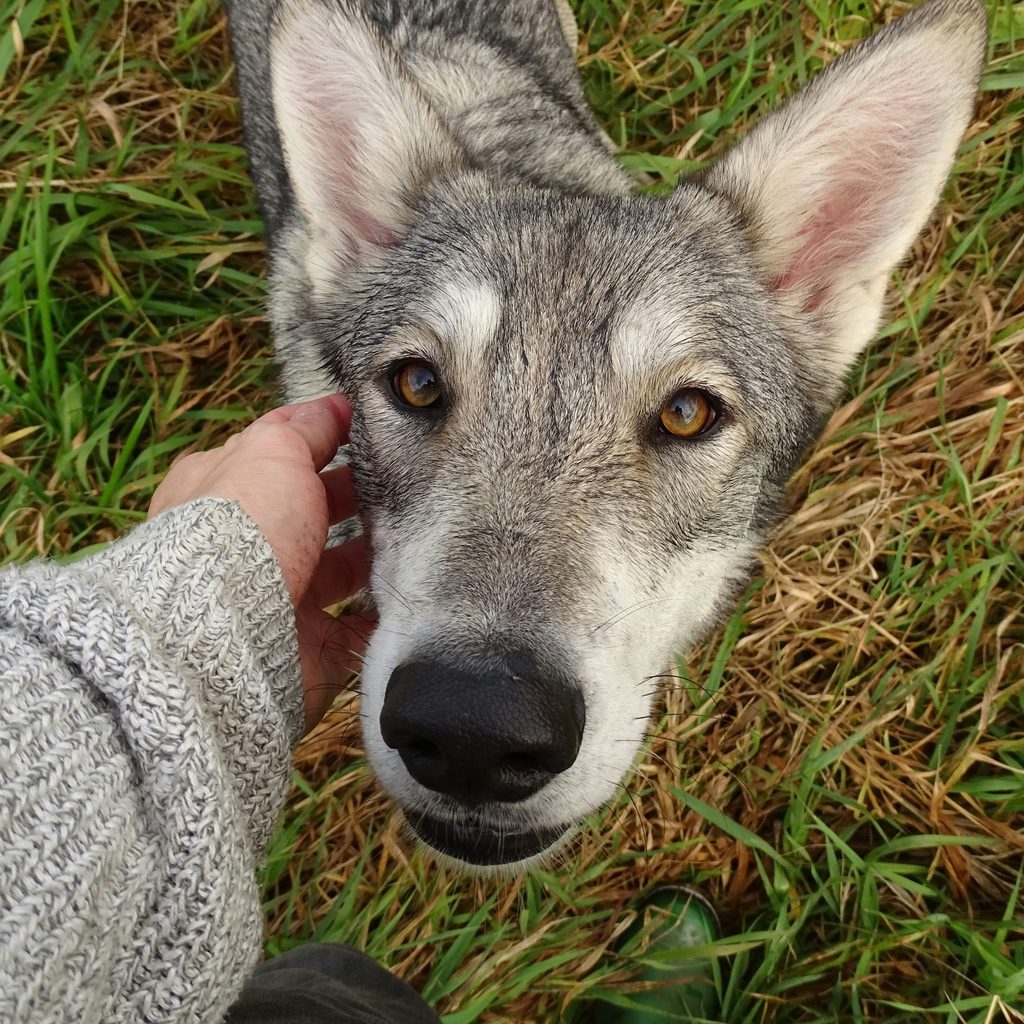
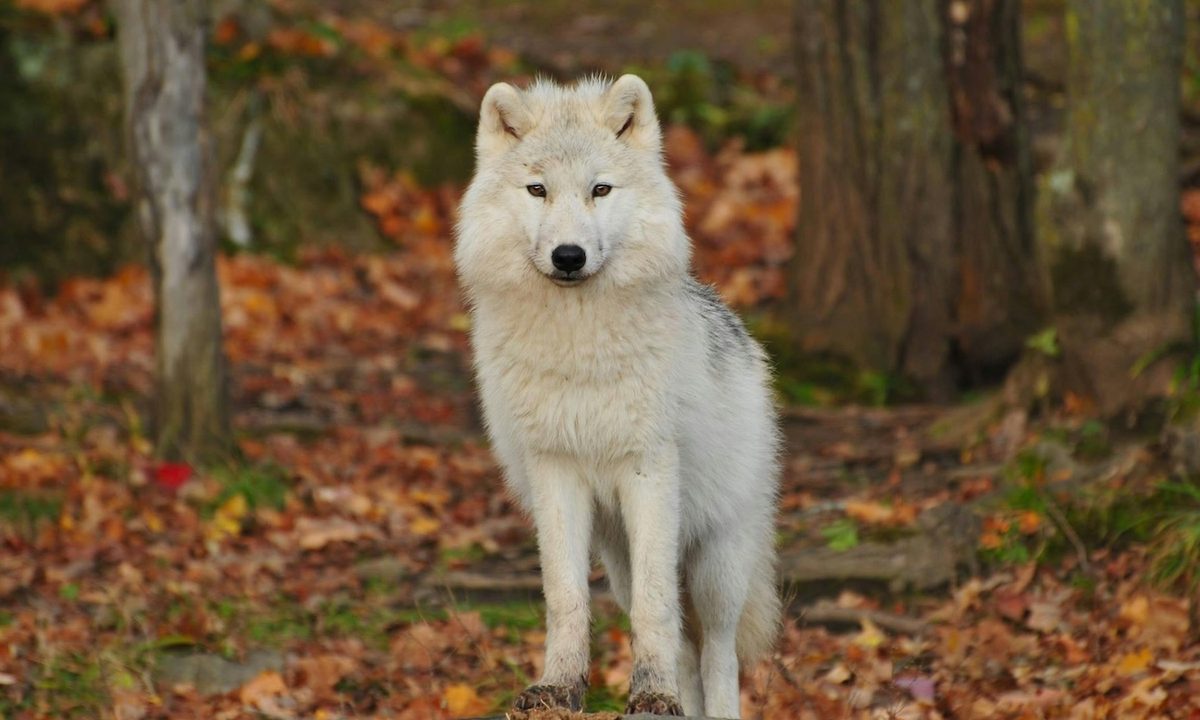
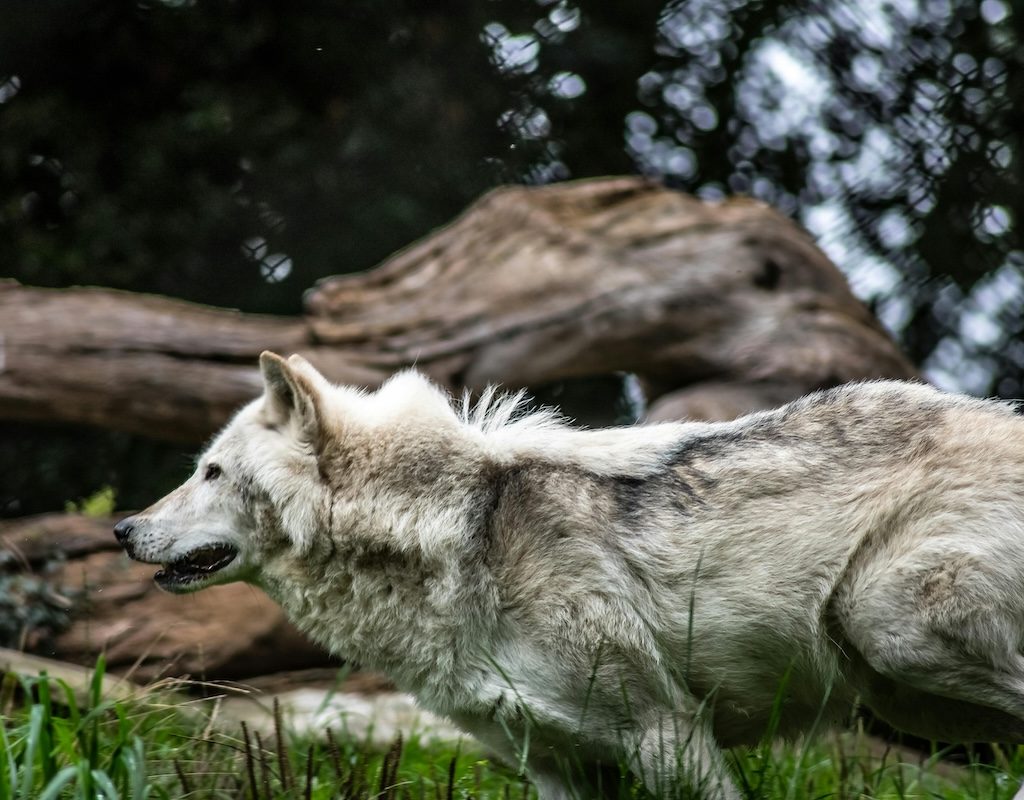
Yes, but surprisingly not from the wolves we see around. The gray wolf that you might spot at the zoo or in Yellowstone looks a lot like a dog and shares 99.9% of their DNA. But our companions come from an ancient animal that no longer exists and so are more like cousins than children to the gray wolf. (Interestingly, they have interbred so much that their DNA confused scientists for years).
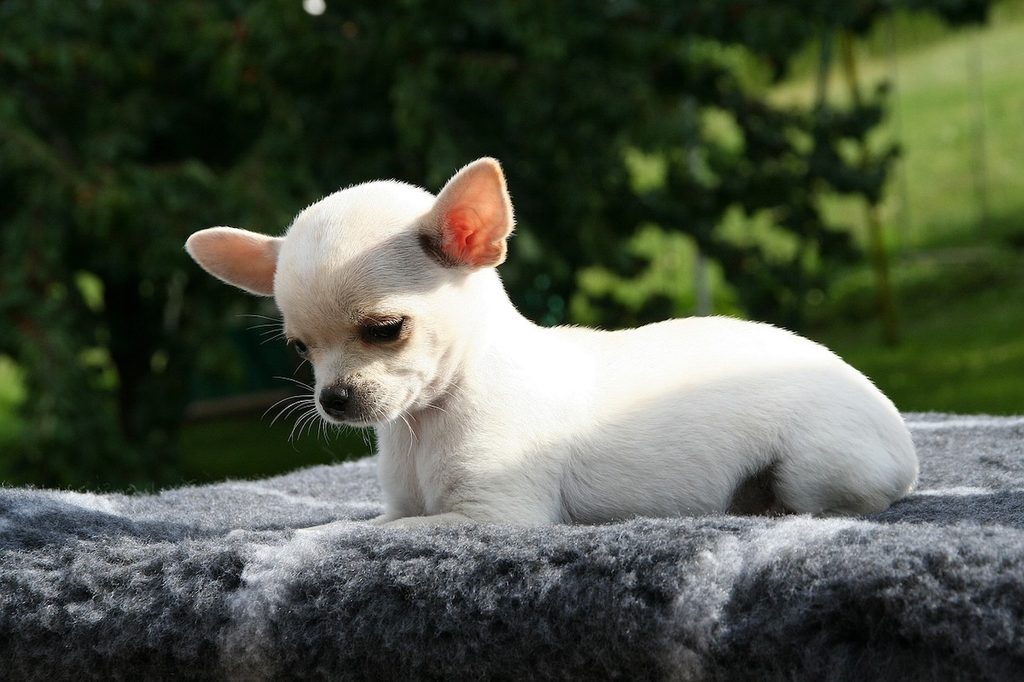
Today, our pooches still bear resemblance to their wild counterparts, even though they have changed substantially over thousands of years (for proof, just look at Chihuahuas). Now we understand better how this journey occurred and why it matters in modern dogs.
How did dogs become domesticated?
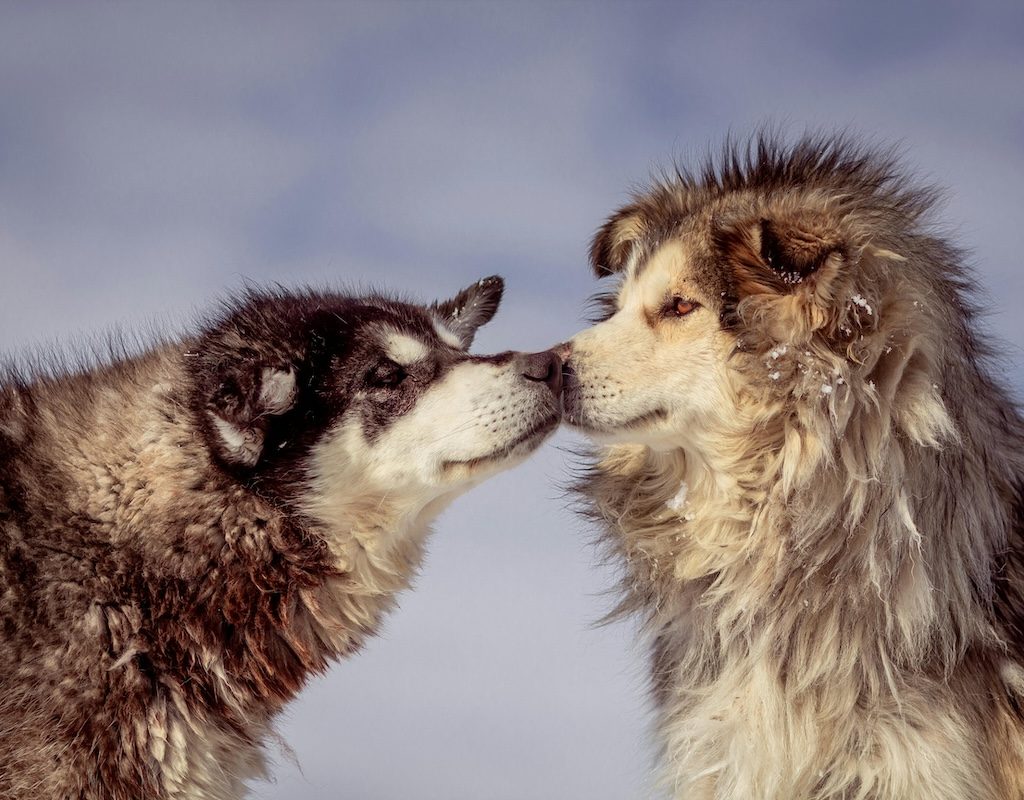
There are a few competing theories out there, but many researchers believe that dogs actually made the decision to follow humans, rather than humans grabbing the first dogs. Seeing us as an easy source of food, some enterprising wolves may have stuck around camps and eaten scraps. Over time, they realized people were kinda alright and we, in turn, discovered how useful a wolf-dog could be.
One hypothesis maintains that the buddies didn’t start out as hunting animals but may have been haulers instead. Over time, though, they almost certainly became one of the best tools that hunter-gatherers had to get food.
When did wolves turn into dogs?
It’s tricky to come up with one dividing line separating the wolf from the dog. A particularly illuminating study has looked at foxes for more than 50 years to see how long it takes to change them into a tamer version. Once the foxes had gone through a few generations of breeding the friendliest guys, they started to get cute. Ears drooped and tails curled to resemble something closer to a dog than their fully wild kin.
We look for similar traits when trying to suss out the archaeological record of dogs, paying attention to snouts, teeth, and skulls for a few telltale pup characteristics. Overall, we can determine that dogs evolved between 19,000 and 32,000 years ago in Europe, but quickly spread out. As their tree diverged, different populations had slightly different DNA — in North America and China, for instance.
Eventually, we got separate dog breeds, which likely started as a way to use the canines for distinct tasks. Archaeologists have uncovered a unique finding from Denmark that’s 8,000 years old, with clearly divergent types of dogs. “I didn’t expect to see something like dog breeds,” Angela Perri, a zooarchaeologist, told Scientific American, “but they had small, medium and large dogs.”
What does the wolf ancestry mean today?
While your sweet fur baby probably doesn’t resemble a wolf, you can still see some of their ancient DNA come through. Dogs howl much like wolves (though sometimes for different reasons) and also have a pack hierarchy — one that doesn’t look exactly the same across these species.
You don’t need to stare too hard to spot the differences, though. Interestingly, domesticated canines are considered omnivores, but wolves eat almost all meat. That’s what thousands of years of scavenging from humans gets you. Fidos also have learned to play just for fun, which is something wolves still use to teach their young important survival skills. Lastly, wolves are extremely shy of humans, and for good reason. We have hunted them almost to extinction in North America, but happily, they’re starting to make a comeback due to conservation efforts.
The next time your buddy does a trick, perhaps you should say, “good wolf” instead of “good dog.” While they may look — and act — unrelated today, recall that they share so much DNA that dogs and wolves can still interbreed. In time, though, our companions have learned to listen to us (sometimes), live indoors, and perform very different tasks, like acting as service animals. With all the love and treats we give them, it’s no wonder their ancestors decided to hang out by the fire and eat scraps.