

  1. Home
  2. Cats
  3. Getting Started
  4. Evergreens

Are cats color blind? It’s a bit more complicated than you might think

The truth about cat eyes is a little more perplexing than you may know

Add as a preferred source on Google
A grey cat with shiny eyes stares at the camera
Tengyart / Unsplash

You may have been told at some point that cats don’t see color, and pictured your pet examining the world in black and white. But as far as we know, only one animal actually sees that way (a fish) so that’s not what color blindness means in this situation.

Cats aren’t fully color blind, so they do see some colors, but not others. Taking a deeper dive into your cat’s pretty eyes will help you understand them and can guide you with other things like training and play. So are cats color blind? Here’s what you need to know.

Recommended Videos

How do animals see color and light?

A quick lesson in biology first: Our eyes (and those of our cats) use rods and cones to see light and color respectively (of course color and light overlap, but you get the idea). Most humans have cones for green, blue, and red, and if any of those are missing, that’s what creates color blindness. About 8% of males (the human kind) are color blind, usually a form called red-green, which is somewhat similar to how our cats see.
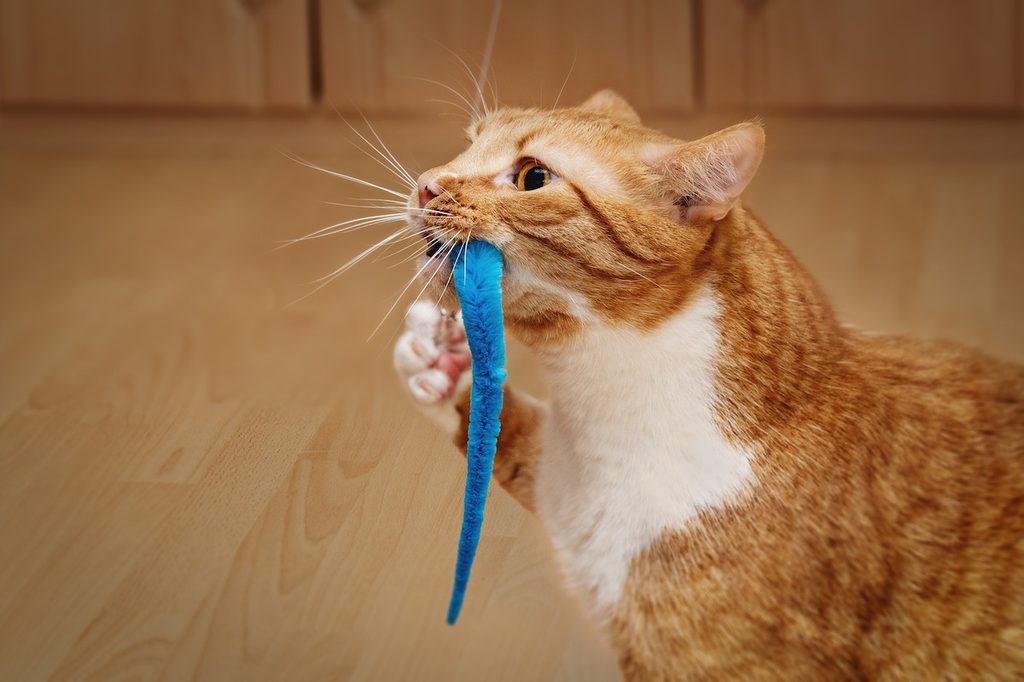
Orange cat playing with a blue toy

So what colors do cats see?

Cats and dogs only have blue and green cones, which means they struggle to distinguish reds. Because we understand that color-blind humans see a little bit like cats, we can dive really deep into what our animals perceive. Red and pink usually look like green to them and purple might be indistinguishable from blue. This is good to know when choosing toys, especially because your kitty might struggle to spot a red squeaky mouse in the grass, but they’ll see a blue one right away. The last thing we want to mention is that our pups see a lot like their cat friends, so these same rules apply to them, too.

Is it true that cats have good night vision?

Perhaps to make up for their lack of red color vision, cats see excellently at night — a trait they evolved for hunting in the dark. In fact, they have up to eight times more rods than we do, meaning they see a lot better in dim light (that might be why they enjoy a good twilight prowl so much).

You should also notice your cat’s pupils getting huge in low lighting, way bigger than ours, which allows them to spot a mouse even with almost no light around. Lastly, they have an extra layer in there that “mirrors” backlight and accounts for the glow you sometimes see in their eyes.

The good news is that a cat’s lack of extra color vision or poor eyesight in general (like dogs, it’s much worse than a human’s vision) doesn’t seem to stop them. In addition to red-green color blindness, they also are extremely nearsighted, so they often have trouble focusing at a distance. While it doesn’t stop them, we do need to take all these factors into account when trying to predict what they will be able to distinguish that we might see with no problem at all.

Rebekkah Adams
Former Contributor
Rebekkah’s been a writer and editor for more than 10 years, both in print and digital. In addition to writing about pets…
Is aluminum foil really the best way to keep cats off counters?
How to discourage your cat from jumping on counters
Angry striped cat sitting on kitchen table

If your cat likes to counter surf during their spare time, you’ve probably noticed the mess they leave behind. Whether you’re cleaning up spilled drinks or putting back the items your cat knocked off, you’ve likely considered numerous ways to prevent them from climbing on the countertops. Many cat owners can relate!
In fact, cat parents have tried countless tips, tricks, and DIY "hacks" to keep cats off the counter. A tried and true method is covering countertops in aluminum foil, but this strategy can be costly, time-consuming, and even ineffective. Cats and aluminum foil may not have the best relationship, but is it enough to keep your cat off counters for good?
Let's explore cats and aluminium foil, as well as the best ways to prevent cats from jumping on countertops.

Cats and aluminum foil

Read more
How to care for newborn kittens without feeling overwhelmed
This is how to feed and care for newborn kittens
A mewing newborn kitten at the center of a cuddle pile

First of all, congratulations on your furry new arrivals! The first time newborn kittens open their giant eyes, you'll feel like the best cat parent in the world. Whether your cat’s litter was planned or a happy accident, there’s no denying that welcoming newborn kittens into the world is exciting. But kitten care can also be a lot of work.

Caring for kittens isn't for the faint of heart. Between learning how to feed them and how to help them potty, you'll be in the thick of things. Thankfully, we have some good news: You can care for newborn kittens without it becoming a second job. Here’s what you need to know.

Read more
Clicker training for cats: A great way to teach them
This method will work well to correct problem behavior in your feline
Cat sitting and eating a treat

Being a cat owner is one of the most rewarding experiences in the world. From their adorable chirps to their vibrant personalities, cats quickly become entertaining, affectionate members of the family. But sometimes, our frisky feline fur babies can be a bit naughty.

Whether your cat likes to nibble on your fingers, screech in the middle of the night, or annoy the family dog, it's time to begin training your cat. However, selecting the right training method is essential when it comes to cat discipline. Shouting can cause anxiety, which may worsen your cat's behavior instead of improving it. Let's find out why clicker training for cats is an effective way to correct naughty behavior — no screaming involved. 
What is clicker training for cats?

Read more