You may have heard the phrase “like herding cats,” but actually, your kitty can be trained. Coaching your feline will help them out if they need extra stimulation, have a behavior problem, or you hope to better bond with your pet. Don’t listen to the naysayers who say you will have trouble getting your animal to listen. With the right approach, you can train a cat almost as well as you can a dog. Still skeptical? Here are our nine tips for how to train a cat.
Why cat training is important

Without enough to do, cats can turn destructive, so you want to get ahead of that and give them a project. Pets that don’t get enough stimulation often scratch up furniture, gain weight, and withdraw. The right training can get them to move their little body and work their sharp mind.
As you continue to train, you will find them responding to you more and more because they come to trust you. Plus, you will love watching your kitty succeed. Lastly, the right training can help them stop doing things that you don’t like, including biting and scratching.
What you need to know before you start your sessions
Take a pause before diving in and make sure you have your equipment and a clear set of goals. First, decide which type of training you want to do. As in, are you looking to get your cat to jump through hoops (literally), walk on a harness successfully, or respond better to strangers? (Of course, you could eventually cover all of these, but they gotta start somewhere.)
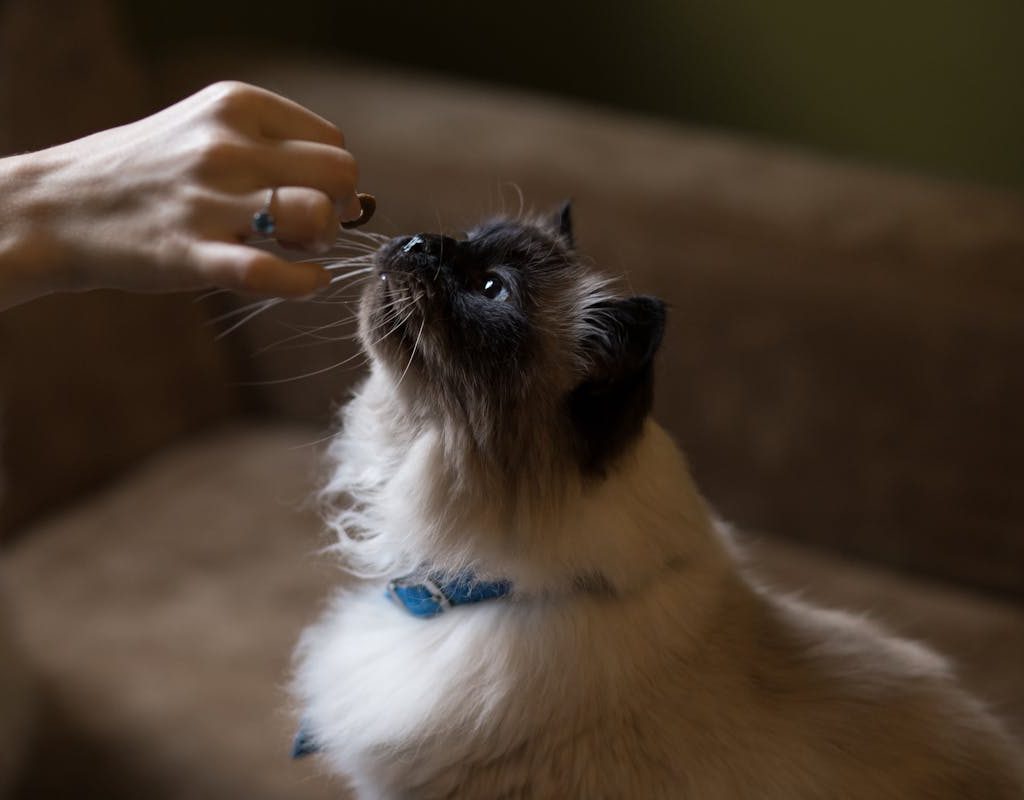
You also need to grab the tools that will make training go smoothly, including a clicker and treats. Remember that your cat will respond well to positive reinforcement, which means lots of pats and treats.
9 cat training tips
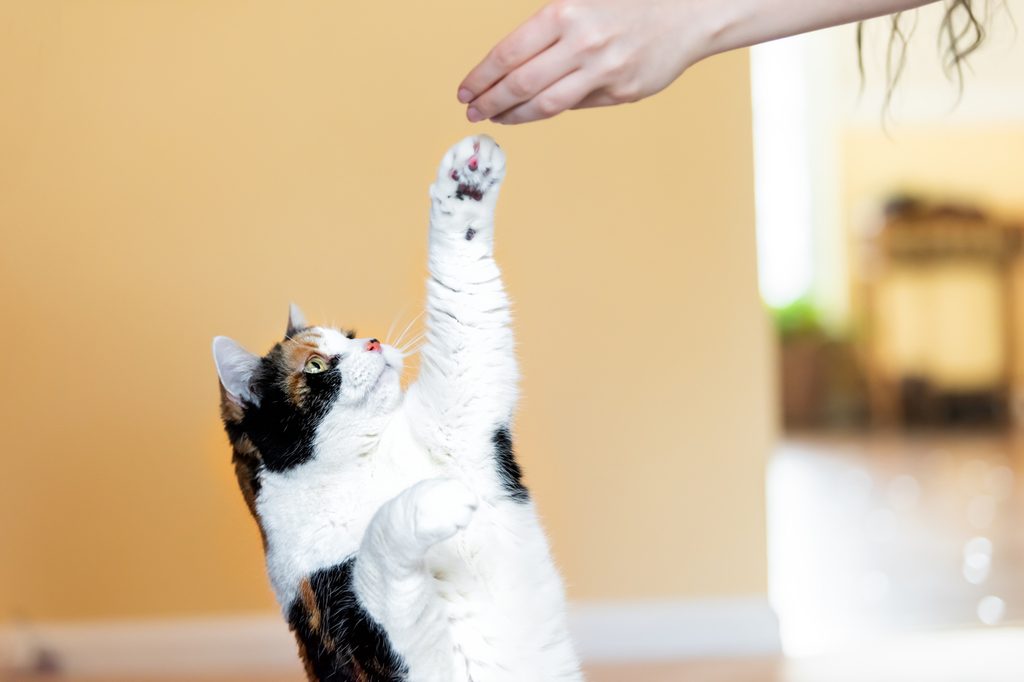
Once you and your mouser feel prepared, you’re ready to dive in — together!
Start small
You probably can’t get your furry friend to complete an obstacle course on the first day. Instead, choose to teach them the clicker on its own and then add something basic, like sit.
Keep sessions short
Your cat will start to zone out if you make sessions too long, and your concept of time is very different from theirs. When we say short, we mean under 5 minutes on the first day.
Remove distractions
Training won’t work if your cat spends the whole time watching the curtains blowing against a window. Find an area where you have few distractions, especially where there are no other pets or humans.
Reward consistently
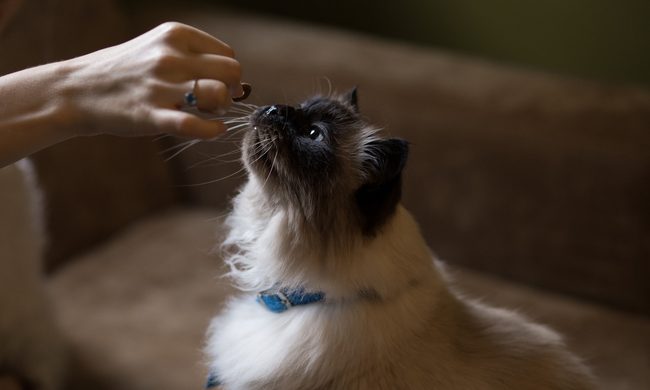
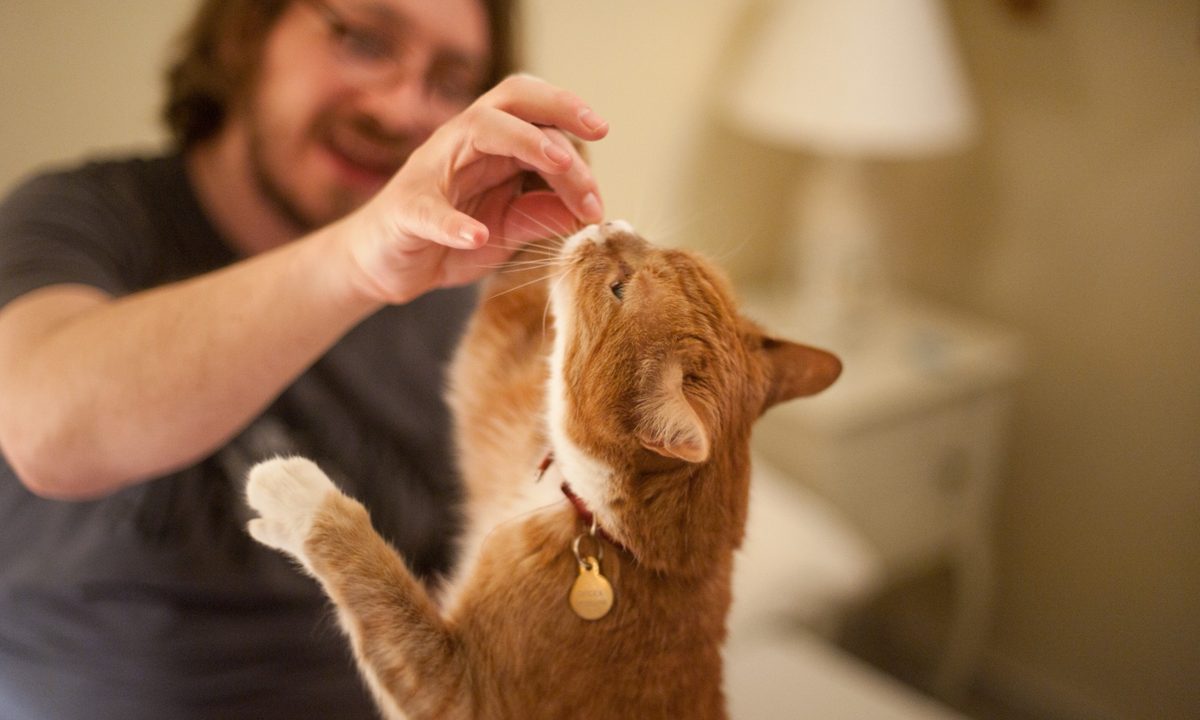
The second they get it right, they need to hear the click and then get a treat. That way, you communicate with them that they’re being rewarded for the correct behavior.
Choose the right treat
Not all cats like the same treats, and it might take a minute to find something you can dole out consistently that they love enough to keep coming back for more. Save a high-value treat stash for particularly challenging feats.
Don’t punish bad behavior
Instead of correcting any unwanted behavior, you can redirect to something good. Pets don’t respond well to punishment and will often become anxious, which certainly doesn’t bode well for the rest of your training.
Use cues
Many animals prefer hand signals, but the key here is consistency. Always use the same voice command paired with the same sign, so they know exactly what you mean.
Find the right time
Wait until your cat is well rested to jump into your instruction time. We often recommend first thing in the morning or after a particularly good nap, but before mealtime. That way, they feel super motivated to listen and get that treat.
Involve the whole household
Everyone in your house needs to be on the same page, particularly for unwanted habits. After all, if you teach your four-legger not to jump on the counters but your partner allows it, you’ll take a huge step backward.
While we lay it out pretty clearly here, you can’t expect the whole process to run smoothly. Training an animal takes a lot of time and patience. They won’t learn every trick the first time or even the tenth. At times, you could feel a bit discouraged, but definitely don’t give up too easily. Your pet responds to consistency and will steadily improve as you work to increase their skills. When you run into an obstacle, consider reaching out to an expert who may guide you on successful techniques or help work with your kitty directly.