While there’s no doubt that your cat is a cuddly little fur ball, he’s also a natural-born predator. In fact, domestic cats are considered a globally invasive species, and one 2013 report found that cats kill 1.4 to 3.7 million birds yearly. Unfortunately, the news about your little sofa lion’s capabilities only gets grimmer from there. Cats kill more than 20 billion mammals each year, including rats, squirrels, and rabbits. However, this surprises many cat owners, especially if their sweet kitty happily purrs all day and snuggles with you each night.
A study of cat whiskers provides more insight into why cats kill animals. Here’s what researchers found and what it teaches us about our feline friends. You may be surprised at what you learn!
Why do cats kill? About the study
Dr. Martina Cecchiti and some fellow researchers knew that cats posed a danger to small animals that are vital for a functioning ecosystem. Still, they wanted to learn more about why cats kill animals. For example, are they hungry, lacking nutrition, or just hunting for fun?
For their study, the researchers asked parents of free-ranging, outdoor cats in Southwest England to participate. They clipped some of the cats’ whiskers to analyze their hunting behaviors.
The research team told each pet parent to remove anything that might tip off prey or make it harder for the cat to catch an animal successfully, like bells and collars that could alert a bird to the cat’s presence. The human participants noted any game their kitty brought home for seven weeks.
The researchers sought to understand what interventions reduced predation, so they separated cats into trial groups and gave them a set of preventative measures to try. Some examples of these interventions included puzzle feeders, noise-making collars for outdoor cats, high-protein foods, and active playtime. The kitties’ parents continued to collect any prey and freeze it. The goal was to help researchers determine the best ways to minimize cats’ hunting behaviors or, at the very least, the ability to kill small animals successfully.
The cats who had their whiskers clipped at the beginning of the study had them clipped again so researchers could analyze them. Why? The researchers wanted to evaluate the distribution of provided cat food and consumed wild prey. The scientists explained that when a cat eats, markers of that food show up in keratinous tissues like fur, claws, and whiskers. The whiskers could be collected and inspected with relatively little fuss to uncover secrets about the feline diet.
Researchers freeze-dried the prey and food samples the study participants gave them, then ground them into powder. They analyzed the powder and whiskers to determine how much of a cat’s diet came from each food source.
Cats’ natural hunting instinct
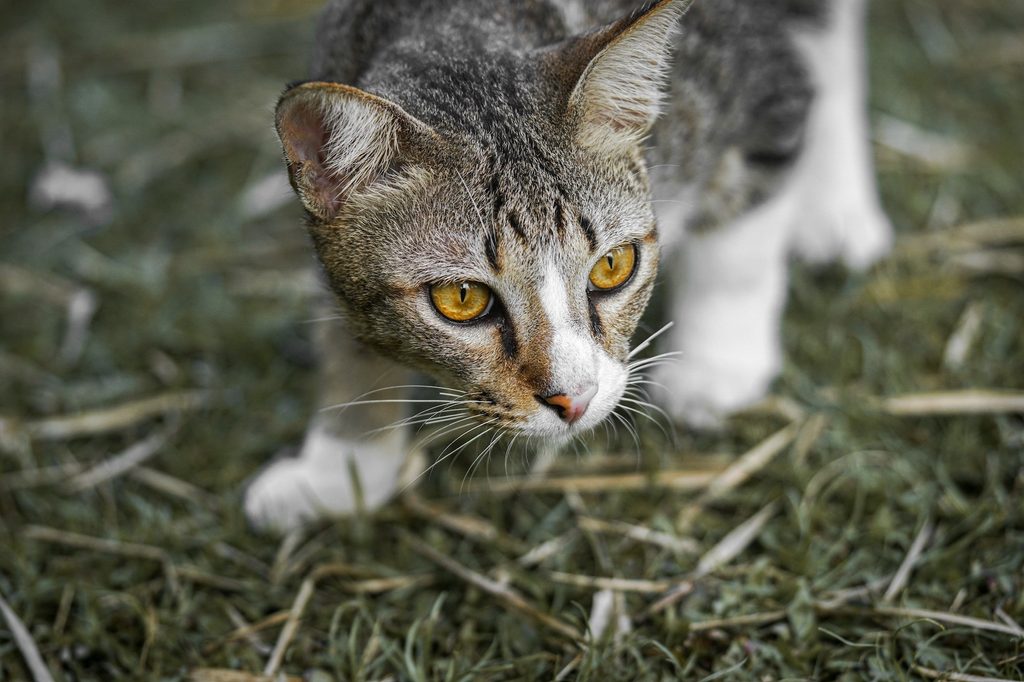
Once researchers analyzed the data, they came to the conclusion that your cat hunts because she wants to and can, not because the food you give her lacks nutrients. Even if a cat successfully captured and consumed prey in the study, it was a tiny portion of their overall diet.
“The diet of domestic cats consists almost entirely of food provided by humans, with only 3-4% coming from captured prey,” the researchers wrote in the study. “This indicates that predatory behavior is likely a result of instinct or stimulation and not driven by dietary deficiency.” The takeaway? Cats in the wild hunt to eat, and pet cats hunt because of those evolutionary instincts and because it’s fun for them.
What the research teaches us

First, there’s nothing wrong with your cat food, and you shouldn’t feel guilty when your cat “window shops” for birds from inside. You’re not depriving him of essential nutrients. Cats are natural hunters; even thousands of years of domestication can’t eliminate their desire to catch prey. It’s rewarding to them in ways that eating and playing just aren’t!
Allowing a cat to hunt can damage the ecosystem, but you also want to keep your feline friend happy. The researchers found that the Birdsbesafe collar cover was the best method for reducing the consumption of wild prey. These collars come in bright collars that are easy for birds to spot, so your cat gets the thrill of the chase while the birds can fly away unscathed.
Other methods to reduce a cat’s hunting instinct included providing food with high meat content and offering objects for playtime. Engaging your cat in a rousing session with his favorite fish pole is a great way to bond and let him act like the tiny predator he is without actually killing anything.
The best way to prevent hunting is to keep your cat inside
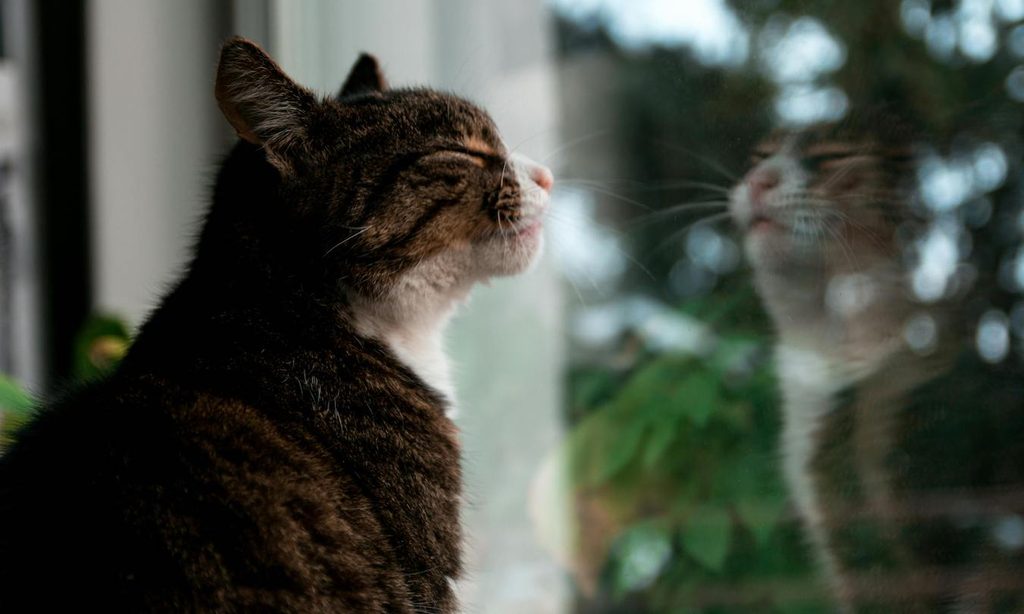
If your cat hunts more frequently than you like, it may be time to consider bringing them indoors. True, letting a cat indulge their hunting instincts can give them enrichment, exercise, and satisfaction, but it may be doing more harm than good. Not only are cats responsible for destroying populations of small animals like birds and lizards, but they also put themselves at risk of contracting diseases when they put wild animals in their mouth.
Bringing an outdoor cat indoors can be a long and arduous process, especially if your cat spends almost all of their time outside. This is why many cat owners build a “catio” or an enclosed space with plenty of open air where cats can climb, sunbathe, and watch birds from the safety of their homes. Some people dedicate a sunroom to their felines, while others enclose an area of their porch with chicken wire to keep their furry friends in. Make sure your cat has plenty of toys and enrichment during its adjustment period, but after a while, it will feel like they’ve always been an indoor cat.
Cats will be cats
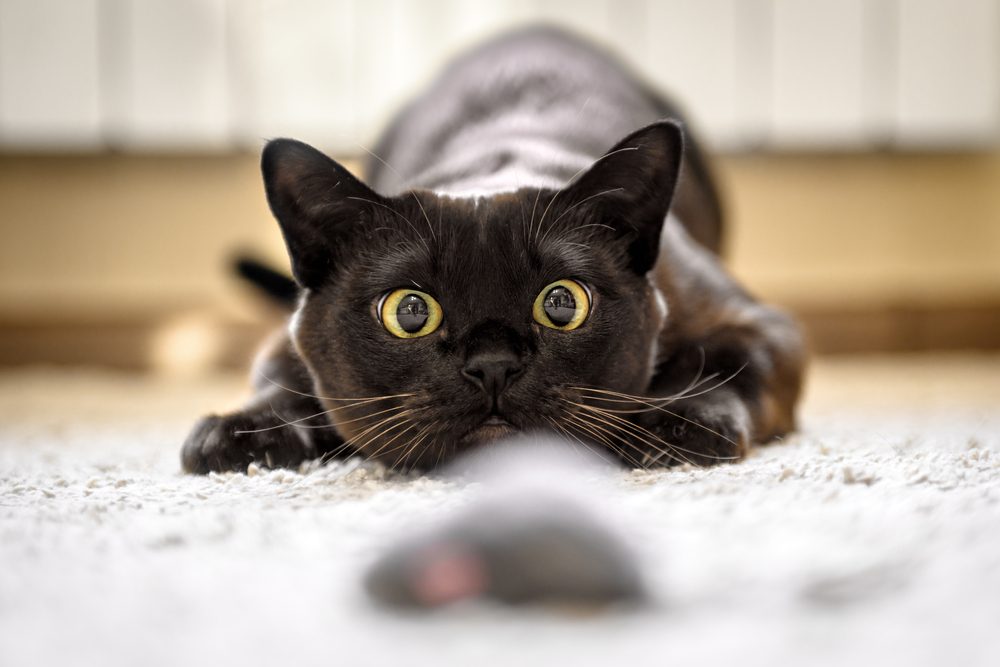
Cats love hunting, but your pet cat doesn’t need to kill small animals to get nutrients. Scientists have found that even kitties who successfully catch prey still rely mainly on the food provided by their humans to survive. When cats hunt, it’s simply instinctual. Therefore, you can ditch the cat-parent guilt you feel about keeping your pet inside, and you don’t need to find new food. In fact, it’s better for the ecosystem if you find other ways to help your cat satisfy his needs.
Engage your cat with toys, such as fishing poles and food puzzles, so that he can fulfill his drive to hunt without actually hurting another animal. If you’re concerned about your cat’s health or happiness, or if you need more advice about how to curb your kitty’s hunting habit, you can always talk to your vet.