
Whether it’s a puppy or a new-to-you adult dog, you’re in charge of teaching your newest furry companion what’s expected. Training your dog at home can be a quick way to encourage positive behaviors and reduce the negative.
Before you look into expensive training programs, know this. You can train your dog at home, on your own, with patience and consistency. Here is a basic five-step plan for training your dog so you can enjoy your companionship and provide healthy boundaries.

Step zero: Decide on one skill
This isn’t a step, but it is the most important trigger for training. What do you want your dog to learn? Teaching more than one skill at a time isn’t going to help your dog understand boundaries, so pick the most pressing thing and stick to it.
Maybe it’s teaching your dog to sit. Perhaps it’s teaching your puppy not to jump on the furniture. Whatever the skill, choose it and then focus all your efforts on that particular thing. If necessary, remove distractions and things that encourage your dog to perform the wrong behavior.
Step one: Get your dog to perform the behavior
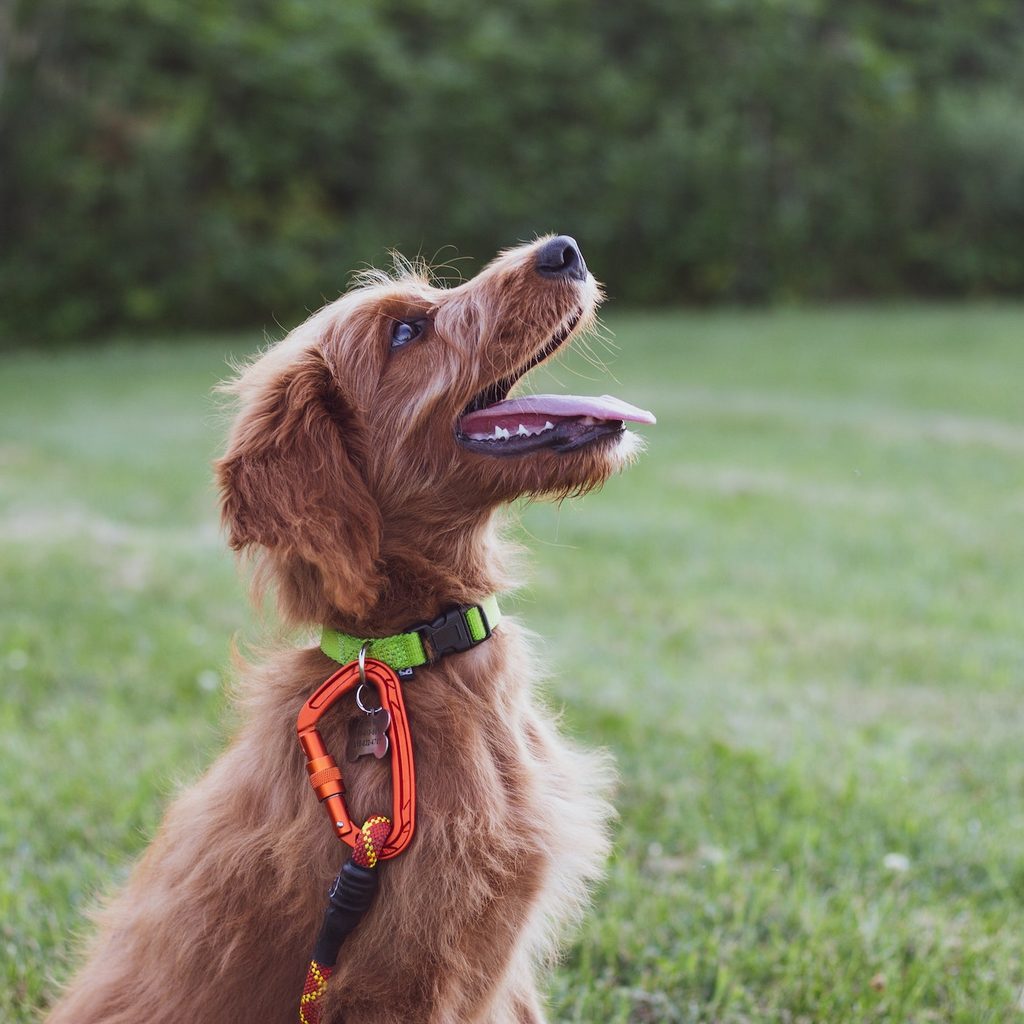
Here are the most common targeting methods:
- Luring: Use a treat to coax a dog into a behavior. For example, hold a treat above your puppy’s head and move it backward. Your puppy will follow the treat and naturally fall into a sitting position.
- Capturing: Wait for your puppy or dog to do the behavior on its own. For example, when your dog wants something, it may paw at you. Grasp the paw for a shake.
- Modeling: When you shape or place your dog’s body for the behavior, this is modeling.
- Reflex behaviors: If you’re teaching your dog to walk backward, you can walk toward your dog quickly in a hallway. Your dog has no choice but to move back and perform the behavior.
- Shaping: Teaching the behavior in small increments can be the way to train your dog for a more complex behavior like going to their crate.
Whatever it is, mark and reward the behavior. If your puppy sits, whether intentional or not, quickly praise your puppy and give a small treat. Your puppy will learn to associate the word with the behavior.
Step two: Add a verbal cue
It can be confusing if your puppy doesn’t know the word yet and does a bunch of different things before landing on “sit.” Instead, wait until your puppy begins to sit based on your luring. When that motion is consistent, begin adding the word to the motion. Now, as you lure your puppy into a sit (or another behavior), firmly repeat the word associated with the behavior. Reward your puppy.
Step three: Remove the lure or other assistance
When your puppy shows consistent sitting behavior using the word, begin to say only the word or verbal cue. You may have to remind your puppy at first what the word is, but gradually take away the assistance and rely on the verbal cue.
Give your puppy a few seconds to process the word. It can take some time for “sit” to invoke an immediate response. If your puppy performs the behavior, reach into your pocket for the treat or reward, and praise your puppy.
Step four: Vary the reward

You don’t want to give your puppy a treat every single time a “sit” command is followed. Begin removing the reward slowly and offering verbal praise instead. Start by removing every fourth or fifth treat, which will still keep some consistent rewarding.
The idea is to slowly remove treats as the default reward and replace them with praise. Offer treats every so often to make things interesting and to keep the dog motivated to perform the behavior when you command it.
Step five: Generalize
Once your puppy or dog is performing the command regularly using verbal cues, it’s time to generalize the behavior. Try the sit command at the dog park, for example, where there are lots of distractions, or try waiting a beat or two before rewarding or praising.
Dogs may not immediately recognize the command outside of your normal training area, so regularly practicing in different locations will help your dog understand the universal nature of the command. Keep plenty of treats on hand when generalizing and transition slowly back to verbal cues only.
Some tips for training
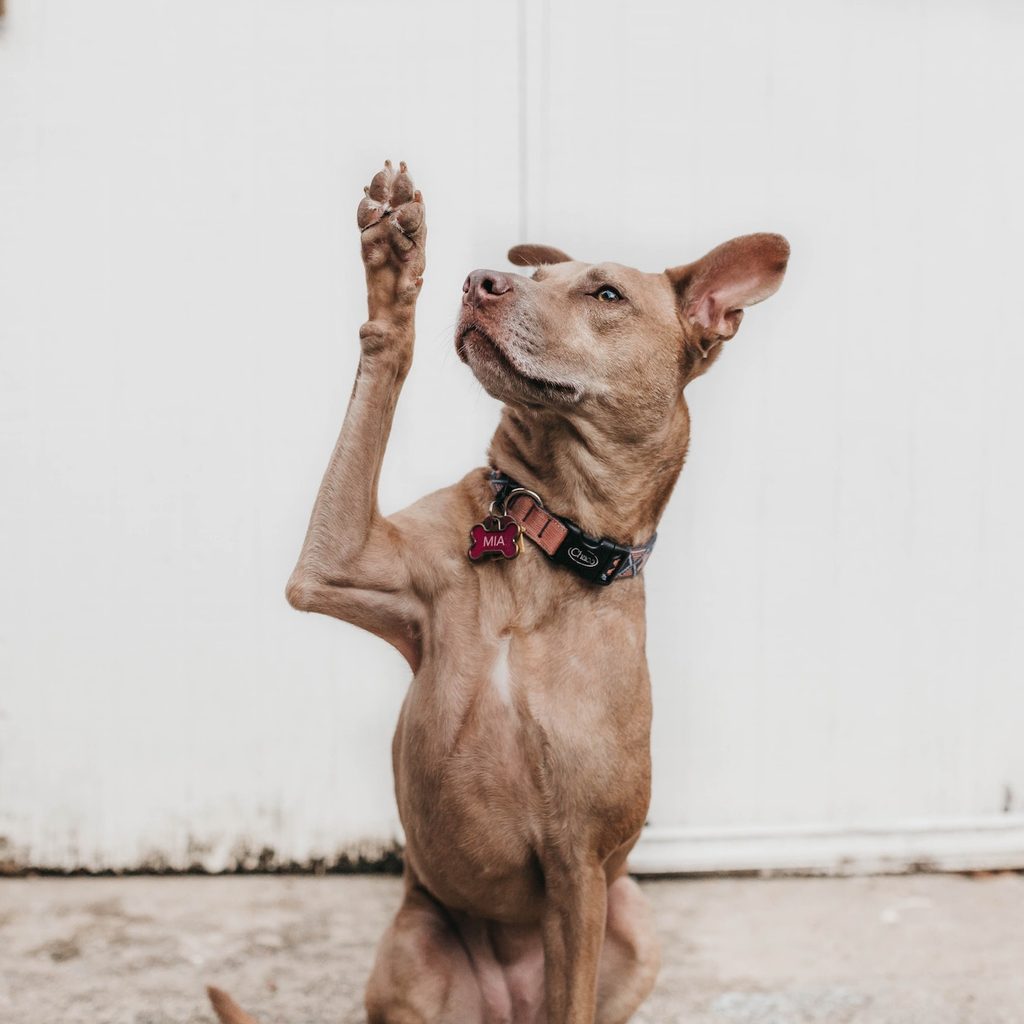
Here are a few things to remember as you move through the steps.
- Focus on one behavior: Trying to teach a whole bunch of commands at once is confusing. Teach one at a time, and move to a new one after the steps are complete.
- Stay positive: Reward your dog for behavior you want to see and avoid yelling at your dog or punishing for negative behavior. Dogs don’t process actions the way humans do, and you’ll get further by focusing on the positive.
- Stay consistent: You can’t expect your dog to learn a command if you only practice once a week. Carve out time every single day to run through commands, even if your dog has mastered them. This helps reinforce boundaries.
- Be patient: It can take dogs time, especially if they’re puppies, to grasp what’s going on. If this is your puppy’s first-ever command, expect it to take a while. Your puppy is not only learning the command but also the concept of training in the first place.
Establishing healthy boundaries
Your puppy or dog is relying on you to help understand what’s expected. Consistent training makes having a dog more enjoyable and reduces stress because your puppy knows what to expect. Follow these steps, and you’ll have the building blocks of a long, happy life with your furry companion.