When it comes to dog fetch training, we don’t really entertain the idea of teaching the same thing to other types of pets. Chasing and retrieving are behaviors that come naturally to them — it’s even in the name of some breeds! A rousing round of fetch helps them burn off excess energy, bond with their owner, and have tons of fun. Neon tennis balls scattered across the yard isn’t the only way fetch can look, though.
Cats, stereotypically, are much less interested in these types of games (or so you thought!). They’re more known for taking things from you than bringing them to you … unless you’re talking about a dead bird or other surprising “gifts.” They tend not to go for tennis balls with the same vigor dogs do, but with a smaller toy that they’re interested in, could it really be possible to coax your cat into a game of fetch?
Are cats trainable?
It might sound crazy, but cats are actually just as capable of learning to fetch if you go about it the right way. The process might not be as natural as it would be for a dog, but every cat’s personality is different, so you just might be surprised. One thing tends to be common to both animals, though: Cats have energy to work off, too. Melissa Chan, the Houston SPCA’s behavior specialist, explained to The Seattle Times that it’s “not realistic” to expect cats to “just hang out” 24/7. “One thing I wish I could tell every cat owner,” she said, “cats want to work for their food.”
In the same interview, Chan debunked the myth that cats are more difficult to train. Some people believe that this is because cats don’t have the same drive to please their owners that dogs do, but Chan assured pet owners that it’s an easy obstacle to bypass: “We have things that cats want. That’s all that matters.” Whether your kitty prefers a piece of fancy tuna or her favorite catnip mouse, there’s bound to be something you can entice her to work for. Once you find this special reward, your training can begin.
Teaching your cat to fetch involves just a few minutes of work a day. Don’t try to do too much at once — cats get bored quite easily! But when they’re interested, especially when their favorite treat is involved, they can be quick learners. Read on for tips and tricks for teaching your cat to fetch.
How to train your cat to play fetch
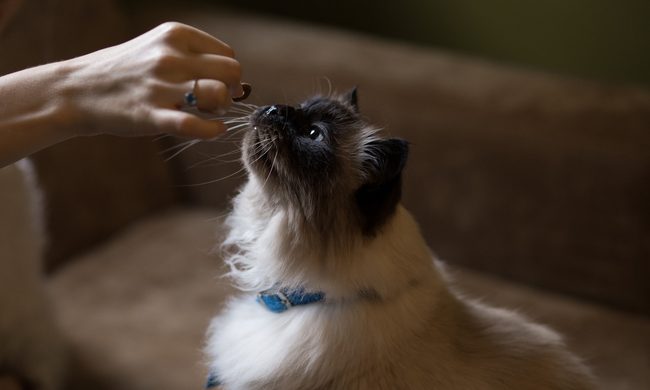
As mentioned earlier, the first step to teaching your cat anything, whether fetch-related or otherwise, is finding a reward she will love. It’s important to have the treat at hand when training your kitty so she’ll immediately associate the behavior with the reward — positive reinforcement is where it’s at! Timing is highly important when rewarding any animal so it remains clear what they’re being rewarded for. Yes, that means you’ll have to give them a treat or a few seconds of playtime every time they perform the desired behavior. This is another reason why training sessions are so short!
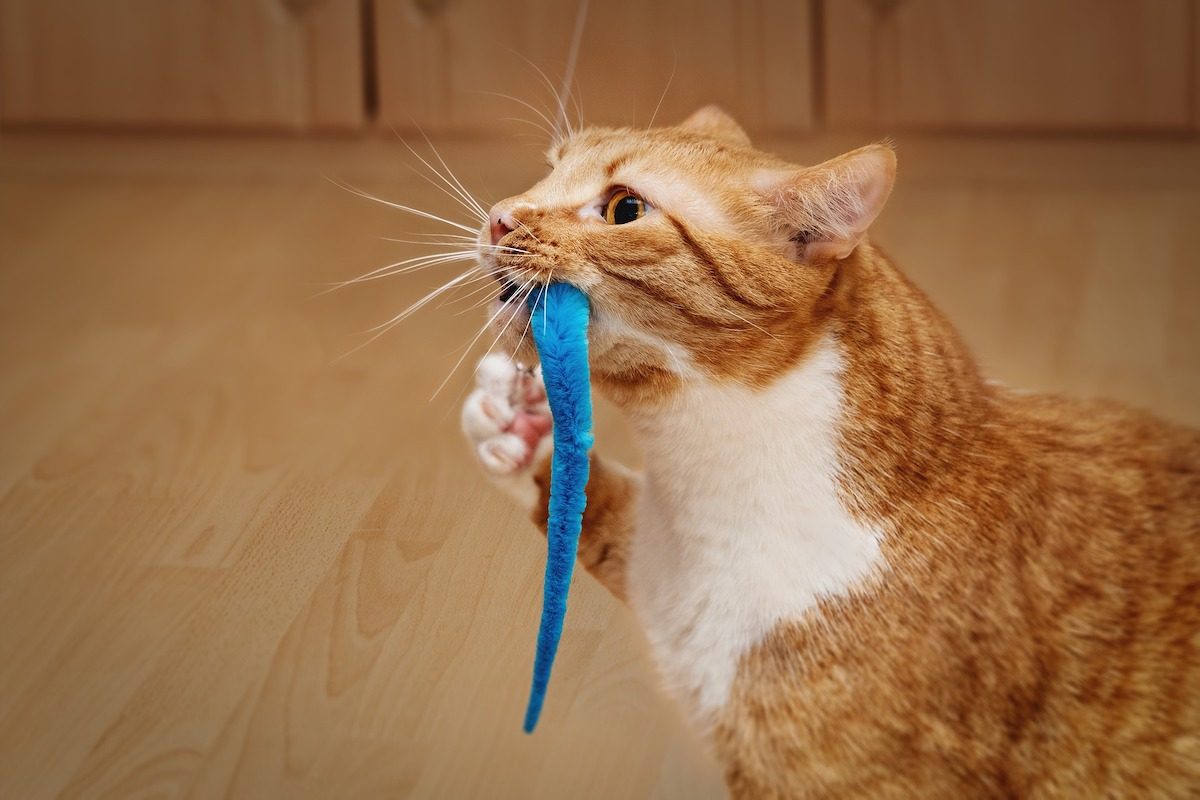
A great place to start is with the soft, kitty-friendly ball or toy your cat will be fetching. The folks at Chewy remind readers how important it is to make sure the ball is the focus of your cat’s attention — aka the key to the reward. Start with something simple that your cat can easily repeat by holding the ball out toward your cat for her to sniff or touch. When she does interact with the ball, even sniffing it or getting closer to it, reward her! Repeat this a few times a day until your kitty is comfortable.
Using a clicker when training your cat might help make the message even clearer. When your cat does what you’re looking for, immediately click the clicker and toss her a treat. A verbal message such as “Good!” is also an option, but you’ll need to remember to say it every time she performs the wanted action.
The next step is to get your cat to put her mouth on the ball, which will warrant some more treats and a few more minutes of patience. At first, your kitty won’t understand why she’s not getting a click and a treat for sniffing or touching the ball with her nose, and she may not know what to do next. Since kitties are naturally curious, she’ll probably try a few different things to get a treat, including putting her mouth on the ball. When she does — you know the drill — reward her!
You’ll take baby steps like these toward getting your cat comfortable with picking up the ball from your hand, then from the ground. Once she becomes a pro at retrieving the ball, try it at farther and farther distances, until you can toss it for her. The last step is rewarding your cat for bringing the toy back to you. Give her a treat for turning back toward you after picking up the ball, then for coming to you with the ball, then for giving it to you.
Keeping an eye on your cat’s behavior and mood during training sessions is key. If your fur baby is getting frustrated, it might be a sign to slow down or go back to the previous step of training. As mentioned, each animal is different, so training your cat to fetch will look different in every home! Be patient, give your kitty some love (and lots of treats), and you’ll get there in no time.