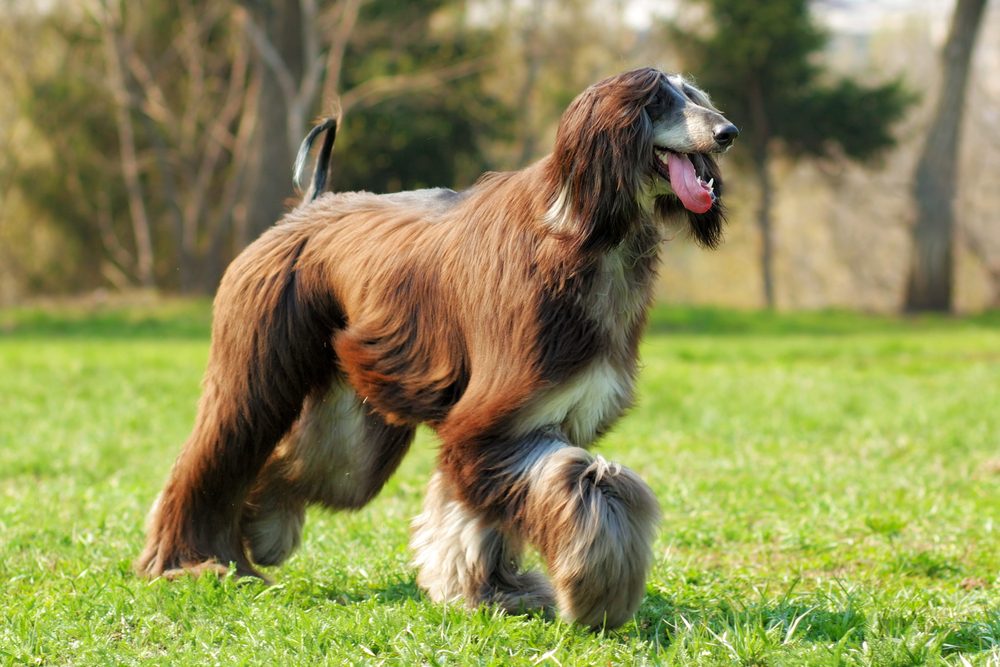
Afghan hounds are an ancient sight-hound breed originally used for hunting leopards and gazelles in the mountainous regions of Afghanistan. Despite its glamorous, regal appearance, the Afghan hound’s long, silky coat serves as a protective barrier against Afghanistan’s harsh climate. Often described as “catlike” by breed aficionados, Afghan hounds are aloof and dignified in the company of strangers, but they’re fiercely loyal and affectionate with members of their human family. But are Afghan hounds cat-friendly dogs? Let’s find out.
Hounds and cats don’t always get along
Because Afghan hounds have tracking and hunting hardwired in their genetic makeup, they’re rarely found on any “best dogs for cats” lists. However, that doesn’t mean you can’t train an Afghan hound to be cat-friendly. Afghan hounds have a reputation for being stubborn, so we wouldn’t recommend one of these sight hounds to a first-time dog owner. If you have more experience training dogs — and the patience and time to do so — Afghan hounds can be taught to live in harmony with their feline family members. We’ll teach you how to do it in just six steps.
1. Keep your fur babies separated at first
Whether you already have an Afghan hound and have just adopted a cat, or you’re bringing an Afghan hound into your cat-occupied home, you’ll want to keep them separated for the first few days. Make sure your dog can’t reach your cat, and don’t leave them alone together for any reason at first. With their keen olfactory senses, your fur babies will learn to recognize each other by scent even without being in the same room.
Give them time to adjust to having a new scent in their home. Bring your dog a blanket the cat has slept on and play with him while he smells it. This will help your dog associate your cat’s scent with positive experiences. Similarly, you can take one of your dog’s blankets or toys to your cat during playtime, so she learns to recognize the dog as part of her family. If your cat realizes your dog isn’t something to be feared, she’ll be less likely to run from him, which can provoke an Afghan hound.
2. Make sure your Afghan hound follows basic commands before meeting your cat
Before you introduce your Afghan hound to your cat, you’ll need to ensure he knows how to follow basic commands like “sit” and “stay.” Training your dog to follow fundamental commands while you’re introducing him to a cat will add unnecessary stress to your life, and it could have tragic results. In this case, it’s much better to be safe than sorry. Use positive reinforcement when you’re training your dog, as you’ll see much faster results than if you scold him for not doing what you’ve asked.
3. Introduce them slowly
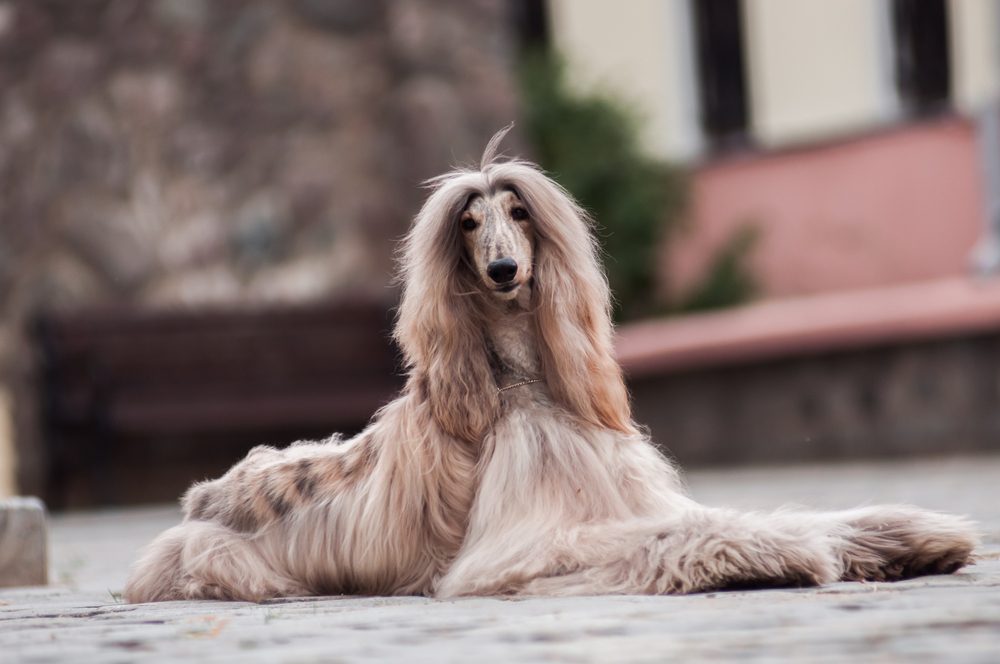
You want your pets to get along so you can spend time with both of them at once, but suddenly opening the door isn’t the best way to introduce them. One method we recommend is feeding them on opposite sides of a closed door. They’ll come to associate being in close proximity with each other with being fed, something all animals look forward to. However, all dogs have distinctive personalities. If you notice your Afghan hound snarling at your cat through the door after they’ve eaten, discontinue this method immediately and move on to the next step instead.
4. Host brief meet and greets
With your Afghan hound on a leash, let your cat roam the common areas of the house so your fur babies can get acquainted. If your dog attempts to lunge for your cat, tell him “sit” in a firm, even tone. Reward good behavior, like your dog’s calmly sitting beside you while your cat walks around. Keep hold of his leash at all times; your pets may want to sniff at each other, but you need to remain in control of how close your dog can get to your cat. Continue meetings, gradually increasing the time your pets spend together, and keep an eye on your pets to make sure they’re not becoming agitated.
5. Let them roam freely
After your pets can remain in the same room, you can let them wander around together. Make sure your cat has access to a cat tree or install a cat door so she can escape to another room if she wants to be left alone. If your dog shows any signs of hunting your cat, separate them again and repeat the steps until they’re able to get along without issue.
6. Start them off young
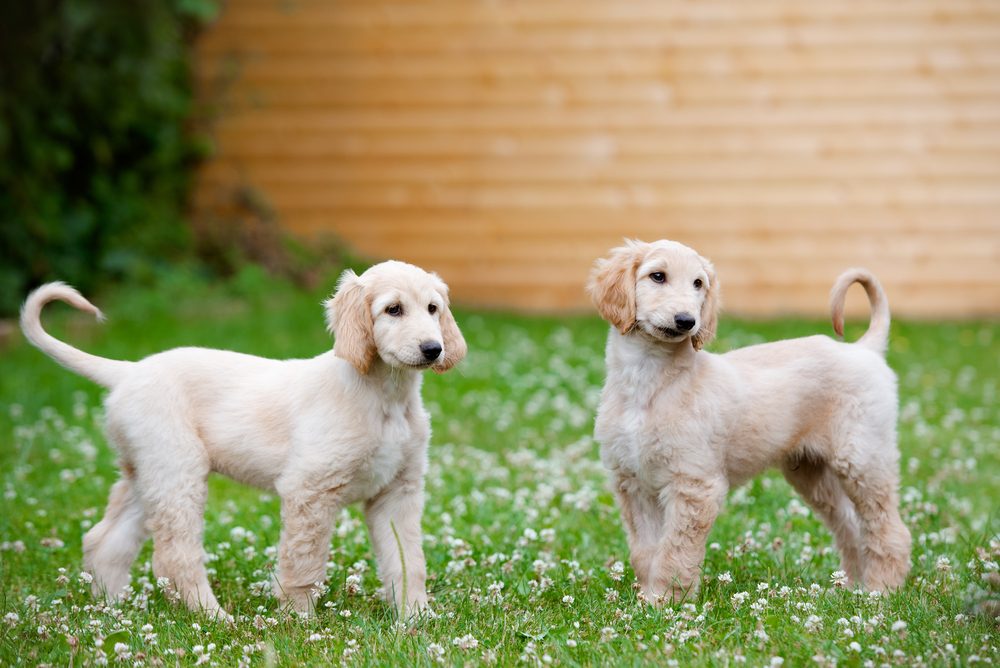
While the previous methods are geared toward teaching older Afghan hounds how to get along with a cat, one of the easiest ways to ensure your dog won’t see your cat as a prey animal is to adopt a young puppy. When dogs grow up alongside cats, they see them as friends and playmates, not prey.
Afghan hounds are a clever and elegant breed, but they aren’t known for getting along well with cats. With patience, training, and a watchful eye, you can teach your Afghan hound to see the family cat as a friend, not a prey animal. While the best solution is adopting a puppy, even adults can be properly trained. In time, you’ll have a harmonious household, and your fur babies might even become best friends.