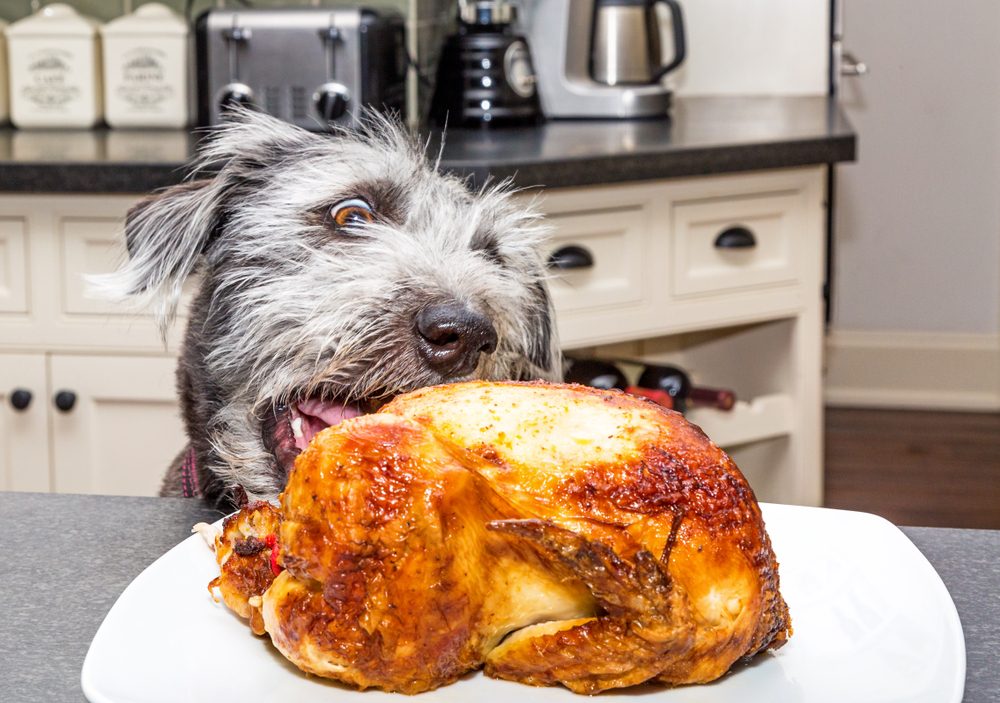
Your dog is no dummy. His incredible sense of smell and your tendency to leave food on the counter has taught him where he can find tasty treats when his food bowl is empty — or when you aren’t looking. And every time he successfully scavenges food from the counter, it reinforces the likelihood that he will repeat that behavior again and again and again.
It’s an annoying habit, for a variety of reasons. It’s unsanitary at the very least, not to mention potentially dangerous for your dog, especially if he eats food or medication that is toxic to canines.
Fortunately, there are ways to teach your counter-surfing pup more respectful (and safe) behavior. Here’s how to stop a dog from jumping on the counter.
Put your things away
This might seem obvious, but if you don’t want your dog taking things off your counter, then be extra intentional about keeping your counters clear of things that interest him. Put all food away in the refrigerator or cupboards where your dog can’t access it. Clean up all dirty dishes, either by washing them immediately or putting them in the dishwasher. Don’t leave out bowls of fresh fruit or vegetables. And don’t leave plates of food unattended, even for a moment.
Restrict access to the kitchen
One of the best ways to keep your dog off the counter is by placing his food bowls in another room and teaching him to stay out of the kitchen entirely. Depending upon your floor plan, use a gate to prevent him from entering the kitchen or teach him to respect an invisible boundary.
If you’re hosting a party and know your dog is prone to stealing food from the table or counter, relocate him in another room or playpen with food, water, and toys of his own and instruct guests not to feed him any scraps of food from their plates.
Keep him busy with toys of his own
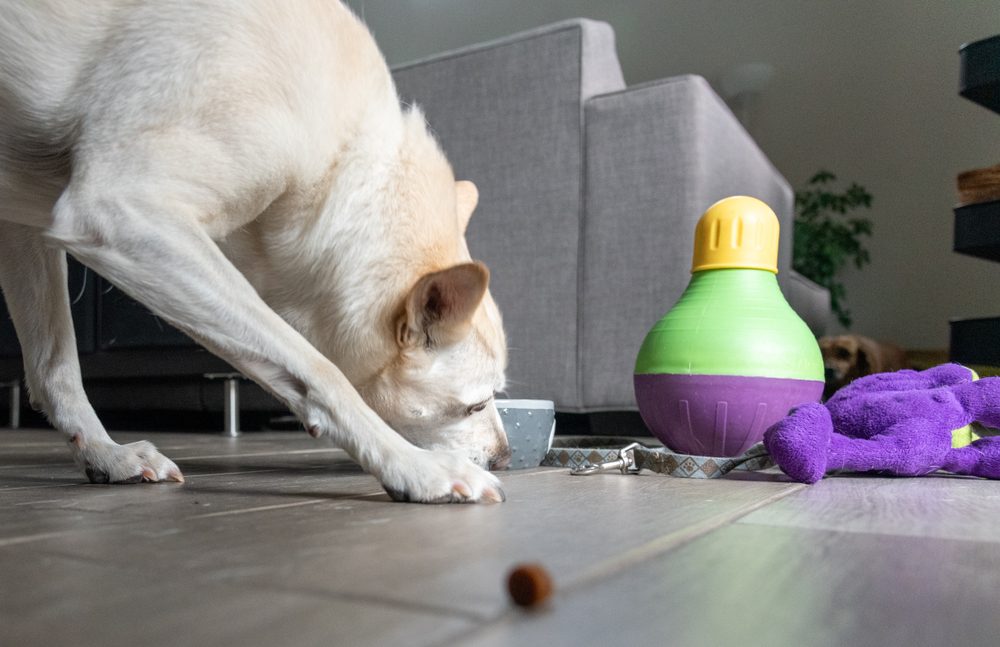
Whenever you’re in the kitchen preparing food, make sure your dog has something tasty of his own to occupy his time. He might be happy with a treat he can chew on while you’re cooking, or even a puzzle toy with a food reward. The goal here is to teach your dog that the good things in the kitchen are not on the counter but on the floor in special toys he can enjoy during certain times of day.
Teach your dog to ‘leave it’
This command is effective in teaching your dog to wait for permission before he eats anything he finds, whether it be on your kitchen counter, something you drop on the floor accidentally, or things he finds on your daily walk — all of which could be dangerous to his health.
Teaching the leave-it command takes time and patience. Here’s how to accomplish this using his favorite treat:
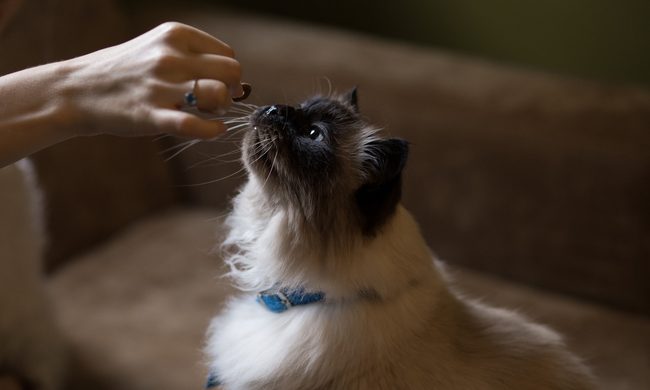
- Put a small piece of the treat in your hand, close your fist, and let your dog get a good sniff. Then open your hand and let him take the treat.
- Repeat the process, only this time, keep your fist closed and wait patiently without saying a word. Let him nudge and sniff your fist until he grows tired and backs away or sits down. Then, open your fist and let him take the treat.
- Once your dog consistently learns to wait patiently for you to open your fist, begin saying “leave it” in a firm voice the moment he begins to move away.
- Practice frequently, with lots of praise as he masters the command.
Check your own behavior
A dog’s sense of smell is keen, there’s no denying that, which means he’s probably coming into the kitchen whenever he smells something delicious. There’s nothing wrong with occasionally sharing dog-friendly, healthy table scraps, of course, but if you don’t want your dog constantly searching your counters for food, don’t feed him scraps of food from the counter. Instead, place anything you want to share in his bowl. That teaches him to look in his bowl instead of on your kitchen counters whenever he wants a special treat.
Reward good behavior
As a good pet parent, you already know that positive reinforcement is the healthiest way to train your dog to respect boundaries and obey house rules. The same holds true when teaching your dog to stay off the counters.
Punishing your dog for eating food off the counter can be — ahem — counterproductive. Instead of learning what not to do, he’ll just become sneakier and, perhaps, aggressive the next time you discipline him when food is involved. Instead, whenever you find your dog counter surfing, tell him “no” firmly, then redirect his attention with a treat-filled puzzle toy or other activity he likes just as much.
Most dogs learn new commands within one to two weeks of consistent training. When you implement these five simple solutions in a firm, consistent, and patient manner, your dog’s counter-surfing habit will soon become a thing of the past.