Spring brings out the pet parent instinct in all of us — we see so many baby bunnies and chicks that it’s natural to want to add one to the family. However, we recommend that potential pet parents think carefully before bringing home any new animal. Everyone in the household needs to be sure it’s a good fit, including other creatures already living there. But if you truly couldn’t help yourself and impulsively adopted a baby chicken or two, we’re here to help you figure out how to care for them successfully.
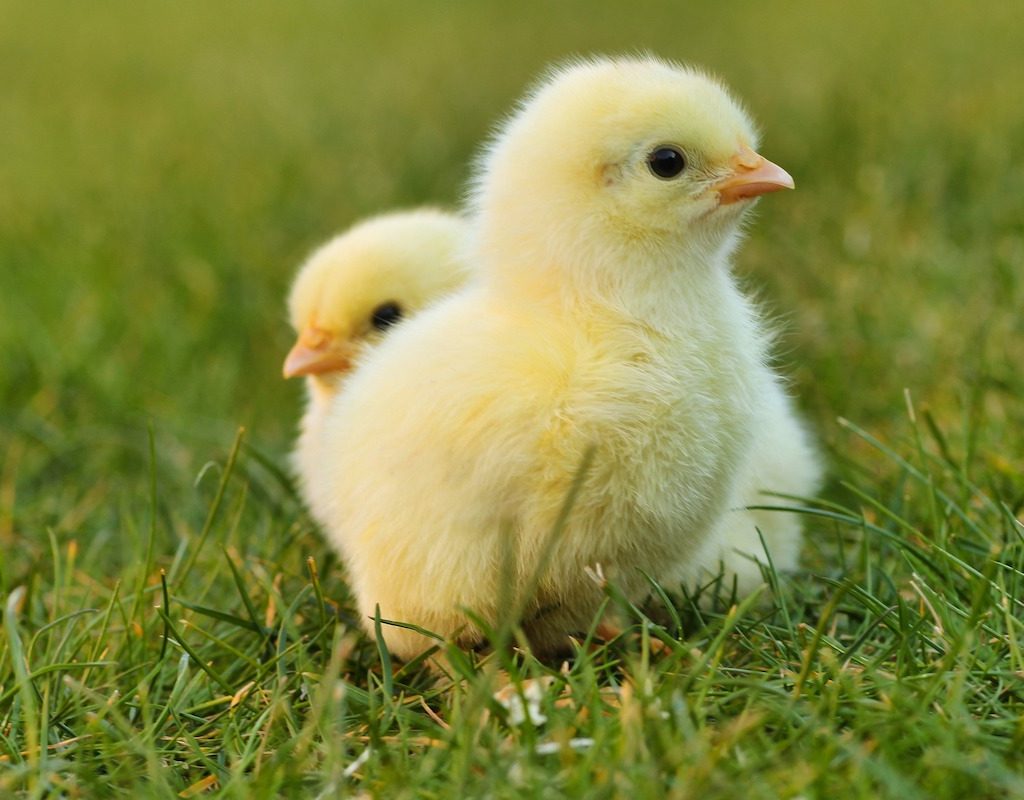
How do I take care of chicks?
First, you need a pen and then a coop to keep the chicks in. You can buy a coop, or you can build one if you’re handy. Make sure it’s sturdy, warm (more on that in a minute), and protected from predators. We all know what happens when a fox gets into the chicken coop, and just the stress of dogs or cats could harm little chicks. Flooding when it rains can also cause problems, so you’ll notice that most coops are elevated off the ground to keep out excess water as well as local predators.
You’ll likely keep very young animals in a heated pen. You can start small and upgrade as they get bigger, eventually graduating the flock into their coop. Many first-time owners successfully create their own brooder pen with a small plastic box, substrate, and heat source. The little chickies will stay in there until they’re ready to move outside.
What do my chicks need to stay warm?
At first, your chicks need constant heat since they struggle to make their own. Red light is also essential to prevent your chickies from pecking one another, which can lead to injury or death. You can take care of both these needs with a heating lamp. Chicks who are only a day old need a heating source set constantly to 92 degrees Fahrenheit. Be sure to monitor the temperature closely and adjust as needed, though some lights have built-in controls. Keep the heating lamp about two inches above the substrate of the pen. You want it to heat the area thoroughly but not be placed so close that the heat burns your chicks’ delicate skin. As the chicks grow, you’ll turn the temperature down by 5 degrees per week. At six weeks old, the chicks will move from the brooder pen to the coop and you can remove the constant heat source.
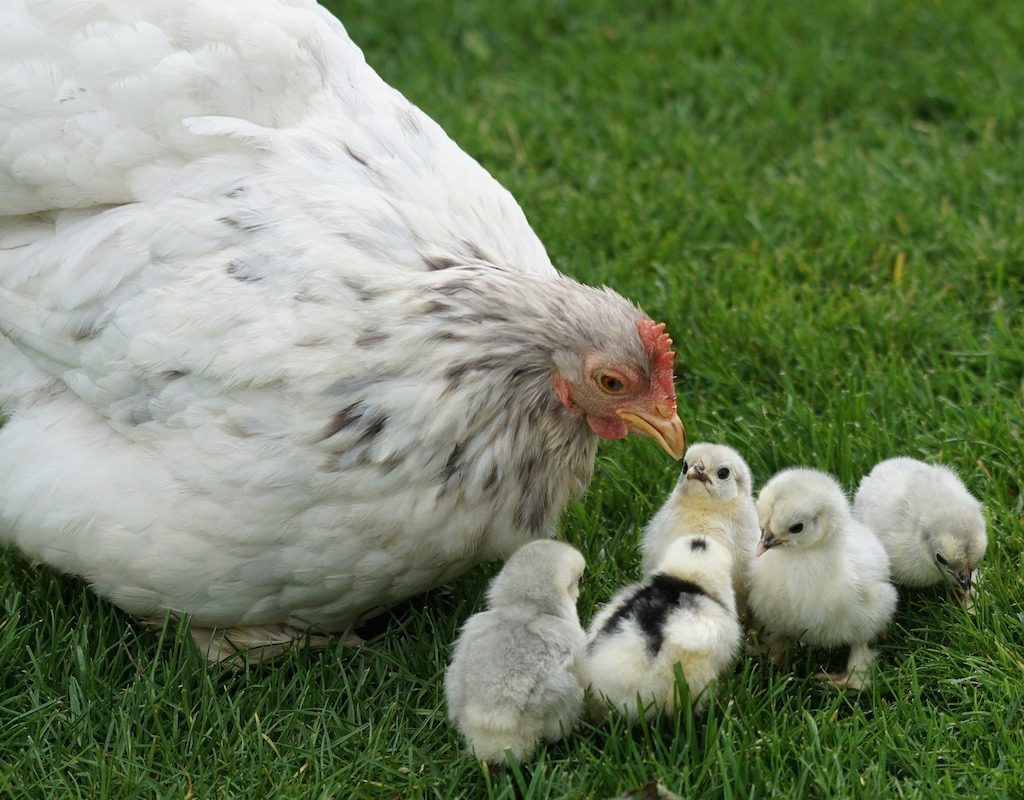
What should my chicks eat?
All babies, whether human or avian, need protein. While mammals provide protein to their young through milk, baby chickens aren’t able to digest the product of mammary glands. They need a different source of nutrients.
Choose a starter feed with plenty of proteins and vitamins. It might take a while for your chicks to figure out how to eat and drink, as strange as that sounds. Set their food right in front of them, and encourage them to drink by tapping the bottom of the inside of the water bowl to imitate drinking with a beak. After a day or so you can introduce a feeder, leading the chicks to it if necessary. As they grow, you’ll adjust the contents of their food, reducing the amount of protein a little at a time. Eventually they’ll eat chicken pellets and other adult bird food including bugs.
On a final note, you want to be careful about where you get your chicks — as with any pet. Make sure you bring home chicks who were well cared for as eggs and check that their mother was well fed and free-range. If at all possible, look locally rather than buy chicks online, so you aren’t shipping the animals, which can lead to problems. Many farmers or hatcheries will sell baby chickens for a small fee, or if you’re feeling adventurous, consider getting a hen who will lay eggs and helping her out with the process from start to finish.