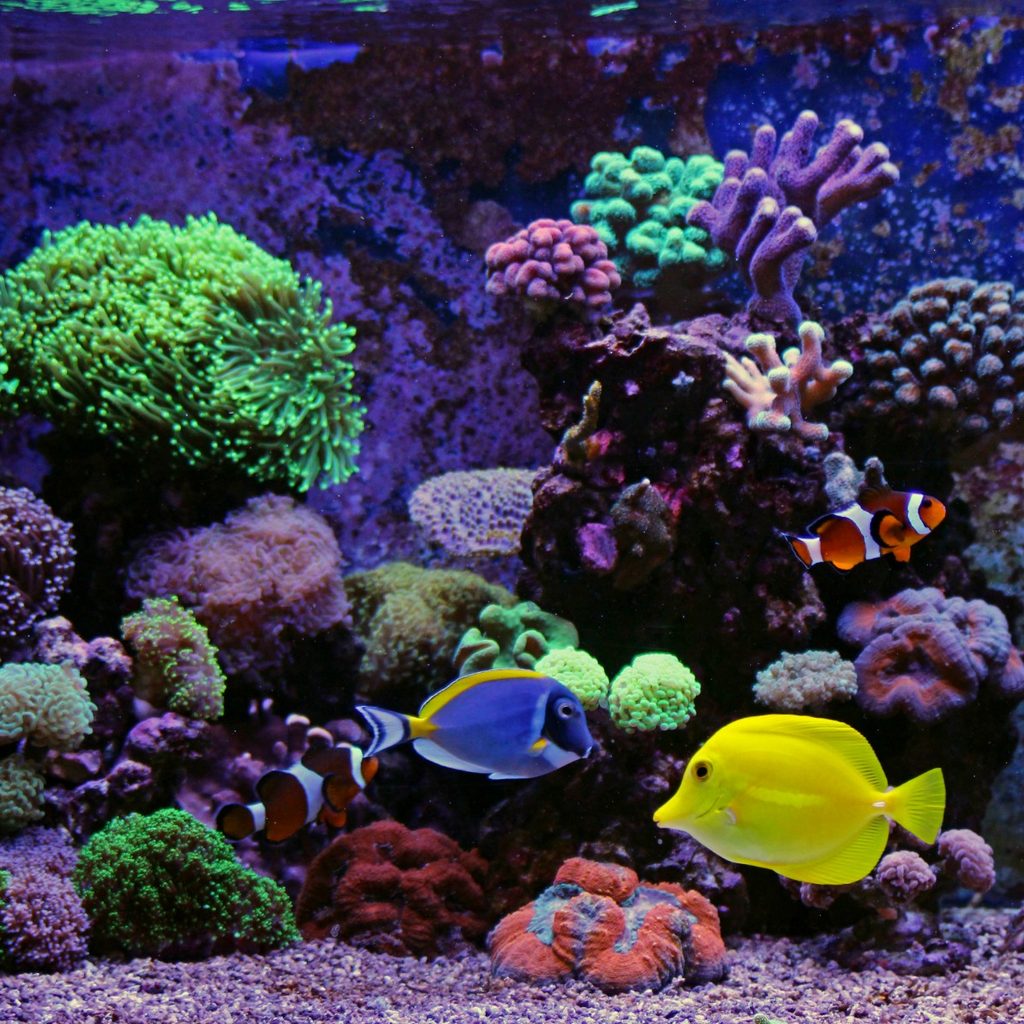
Plagued by algae? We’ve all been there. Maintaining the proper balance in your saltwater aquarium can be tricky, and unfortunately, a tiny change can trigger big problems. Once an issue has set in, you may have trouble figuring out exactly what needs adjusting to put it back right again.
Algae can affect even the most well-kept aquarium. While some products and techniques eliminate the bulk of it in one treatment, it’s far more important to discover the underlying cause to prevent the green gunk from coming back.

What causes algae in a saltwater tank?
It doesn’t take much for algae to overrun your habitat and cause problems, but why did it grow in the first place? Unfortunately, just a few little spores can spark a big problem. Certainly be extra careful when adding something to your ecosystem, like a new creature, but algae spores can also go airborne, and they’re everywhere (literally). That’s why even master aquarists wind up having a problem occasionally.
Even though it’s impossible to eliminate algae completely, you can (and should) make it tricky for these plants to thrive. Like everything else in your aquarium, algae need to eat. Of course, they do this through photosynthesis, but this greenery needs nutrients, too. Both your light source and your tank levels may cause a bloom, and you’ll have to tackle each issue separately.
How to get rid of green algae in a saltwater tank
Getting rid of an algae explosion takes a few steps, for both immediate reduction and long-term treatment.
Step 1: Remove excess algae with your hands.
It’s not a forever fix, but feel free to pull it out. Wash your hands before and after, making sure they’re clean but don’t smell like soap when yanking the algae out, and use gloves if you have anything that might bite or sting you.
Step 2: Add a forager.
Lots of underwater dwellers eat algae, and by adding one to your aquarium, you will help keep the quantity down (and get a fun new addition to your collection). You’ll need to properly determine exactly what type of algae you have growing so you can get the correct feeder.
Step 3: Put in some macroalgae.
Make your pesky plant compete by adding macroalgae of your choosing to your decor. The hardier of the bunch will snatch up all those nutrients and prevent the algae you don’t want from taking over.

How to prevent green algae from coming back
If you have been in the saltwater game a long time, you probably have a really good handle on the proper water parameters for your tank, but that won’t be enough to rid your aquarium of this nuisance. To fully eliminate algae (as much as possible), you’ll need to do the following.
Step 1: Test your aquarium.
You need to do a water check frequently and adjust levels as necessary, paying particular attention to nitrates and phosphates.
Step 2: Remove anything dead.
Both plant and animal matter will decompose and release chemicals. Take it out immediately after discovering it, and check for leaves daily if you have a mini underwater forest.
Step 3: Get a hungry algae eater.
They will counterbalance your tank and you'll provide them with an endless buffet (funnily enough, if they do their job too well, you’ll have to give them a new source of algae from outside the tank).
Step 4: Check your source water.
Avoid taking from the tap if at all possible as the water in your home may contain extra chemicals you don't want.
Step 5: Examine your filtration system.
Take a look at every piece and make sure it’s functioning properly, replacing anything that’s not working and cleaning any pieces that need it. Look into adding new cleaners like a protein skimmer or activated charcoal.
Step 6: Keep track of feedings.
You should monitor how much your fish consume and how much you put in to prevent overfeeding. If a lot floats around after, reduce the amount you offer each meal.
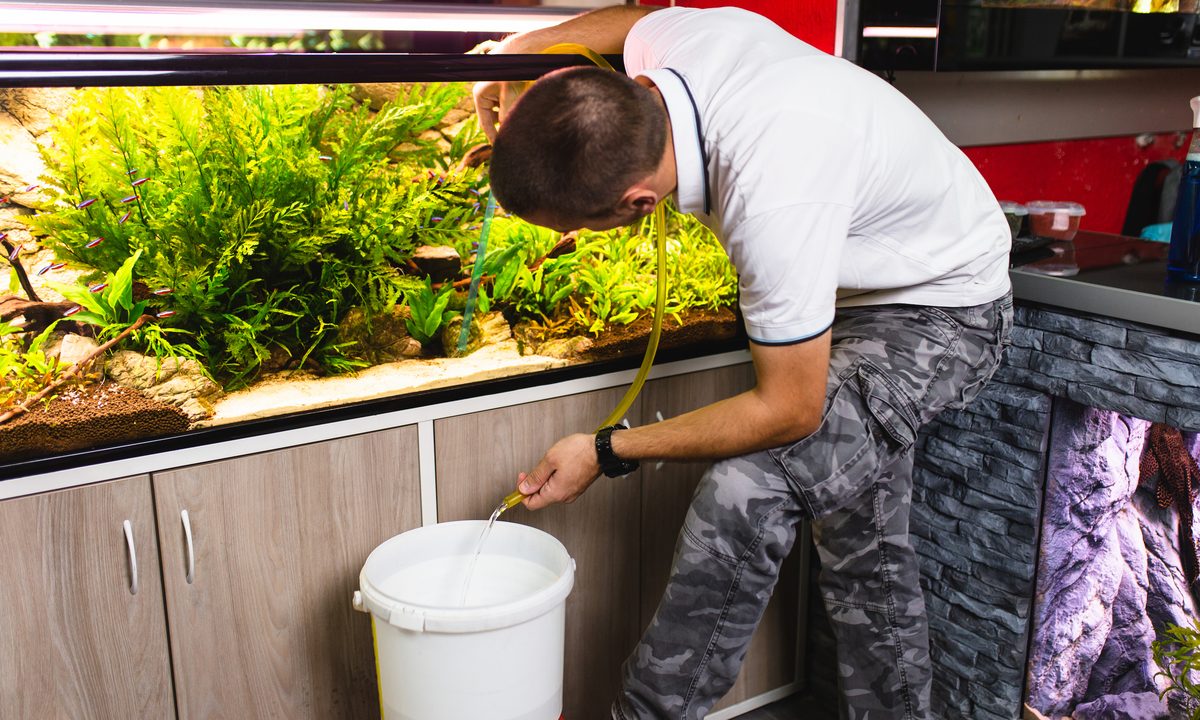
Step 7: Do a partial water change, carefully.
Remember that too much change can introduce more problems than it fixes.
Step 8: Reduce your light.
Or even turn it off for a day while you’re employing other countermeasures. You're effectively starving out the algae by doing this.
Step 9: Add a treatment.
If you’ve tried everything on the list and your algae won’t budge, as an absolute last resort, you can look into buying a treatment.
Figure out which problem you have, keeping in mind that bacteria growth can sometimes look like algae. If you go the conditioning route, the additive will vary greatly depending on what you have in your tank. Also, even though these are safe for fish, putting anything this strong into your aquarium can wind up changing things down the line. Lastly, don’t panic every time you see a splash of green in your fish home — a little algae won’t hurt.