Rabbits are fun, curious companions that have a wrongful reputation for being dirty. In reality, rabbits are a fantastic choice for pets — especially for people who don’t have a lot of space or a big backyard.
Rabbits can be housetrained, or more specifically, litter box trained, making them a more natural choice for apartment dwellers or those who can’t always walk a pet regularly. It’s not quite the same as with cats, but you can litter box train your sweet rabbit in as little as a week with the right steps.
Setting up the litter box
Rabbits can use a litter box as cats do, but they have different requirements. Rabbits need an open space with low sides. A standard litter box is fine as long as it isn’t covered and the sides are low. You can even use a plastic bin you already have — just cut an entrance gap in the side, if necessary.
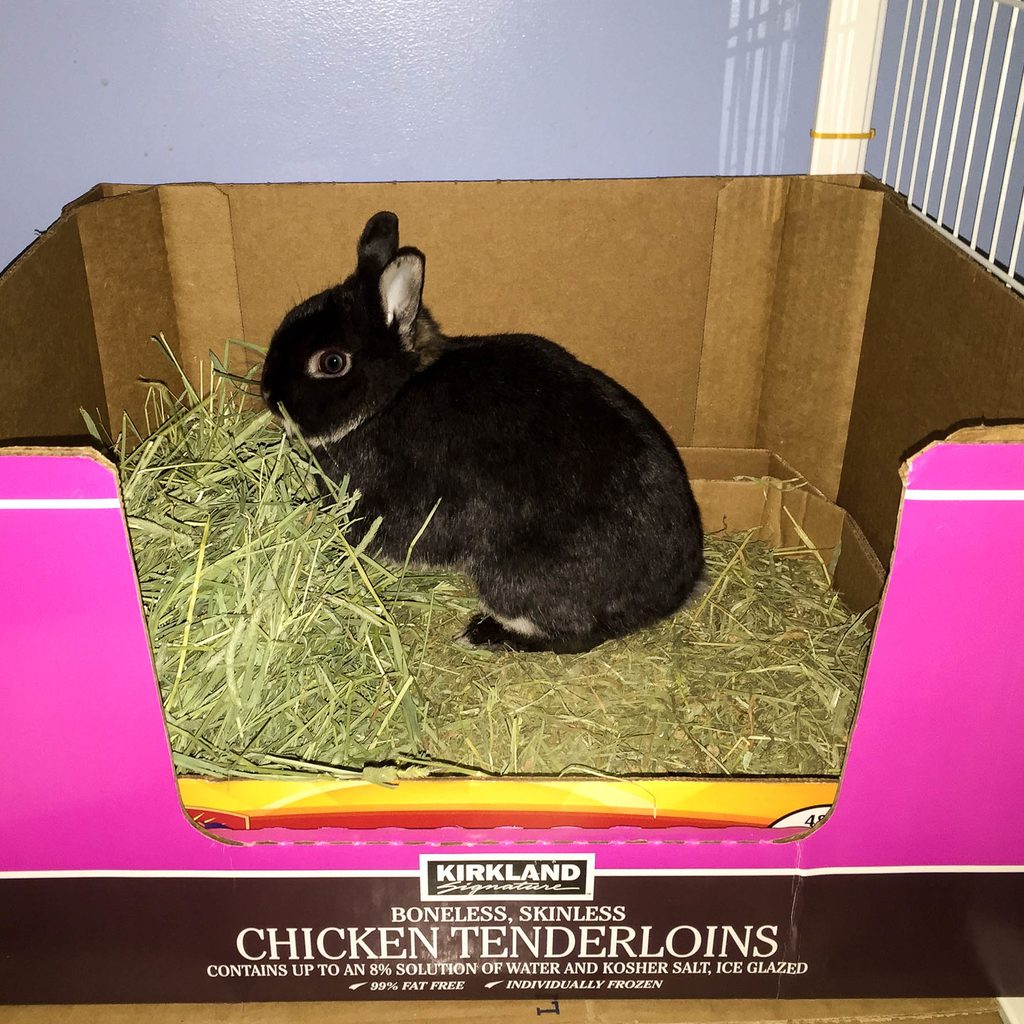
Once you’ve got your bin (or several), here’s how to set it up.
Choose the right litter
Some litters are dangerous for your rabbit’s respiratory system, causing injury or death. Avoid litters that contain the following:
- Clay, which can affect your rabbit’s respiratory system.
- Cedar or cedar oils, which can be lethal.
- Pine or pine oils, which can also be lethal.
- Zinc, which can cause zinc poisoning.
Overall, ensure that the litter you use is approved for use by rabbits, because they tend to nibble their litter, unlike cats. Approved materials include recycled paper shavings, safe wood shavings, and bedding pellets.
Prepare for trial and error
Bunnies can be more finicky than cats when it comes to their litter, so you may have to try out a few combinations before getting the litter box just right. Start with around one inch of your chosen litter and cover it with rabbit-safe hay. You could also put a hay feeder next to the box.
The hay encourages your bunny to come to your chosen litter box location to nibble. Ensure that your bunny likes the particular hay you use, and only use it where the litter box is.
If your bunny continues to go to a particular spot that isn’t the litter box, you may have better luck moving the box to that spot. Sometimes, rabbits will pick a particular place they like, and that’s that.
Protect the area
Rabbits aren’t as precise as cats, so investing in a tough rubber or plastic mat for underneath the box is critical. Ensure that it’s tough enough so your rabbit can’t chew through it. You’ll have an easier time mopping up small accidents, and you’ll also keep excess hay or litter out of your carpet.
How to train a rabbit to use a litter box
Once you’ve got everything set up, it’s time to start litter training your rabbit.
- Start with a single room. Place your litter box in the desired location, and keep your bunny close to the litter.
- Choose a time frame — every 10 minutes or so — when your rabbit is out of the enclosure. Gently pick up your bunny and place it in the litter box. Praise it. If it happens to “go” while in the litter box, praise it even further with treats.
- If your bunny goes outside the litter box, clean it up immediately, and then place your rabbit in the litter box. Place any poop inside the litter box with your bunny. Again, praise your bunny.
- As your bunny begins to get the idea, you can stretch out the time between placing your rabbit into the box. Clean up accidents immediately, but keep the litter box a little dirtier than you would normally — your rabbit will associate the box with going to the bathroom.
- Through trial and error and a lot of patience, you should see your rabbit getting the idea.
- Once your rabbit has mastered one room, you can expand to other areas. It may be best to keep multiple litter boxes around the house so that your rabbit always has access.
Frequently asked questions
Why do I need to use hay?
Rabbits love to nibble on hay and poop at the same time. Placing hay on the litter or in a hay feeder directly beside the litter box will encourage pooping in the right place.
How much litter should I use?
Since you dump the box each time, you don’t need much litter. Cover the bottom of the box up to an inch to absorb wetness as your bunny urinates.
My bunny was litter trained but is forgetting good habits. What do I do?
Needing to retrain your domestic rabbit throughout its lifespan isn’t uncommon. Simply limit your bunny’s space until good habits return. Go through the steps again if you need to.
My bunny is going to the bathroom on my furniture. What do I do?
It’s best to place your litter box where your bunny likes to go to the bathroom, but if that place is on your furniture, it’s a different story. Your rabbit is showing you who’s boss. That’s an entirely different training question than litter box training. Keep up with your litter box training even while you address this second issue.
A well-trained bunny
Bunnies are trainable, like cats and dogs, which make them great pets to have around your home. Consider the unique respiratory needs of your rabbit as you build your litter box, and ensure that you are consistent with your training.
Training can be a time for you to bond with your bunny. Spending time together is one way that rabbits learn who is boss and that they’re safe with their humans. Through litter box training, you can build a relationship with your bunny and follow good household habits. Be consistent and patient during this process.