While we love having birds flock to our feeders, we don’t want them making our lawns their meal. Planting grass seed invites a host of animals, including winged ones, who see this as an all-you-can-eat buffet. Of course, you don’t want to harm them or scare them off forever, but you do need your grass to recover. There are a few tricks you can use to keep the animals off your lawn and continue to encourage them to visit when and where you want them. Here’s how to keep birds from eating grass seed.
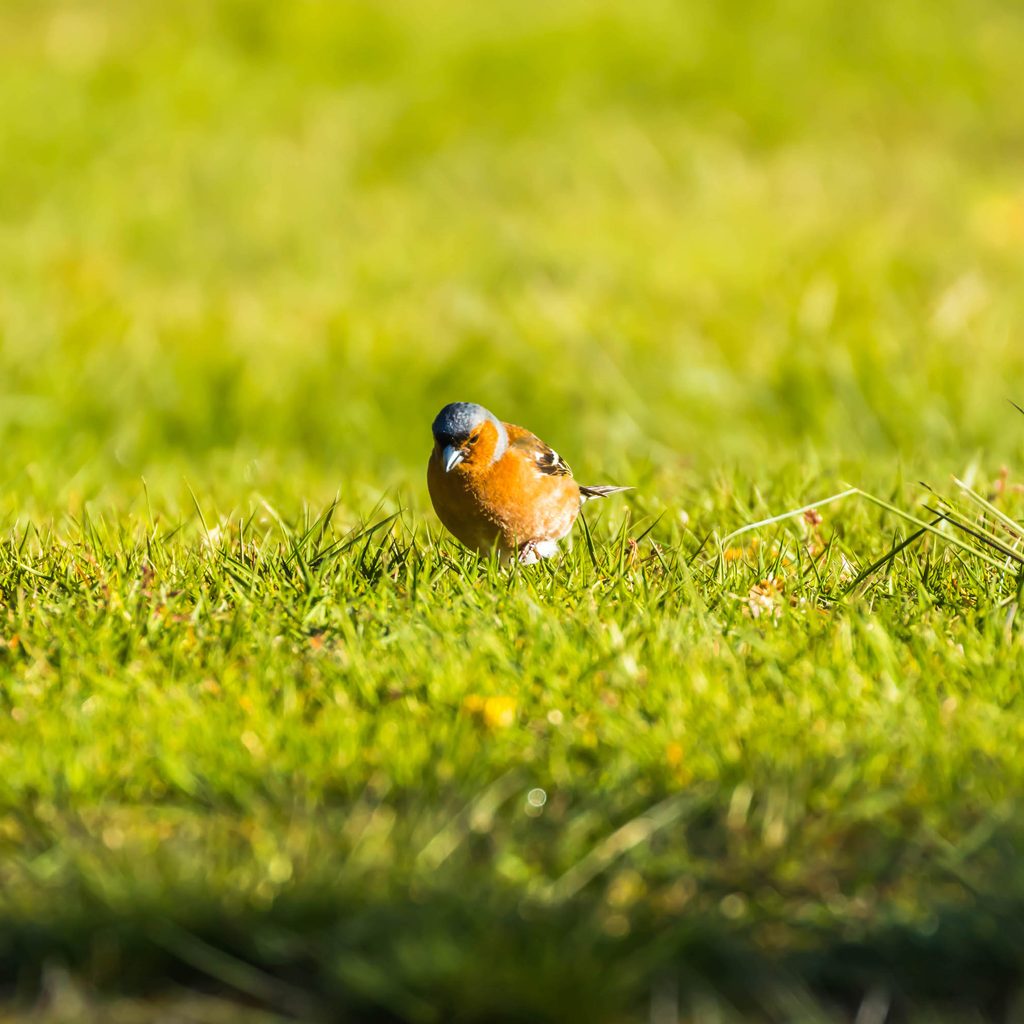
How do I keep birds from eating my seedlings?
Think about this in two ways: You can scare birds from the seed area or you can cover your seeds. Both will work in tandem as well if you want extra protection. We’ll start with coverage options.
Add straw
The goal here isn’t to completely hide the seeds — straw or hay won’t do that for you. But adding a layer of mulch will cause most birds to search for their meal elsewhere. Make sure you rake the seeds first and that you sparsely scatter the straw. You don’t want it so dense that it blocks the light and kills your little seedlings. While this is a great first step, it won’t work in certain conditions, like a windy area.
Use netting
This brings us to our next idea. Placing netting a couple of inches above the ground means birds can’t get in to eat the seeds. You’ll want to get something heavy-duty enough that they don’t shred right through it but not so thick that it prevents water or sun from reaching the new plant life. Because it needs to stay off the earth, you’ll have to attach it to stakes at the edges. Make sure to fold down the edges so that birds don’t crawl underneath and wind up stuck.
Place down burlap
Burlap combines ideas one and two together. You’re both hiding the seeds from sight and preventing critters from getting at them. Unlike netting, this will be easy to tear, but if the birds don’t realize there’s a delicious snack under there, they’ll hopefully give it a pass. Put something heavy around the edges, such as rocks, to keep it in place. Burlap also can benefit the seed by trapping heat and should let enough water and light in while keeping birds (and other pests) out.
What deters birds from eating grass?
We talked about protecting our seeds, but if that’s not working (and some birds are quite clever and persistent), there are a few things you can do to get the birds to leave you alone.
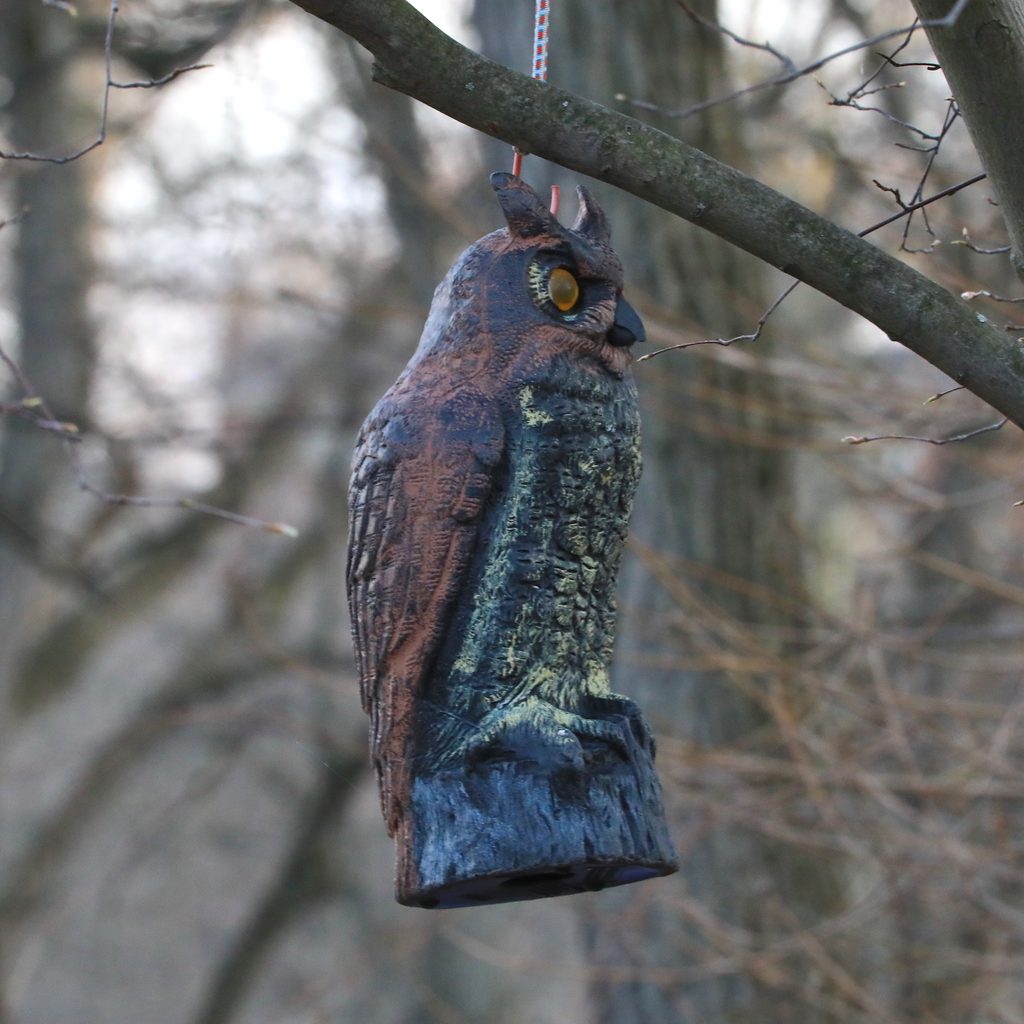
Use predator decoys
It’s easy to incorporate those big fake owls into your decor or put them off to the side so that you barely notice their existence. The birds of the neighborhood will absolutely spy on them and steer clear of the area. You’ll need to diligently move them around since eventually, the birds will realize the fake raptor hasn’t shifted, and you can mix things up by using more than one type — an owl and a hawk, for example. Fancy models include sounds as well for extra impact. The downside here is that the local flyers will steer clear of your whole house, which means you can’t still benefit from watching them through the windows.
Install a sprinkler
You probably already have a water source planned for your newly seeded area, but you may need to upgrade. If you can find one with a motion sensor, that’s an easy and safe way to scare off birds. Remember, it will go off when anything triggers it, including pets or humans. Like us, birds, and even some rodents, do not like to be sprayed with water and will fly (or scamper) away. After a few times of getting caught, they stay clear. Carefully calibrate the intensity so you don’t inadvertently hit the birds too hard and hurt them. It should be an annoyance, not a punishment.
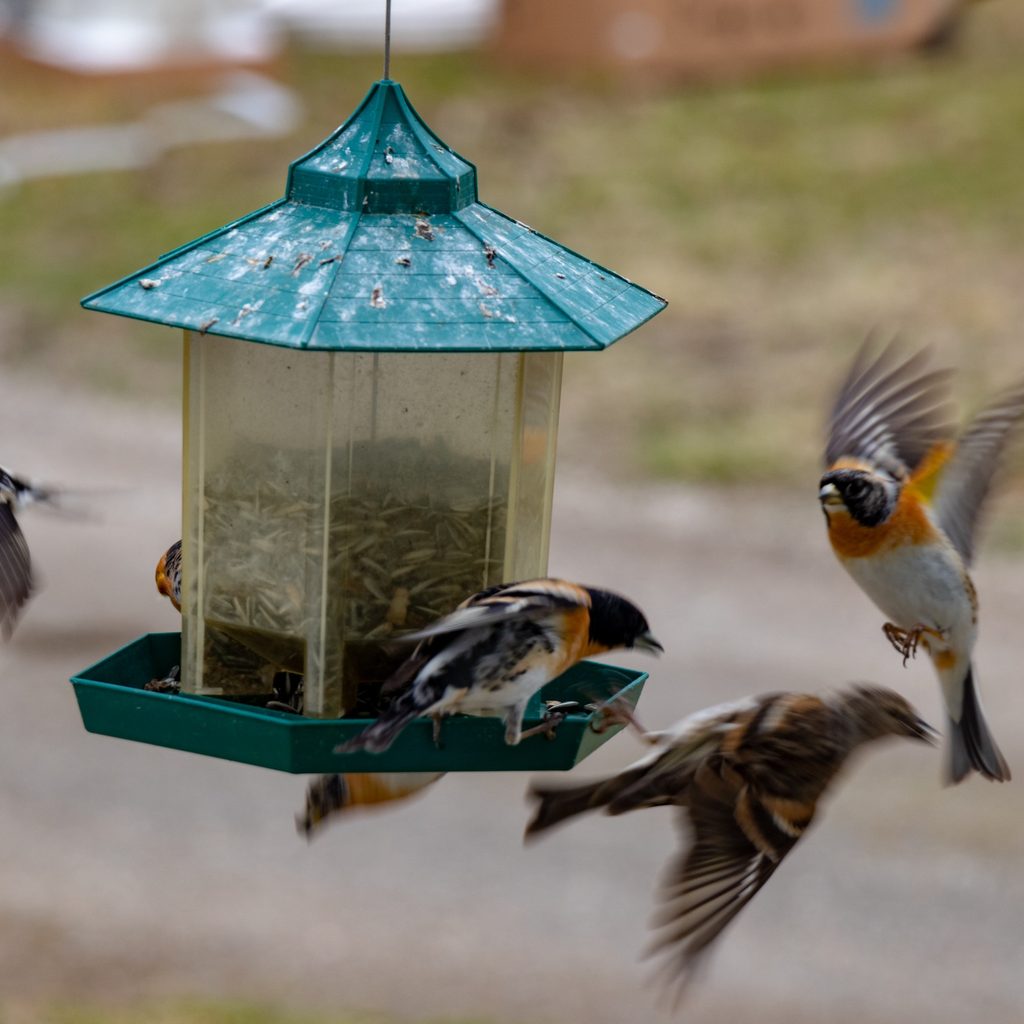
Put up a feeder
It seems backward, but one of the best ways to keep birds away from your grass seed is to entice them to another area with yummier treats. The key here is to maintain it really consistently, starting right before you set down your new grass so that the birds already know where to look for their dinner. As long as you keep the restaurant stocked with prime meals, they won’t need to go looking for grass to eat. Splurge on the really good stuff when you need them distracted, like suet, nyjer, or fruits, even if you return to a basic mix after.
The perfect solution will vary and will most likely include something from column A and some from B. Combining a few methods will often work double, and many of these solutions, like the decoys, don’t require maintenance. One more note: Never use pesticides or other harmful chemicals to keep birds away as that can make them sick or even kill them (which is probably illegal in addition to being sad). Some repellents are safe, like those made from peppermint oil, but triple-check to ensure you’re getting something that won’t harm your feathered friends.