Anyone who adopts a rodent should know they’ll be overwhelmed by the teeth. Guinea pigs in particular have lots of dental needs and often use their chompers to communicate as well. Sadly, you won’t see a happy piggy smile, so instead, you’ll have to spend some time studying your piggy to decipher the mouth movements.
Oral health can also indicate bigger issues, which means you should keep a close eye on those pearly whites when you hear your pet grind, chatter, bare, or click them. So why do guinea pigs chatter their teeth? There are a few reasons, but none of them are particularly good.
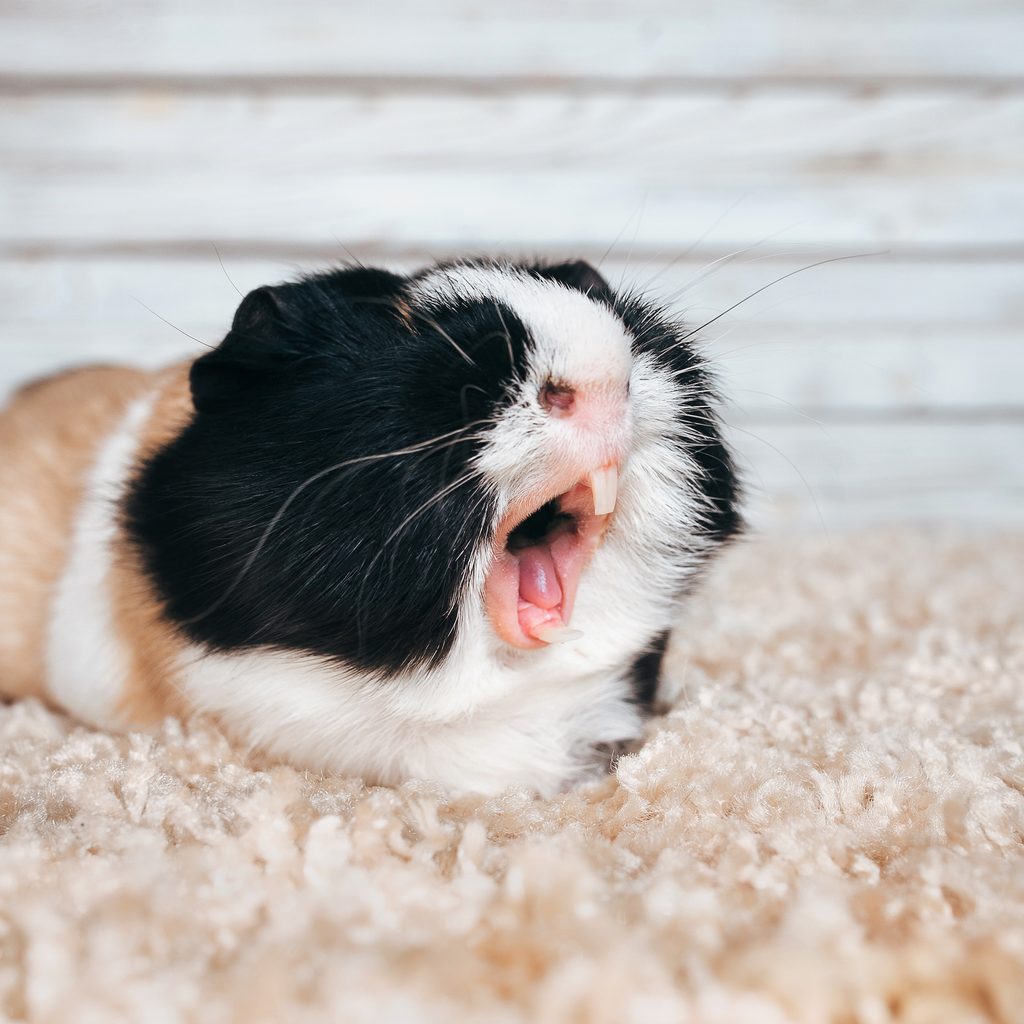
What sounds do guinea pigs make with their teeth?
Guinea pigs make more than 10 different noises, including wheeking and chirping. Each signals something unique, so pay close attention to exactly what your animal does and says. Your pet will use their teeth to show you they’re frustrated or hurt with three special sounds. Here’s how to tell them apart.
Hissing
You may hear a hiss-like noise come from your cavy, just like a cat, and it says something similar too. Usually, this means “leave me alone” or “I’m annoyed.” Treat it as a sign to give your pet a little space. They could be sick of playing but have no other way to communicate those frustrations (unfortunately, they likely won’t come out and tell you plainly). Don’t go away forever though — these little guys have short memories and they’ll want you back at their side in no time. But do take it as a serious sign of discomfort. In fact, sometimes the hiss precedes a bite, so try to get yourself clear quickly before they make a lunge for you.
Grinding
Persistent teeth grinding typically has a physical cause rather than an emotional one, and a trip to the vet may be in order. Sometimes guineas grind their teeth when in pain, just as you might grit yours when ripping off a Band-Aid. As prey animals, they’re designed to hide injury and illness, so a small sign like this could be all you get to determine that something is up. Alternatively, it might be the teeth themselves that are causing the issue.
Remember, many small pets have fangs that never stop growing and frequently need attention. Have your animal doctor do a full dental workup to spot any issues quickly and correct them in time. If that’s not the problem, the grinding likely signals frustration, similar to the hiss.
Chattering
You will most commonly see this sign when you introduce a new pet into the home and your original inhabitant feels the need to show a display of dominance. Unfortunately, a fight might be brewing, and you should separate the pair while they both calm down, then try again. Always carefully add a new member to the group with lots of check-ins along the way. If no new piggies have joined and yours distinctly makes this noise, you might be the problem (don’t take it personally). Typically, you’ll want to back off and return your guinea pig to the cage, though sometimes you’ll get a teeth-chatter when you’re in the middle of something annoying yet essential, such as grooming.
Lastly, if you have any brand-new babies in the house, Mama will definitely bare and chatter her teeth at you — wouldn’t you if a giant predator approached? Steer clear when she does. Trust us, she means business.
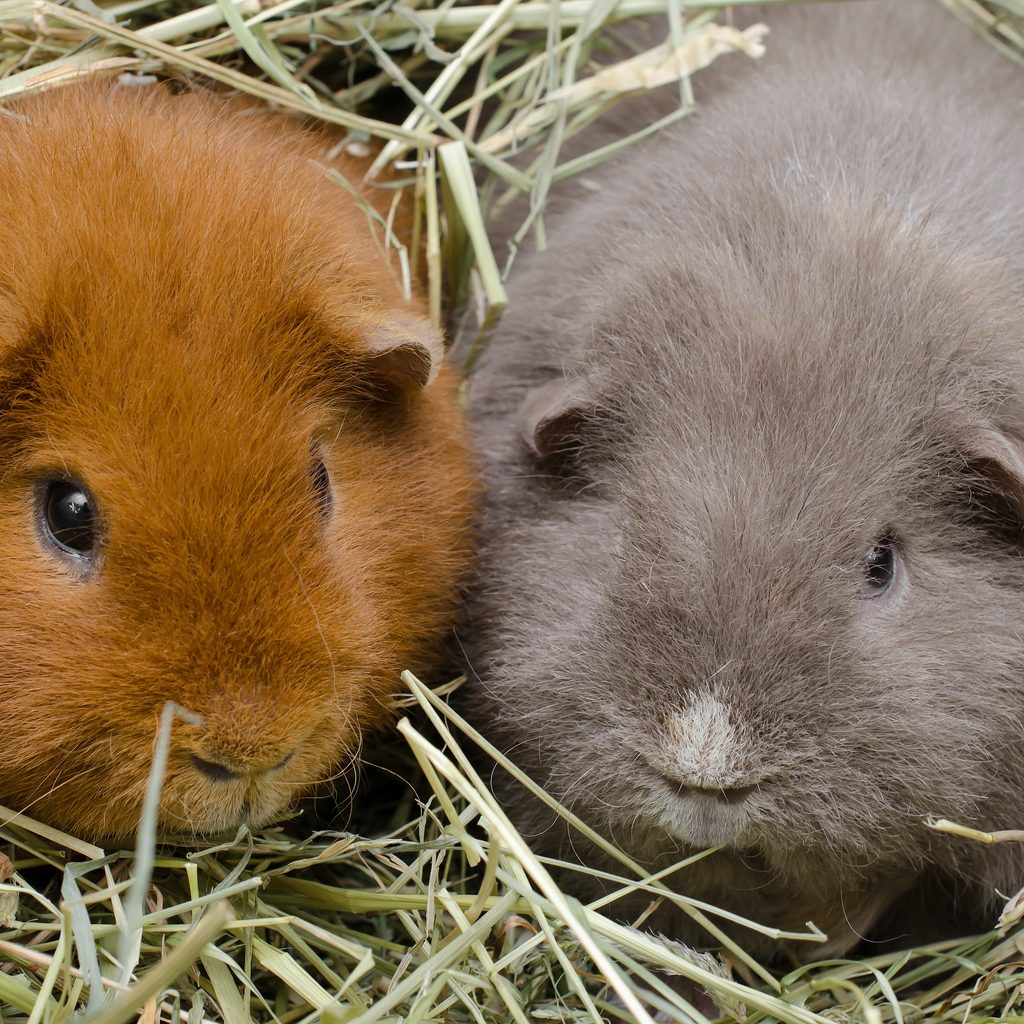
Final thoughts on teeth chattering
While teeth chattering certainly can mean that your guinea pig needs a vet, not all dental communication is equal. Try to figure out first which of the three mouth noises she’s making and what it might be in response to. Oftentimes, you’ll notice pretty quickly what’s upsetting your piggy just by looking at their surroundings and stimuli. Even if no chattering occurs, you need to consistently check their teeth and provide extra hay so they can naturally grind them down to the proper size.
Hay will head off most mouth issues at the pass. Lastly, if you hear constant teeth chattering and fighting between two specific animals, it could be time to separate them. Think about setting up different cage spaces for the instigators so no one gets hurt — and you get some peace and quiet.