
Bad news, pup parents — at some point in your dog’s life, he’ll undoubtedly have to wear the dreaded cone of shame. Not only is the infamous dog head cone bulky and uncomfortable, but it’s also downright ugly. Unfortunately for your pooch, wearing some form of protection is essential during recovery time. In addition to medicating your dog, making sure your fur baby gets adequate rest during the recovery period is also important.
So, what should you do if your dog gets too worked up attempting to remove his cone? Don’t worry! We’re here to help. We’ve rounded a list of our favorite helpful pet care products that actually work. Best of all, these accessories are affordable, so don’t worry if you need to try out a couple of options before you find the perfect fit. Here are some of the most popular dog cone alternatives to consider for your furry friend.
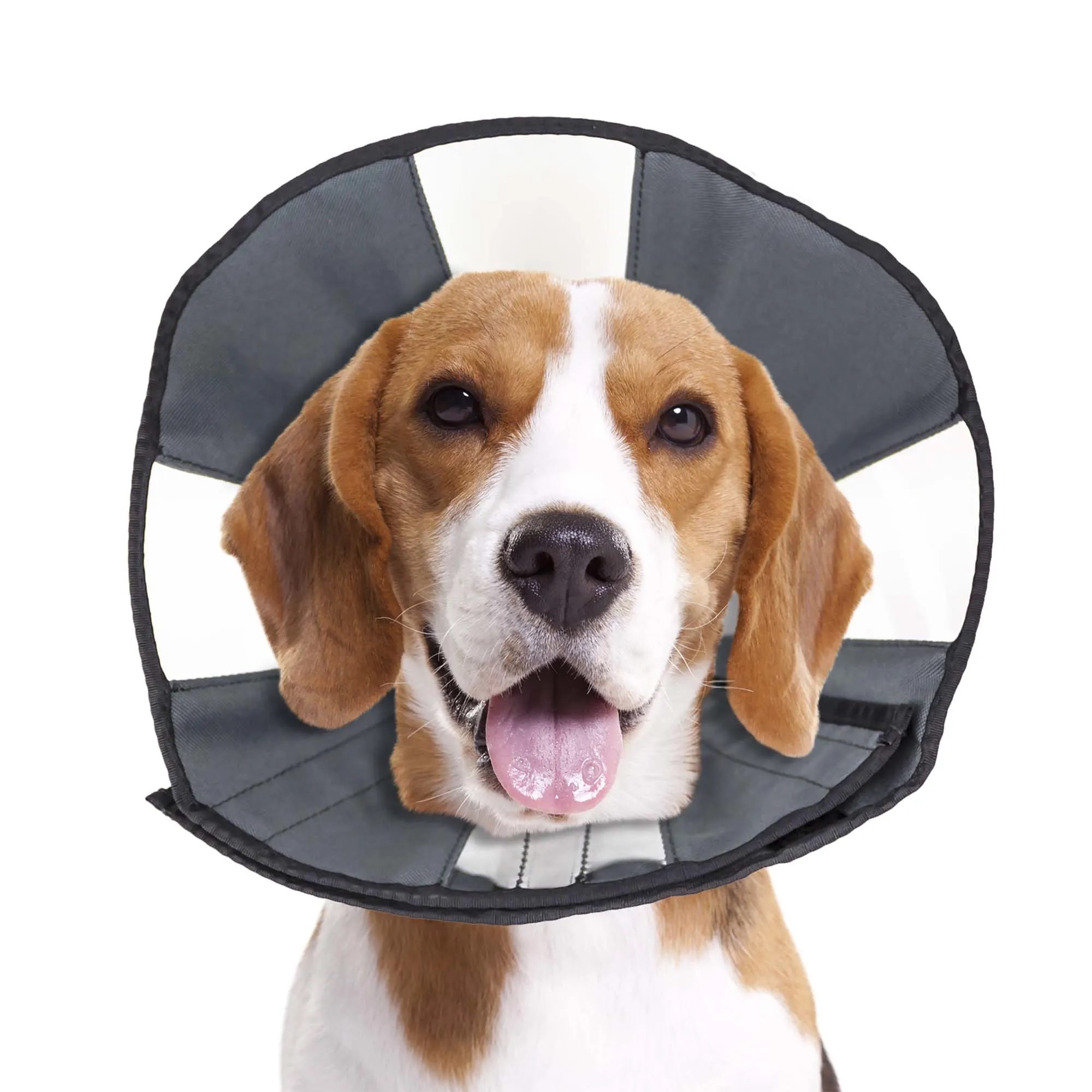
Soft cones and recovery collars
If your pup needs the protection of a medical-grade cone without the uncomfy qualities, look no further than a soft cone or recovery collar. A product like the ZenCone provides the support and blockage of a regular cone without the sound amplification or visual obstacles. The ZenCone, in particular, features easy-to-see-through clear material around your pet’s eye level, so he won’t be visually handicapped while he recovers.
The flexible fabric also allows your pup to sleep and lounge comfortably wherever he goes.
This soft and comfy conical collar will fit like a glove around your fur baby’s neck thanks to its adjustable fit. Your dog won’t be thrown off by any new sensations since this cone attaches directly to the collar he’s already wearing. Yep, that’s right — just thread the collar through the loops at the bottom of the ZenCone, and you’re ready to go.
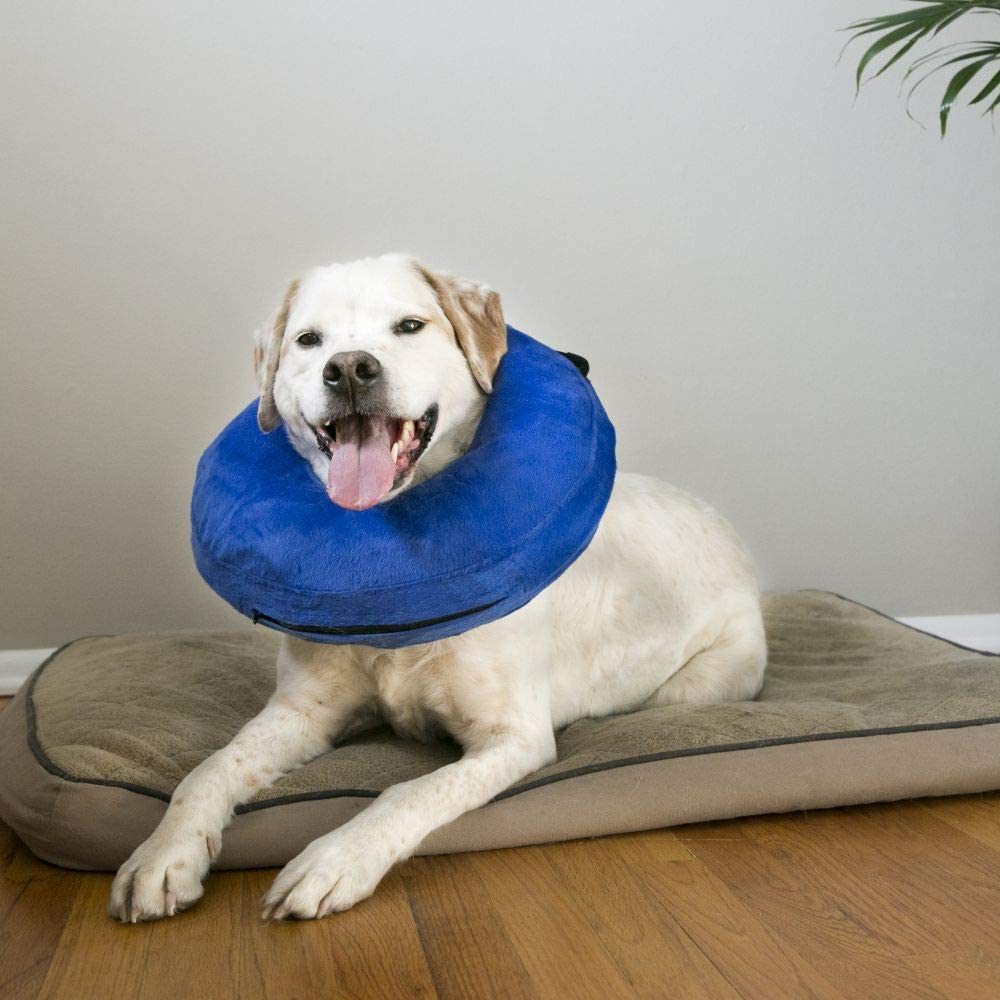
Inflatable E-collar
If you’d prefer to keep your dog protected without the wall of plastic around him, try an inflatable collar instead. It will still minimize your pup’s head movements so he can’t access any wounds or hot spots, but it’s much more plushy and padded than a regular cone. With the same look and feel as those U-shaped travel pillows for people, the Kong Cloud E-Collar will be the perfect compromise between rigidity and luxury.
This pillow collar’s soft material won’t irritate your dog’s skin or leave marks on furniture or floors. It also doesn’t extend around your pup’s face, so he can eat, drink, and play with ease. It’s worth noting that some breeds with longer necks and snouts may be able to reach around this collar to itch their wound, though many will not. It’s all about what works best for your pup!
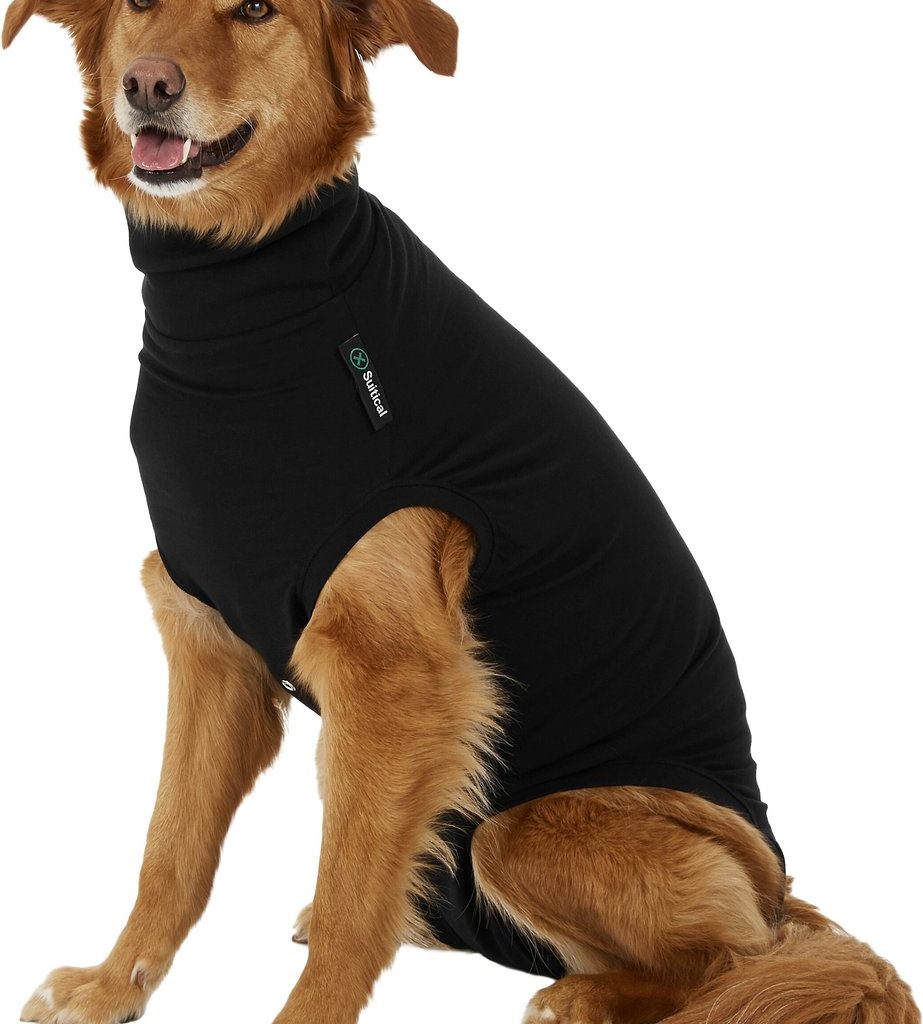
Recovery suit or onesie
This cone alternative isn’t as popular as other methods, mostly because of the hassle of getting your pup into a onesie. These Suitical Recovery Suits aren’t ordinary clothes, though; they are made of a breathable, lightweight material that your dog may not even notice. This allows air circulation around both the body and the wound, which you can cover with gauze pads thanks to this suit’s easy-to-reach inside pockets.
When it’s time for your pup’s potty break, you can unfasten the buttons at the back of the onesie for quick relief. These snaps, plus the suit’s snug and protective fit, will ensure it stays in place and keeps your dog’s body protected from bites and scratches.
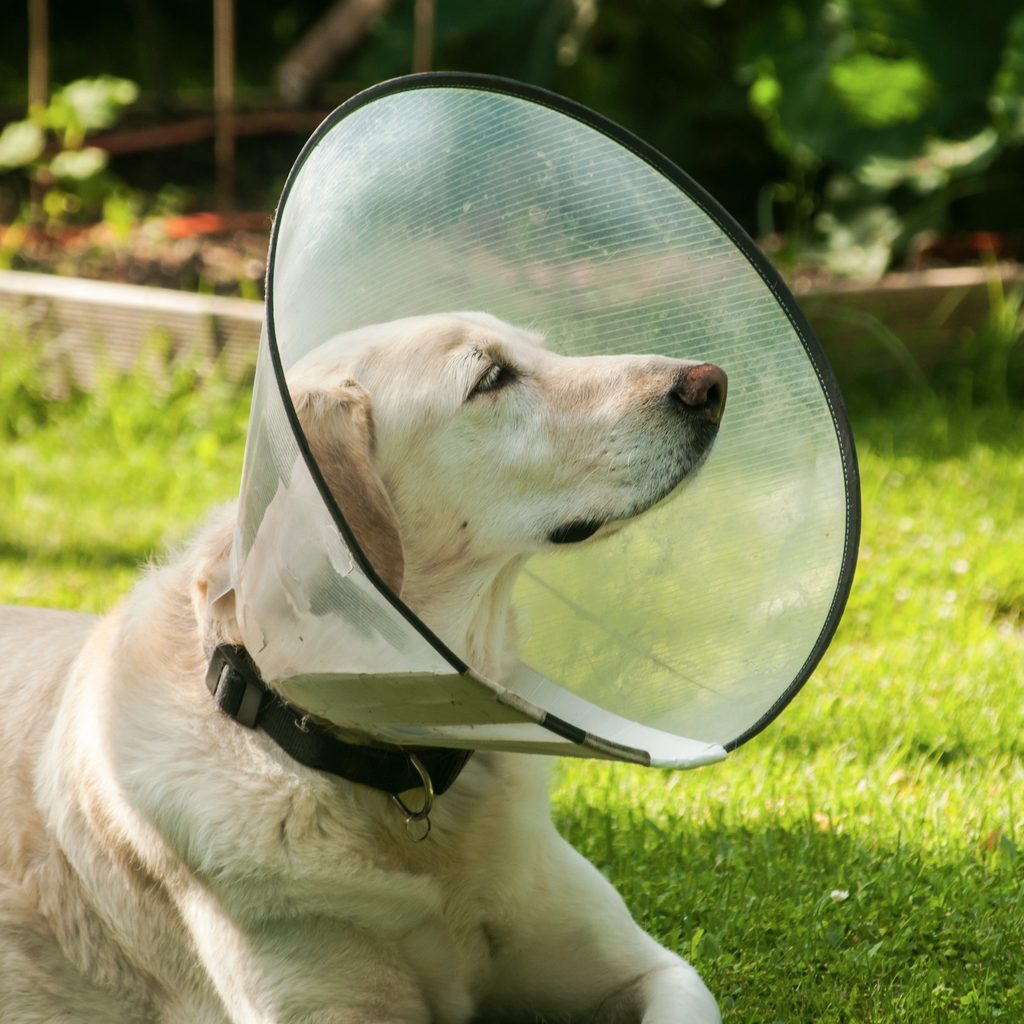
An adjustable hard-to-soft E-collar
If you’re looking for one collar to replace both hard and soft cones, look no further. The Comfy Cone E-Collar has the very same Elizabethan collar style that keeps your dog from getting at his wounds or rashes, while the flexible material lets him resume nearly every activity of daily life without hesitation. There’s no glare, echo, or loss of direction like there can be with normal plastic collars, so your pup won’t mind wearing this helpful accessory. It can be worn several ways, too!
Your dog can wear this collar like a traditional cone, or you can take out the removable stays for a floppier (yet still protective) fit. If it’s not especially comfy like this, you can also place it “upside-down” on your dog, though it won’t really be upside-down at all. Wearing it around his chest and shoulders can keep him from accessing those areas while having total freedom of his head and neck. As if it couldn’t get better, you can even fold the edges up or down to make mealtime as easy as… kibble, we guess!
With these four diverse options, your dog will have everything he needs and more for a comfortable recovery. Each collar meets slightly different needs, so try not to stress out if your first try doesn’t end in success. Every dog has his own preferences, and it just takes time to see what he likes. Odds are, he’ll need some time to adjust to any kind of cone, even ones as soft and minimally invasive as these. Just be patient!